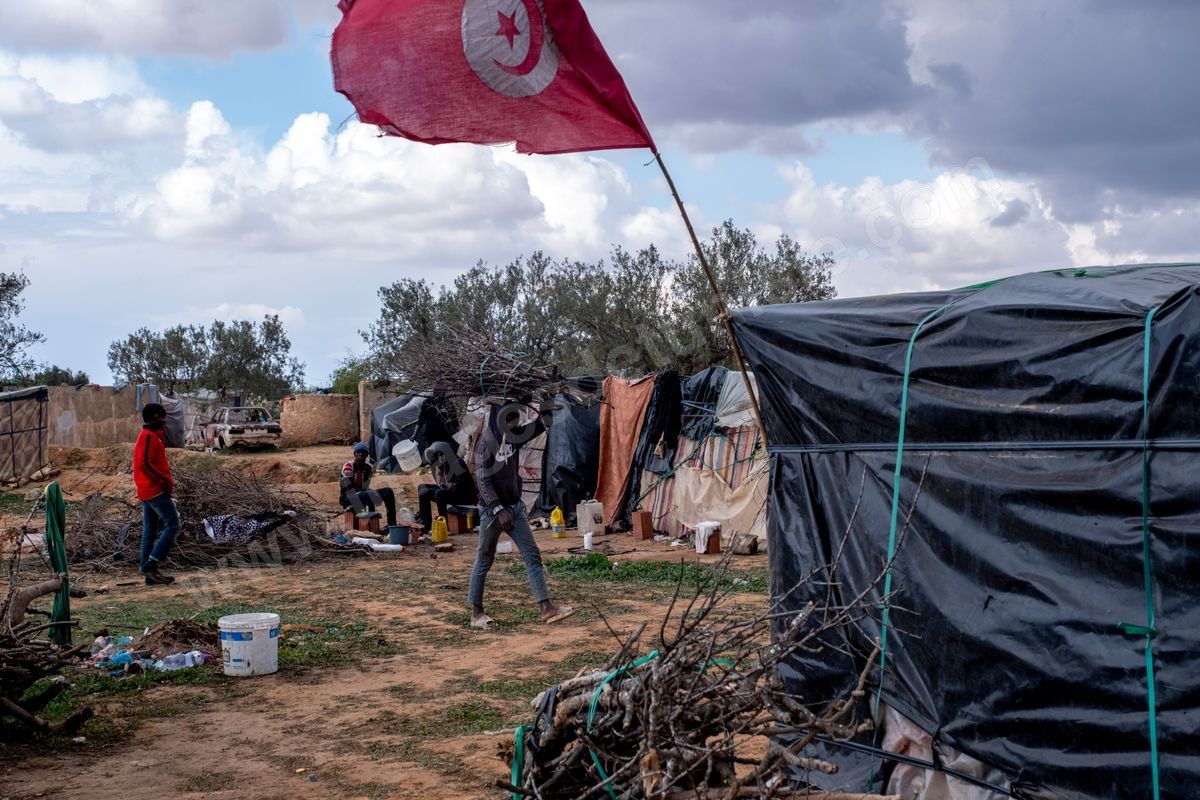
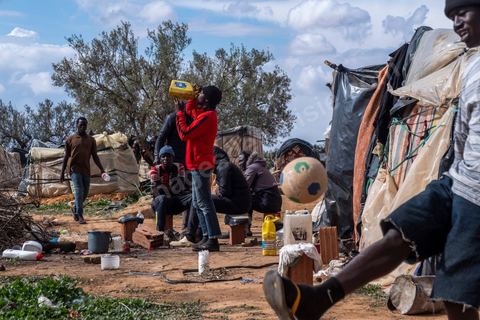
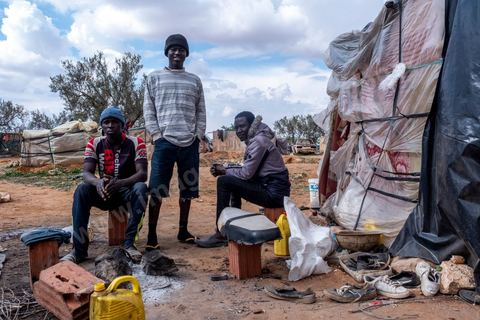
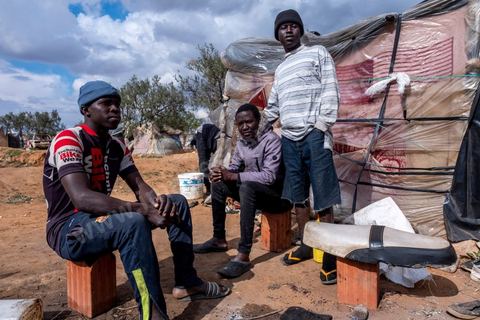
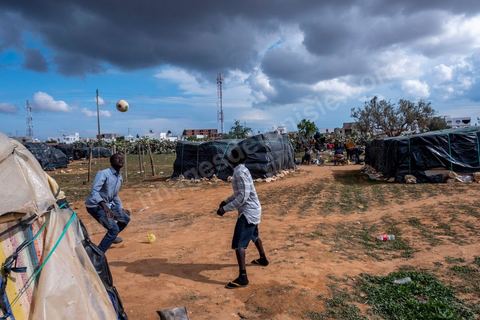
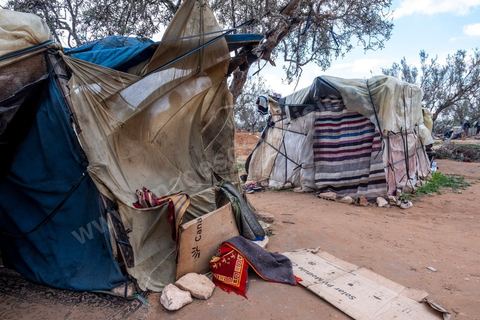
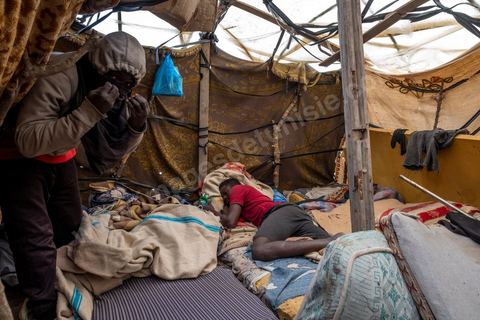
21 février 2024 :  ce camp de migrants sub saharien en périphérie de la ville de Jebeniana, au nord de Sfax, compte près de 300 hommes, femmes et enfants. Chassés de leur domicile il y a un an suite aux déclarations du président de la république tunisienne Kais Saied, les migrants par milliers sont rejetés dans la rue et les campagnes par les autorités locales, risquant à tout moment d'être arrétés et rénvoyés aux frontières libyennes ou algériennes. Ces camps improvisés sur des terrains vagues ou dans les champs sont abandonnés des ONG internationales.© Images de Tunisie — aperçu filigrané

Photos de la même série

21 February 2024: this sub-Saharan migrant camp on the outskirts of the town of Jebeniana, north of Sfax, is home to almost 300 men, women and children. Driven from their homes a year ago by statements made by the President of the Republic of Tunisia, Kais Saied, thousands of migrants are being dumped on the streets and in the countryside by the local authorities, with the constant risk of being arrested and sent back to the Libyan or Algerian borders. These makeshift camps on wasteland or in fields have been abandoned by international NGOs.21 February 2024: this sub-Saharan migrant camp on the outskirts of the town of Jebeniana, north of Sfax, is home to almost 300 men, women and children. Driven from their homes a year ago by statements made by the President of the Republic of Tunisia, Kais Saied, thousands of migrants are being dumped on the streets and in the countryside by the local authorities, with the constant risk of being arrested and sent back to the Libyan or Algerian borders. These makeshift camps on wasteland or in fields have been abandoned by international NGOs.21 février 2024 :  ce camp de migrants sub saharien en périphérie de la ville de Jebeniana, au nord de Sfax, compte près de 300 hommes, femmes et enfants. Chassés de leur domicile il y a un an suite aux déclarations du président de la république tunisienne Kais Saied, les migrants par milliers sont rejetés dans la rue et les campagnes par les autorités locales, risquant à tout moment d'être arrétés et rénvoyés aux frontières libyennes ou algériennes. Ces camps improvisés sur des terrains vagues ou dans les champs sont abandonnés des ONG internationales.21 February 2024: this sub-Saharan migrant camp on the outskirts of the town of Jebeniana, north of Sfax, is home to almost 300 men, women and children. Driven from their homes a year ago by statements made by the President of the Republic of Tunisia, Kais Saied, thousands of migrants are being dumped on the streets and in the countryside by the local authorities, with the constant risk of being arrested and sent back to the Libyan or Algerian borders. These makeshift camps on wasteland or in fields have been abandoned by international NGOs.21 February 2024: this sub-Saharan migrant camp on the outskirts of the town of Jebeniana, north of Sfax, is home to almost 300 men, women and children. Driven from their homes a year ago by statements made by the President of the Republic of Tunisia, Kais Saied, thousands of migrants are being dumped on the streets and in the countryside by the local authorities, with the constant risk of being arrested and sent back to the Libyan or Algerian borders. These makeshift camps on wasteland or in fields have been abandoned by international NGOs.21 February 2024: this sub-Saharan migrant camp on the outskirts of the town of Jebeniana, north of Sfax, is home to almost 300 men, women and children. Driven from their homes a year ago by statements made by the President of the Republic of Tunisia, Kais Saied, thousands of migrants are being dumped on the streets and in the countryside by the local authorities, with the constant risk of being arrested and sent back to the Libyan or Algerian borders. These makeshift camps on wasteland or in fields have been abandoned by international NGOs.
RM

M70-000

21 février 2024 : ce camp de migrants sub saharien en périphérie de la ville de Jebeniana, au nord de Sfax, compte près de 300 hommes, femmes et enfants. Chassés de leur domicile il y a un an suite aux déclarations du président de la république tunisienne Kais Saied, les migrants par milliers sont rejetés dans la rue et les campagnes par les autorités locales, risquant à tout moment d'être arrétés et rénvoyés aux frontières libyennes ou algériennes. Ces camps improvisés sur des terrains vagues ou dans les champs sont abandonnés des ONG internationales.

RéférenceM70-000
CatégorieActualités / Camps de migrants à Sfax et Tunis 21022024
LicenceRM — droits gérés
Date de prise de vue2024
PhotographeNicolas Fauqué
Copyright© Nicolas Fauqué / www.imagesdetunisie.com

Aucun paiement en ligne : la licence est établie sur devis selon l'usage, le tirage et la durée d'exploitation.