M12-600 Independence Day Parade 20032012
1–36 of 68 · page 2/2
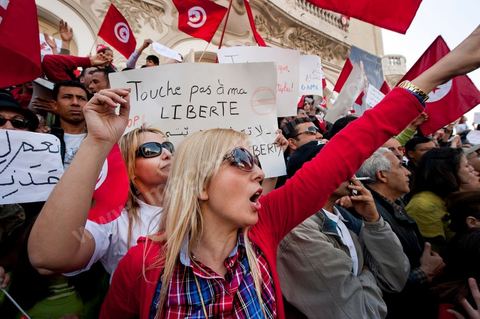
March 20, 2012: Nearly 6,000 Tunisians gathered Tuesday on Bourguiba Avenue in Tunis to celebrate Independence Day and “defend democracy” against “reactionary” forces, amid tensions fueled by the debate over identity and the role of religion. Tunisian flags were everywhere, horns blared, and the national anthem rang out: the demonstrators, who had come in response to calls on social media and from civic movements, chanted, “The people want a secular state!” “No to reactionary thinking, no to the caliphate,” or “We will not let obscurantist forces steal our revolution.” The slogans of the revolution—“work, freedom, dignity”—were also chanted in unison. “In the name of the worker and the farmer, we continue to fight,” proclaimed one banner, while another demanded “jobs, or the government’s resignation.” The 56th anniversary of independence—achieved on March 20, 1956, after 75 years of French protectorate rule—is taking place against a delicate backdrop, marked by growing tensions between the “Islamist” camp—which won the elections—and the “modernist” camp. The debate, exacerbated by incidents linked to Salafist radicals, centers on the question of Tunisian identity and the role religion should play in the country’s future constitution.
M12-618 · 2012
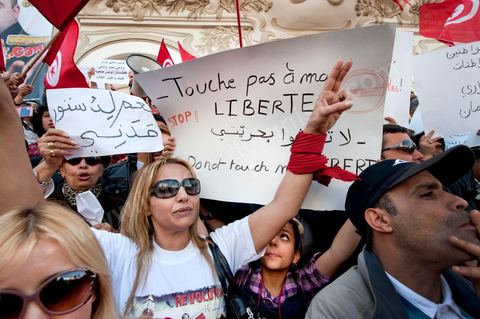
March 20, 2012: Nearly 6,000 Tunisians gathered Tuesday on Bourguiba Avenue in Tunis to celebrate Independence Day and “defend democracy” against “reactionary” forces, amid tensions fueled by the debate over identity and the role of religion. Tunisian flags were everywhere, horns blared, and the national anthem rang out: the demonstrators, who had come in response to calls on social media and from civic movements, chanted, “The people want a secular state!” “No to reactionary thinking, no to the caliphate,” or “We will not let obscurantist forces steal our revolution.” The slogans of the revolution—“work, freedom, dignity”—were also chanted in unison. “In the name of the worker and the farmer, we continue to fight,” proclaimed one banner, while another demanded “jobs, or the government’s resignation.” The 56th anniversary of independence—achieved on March 20, 1956, after 75 years of French protectorate rule—is taking place against a delicate backdrop, marked by growing tensions between the “Islamist” camp—which won the elections—and the “modernist” camp. The debate, exacerbated by incidents linked to Salafist radicals, centers on the question of Tunisian identity and the role religion should play in the country’s future constitution.
M12-616 · 2012
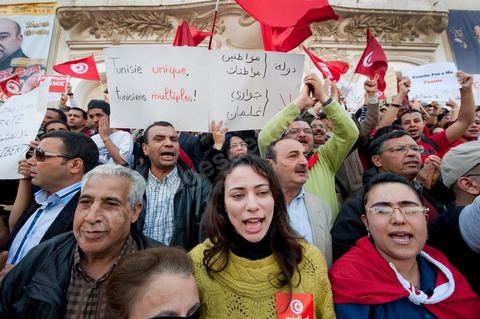
March 20, 2012: Nearly 6,000 Tunisians gathered Tuesday on Bourguiba Avenue in Tunis to celebrate Independence Day and “defend democracy” against “reactionary” forces, amid tensions fueled by the debate over identity and the role of religion. Tunisian flags were everywhere, horns blared, and the national anthem rang out: the demonstrators, who had come in response to calls on social media and from civic movements, chanted, “The people want a secular state!” “No to reactionary thinking, no to the caliphate,” or “We will not let obscurantist forces steal our revolution.” The slogans of the revolution—“work, freedom, dignity”—were also chanted in unison. “In the name of the worker and the farmer, we continue to fight,” proclaimed one banner, while another demanded “jobs, or the government’s resignation.” The 56th anniversary of independence—achieved on March 20, 1956, after 75 years of French protectorate rule—is taking place against a delicate backdrop, marked by growing tensions between the “Islamist” camp—which won the elections—and the “modernist” camp. The debate, exacerbated by incidents linked to Salafist radicals, centers on the question of Tunisian identity and the role religion should play in the country’s future constitution.
M12-615 · 2012
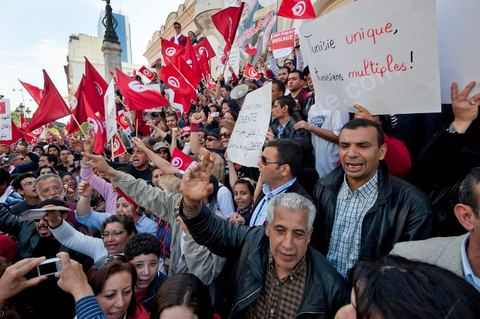
March 20, 2012: Nearly 6,000 Tunisians gathered Tuesday on Bourguiba Avenue in Tunis to celebrate Independence Day and “defend democracy” against “reactionary” forces, amid tensions fueled by the debate over identity and the role of religion. Tunisian flags were everywhere, horns blared, and the national anthem rang out: the demonstrators, who had come in response to calls on social media and from civic movements, chanted, “The people want a secular state!” “No to reactionary thinking, no to the caliphate,” or “We will not let obscurantist forces steal our revolution.” The slogans of the revolution—“work, freedom, dignity”—were also chanted in unison. “In the name of the worker and the farmer, we continue to fight,” proclaimed one banner, while another demanded “jobs, or the government’s resignation.” The 56th anniversary of independence—achieved on March 20, 1956, after 75 years of French protectorate rule—is taking place against a delicate backdrop, marked by growing tensions between the “Islamist” camp—which won the elections—and the “modernist” camp. The debate, exacerbated by incidents linked to Salafist radicals, centers on the question of Tunisian identity and the role religion should play in the country’s future constitution.
M12-614 · 2012
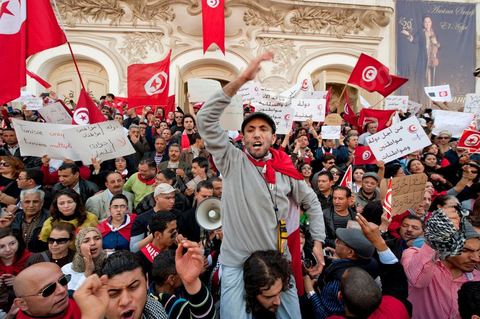
March 20, 2012: Nearly 6,000 Tunisians gathered Tuesday on Bourguiba Avenue in Tunis to celebrate Independence Day and “defend democracy” against “reactionary” forces, amid tensions fueled by the debate over identity and the role of religion. Tunisian flags were everywhere, horns blared, and the national anthem rang out: the demonstrators, who had come in response to calls on social media and from civic movements, chanted, “The people want a secular state!” “No to reactionary thinking, no to the caliphate,” or “We will not let obscurantist forces steal our revolution.” The slogans of the revolution—“work, freedom, dignity”—were also chanted in unison. “In the name of the worker and the farmer, we continue to fight,” proclaimed one banner, while another demanded “jobs, or the government’s resignation.” The 56th anniversary of independence—achieved on March 20, 1956, after 75 years of French protectorate rule—is taking place against a delicate backdrop, marked by growing tensions between the “Islamist” camp—which won the elections—and the “modernist” camp. The debate, exacerbated by incidents linked to Salafist radicals, centers on the question of Tunisian identity and the role religion should play in the country’s future constitution.
M12-613 · 2012
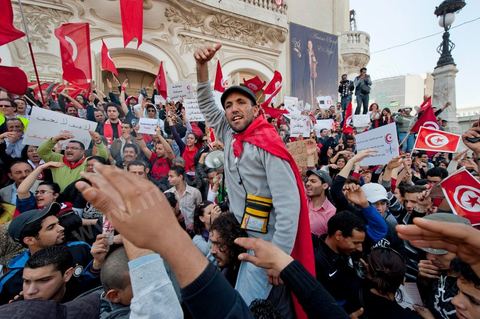
March 20, 2012: Nearly 6,000 Tunisians gathered Tuesday on Bourguiba Avenue in Tunis to celebrate Independence Day and “defend democracy” against “reactionary” forces, amid tensions fueled by the debate over identity and the role of religion. Tunisian flags were everywhere, horns blared, and the national anthem rang out: the demonstrators, who had come in response to calls on social media and from civic movements, chanted, “The people want a secular state!” “No to reactionary thinking, no to the caliphate,” or “We will not let obscurantist forces steal our revolution.” The slogans of the revolution—“work, freedom, dignity”—were also chanted in unison. “In the name of the worker and the farmer, we continue to fight,” proclaimed one banner, while another demanded “jobs, or the government’s resignation.” The 56th anniversary of independence—achieved on March 20, 1956, after 75 years of French protectorate rule—is taking place against a delicate backdrop, marked by growing tensions between the “Islamist” camp—which won the elections—and the “modernist” camp. The debate, exacerbated by incidents linked to Salafist radicals, centers on the question of Tunisian identity and the role religion should play in the country’s future constitution.
M12-612 · 2012
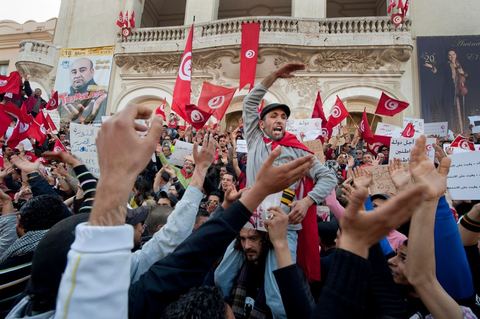
March 20, 2012: Nearly 6,000 Tunisians gathered Tuesday on Bourguiba Avenue in Tunis to celebrate Independence Day and “defend democracy” against “reactionary” forces, amid tensions fueled by the debate over identity and the role of religion. Tunisian flags were everywhere, horns blared, and the national anthem rang out: the demonstrators, who had come in response to calls on social media and from civic movements, chanted, “The people want a secular state!” “No to reactionary thinking, no to the caliphate,” or “We will not let obscurantist forces steal our revolution.” The slogans of the revolution—“work, freedom, dignity”—were also chanted in unison. “In the name of the worker and the farmer, we continue to fight,” proclaimed one banner, while another demanded “jobs, or the government’s resignation.” The 56th anniversary of independence—achieved on March 20, 1956, after 75 years of French protectorate rule—is taking place against a delicate backdrop, marked by growing tensions between the “Islamist” camp—which won the elections—and the “modernist” camp. The debate, exacerbated by incidents linked to Salafist radicals, centers on the question of Tunisian identity and the role religion should play in the country’s future constitution.
M12-611 · 2012
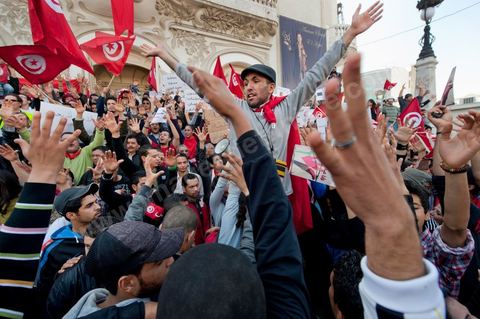
March 20, 2012: Nearly 6,000 Tunisians gathered Tuesday on Bourguiba Avenue in Tunis to celebrate Independence Day and “defend democracy” against “reactionary” forces, amid tensions fueled by the debate over identity and the role of religion. Tunisian flags were everywhere, horns blared, and the national anthem rang out: the demonstrators, who had come in response to calls on social media and from civic movements, chanted, “The people want a secular state!” “No to reactionary thinking, no to the caliphate,” or “We will not let obscurantist forces steal our revolution.” The slogans of the revolution—“work, freedom, dignity”—were also chanted in unison. “In the name of the worker and the farmer, we continue to fight,” proclaimed one banner, while another demanded “jobs, or the government’s resignation.” The 56th anniversary of independence—achieved on March 20, 1956, after 75 years of French protectorate rule—is taking place against a delicate backdrop, marked by growing tensions between the “Islamist” camp—which won the elections—and the “modernist” camp. The debate, exacerbated by incidents linked to Salafist radicals, centers on the question of Tunisian identity and the role religion should play in the country’s future constitution.
M12-610 · 2012
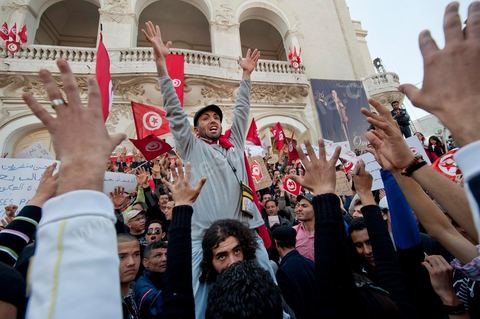
March 20, 2012: Nearly 6,000 Tunisians gathered Tuesday on Bourguiba Avenue in Tunis to celebrate Independence Day and “defend democracy” against “reactionary” forces, amid tensions fueled by the debate over identity and the role of religion. Tunisian flags were everywhere, horns blared, and the national anthem rang out: the demonstrators, who had come in response to calls on social media and from civic movements, chanted, “The people want a secular state!” “No to reactionary thinking, no to the caliphate,” or “We will not let obscurantist forces steal our revolution.” The slogans of the revolution—“work, freedom, dignity”—were also chanted in unison. “In the name of the worker and the farmer, we continue to fight,” proclaimed one banner, while another demanded “jobs, or the government’s resignation.” The 56th anniversary of independence—achieved on March 20, 1956, after 75 years of French protectorate rule—is taking place against a delicate backdrop, marked by growing tensions between the “Islamist” camp—which won the elections—and the “modernist” camp. The debate, exacerbated by incidents linked to Salafist radicals, centers on the question of Tunisian identity and the role religion should play in the country’s future constitution.
M12-608 · 2012
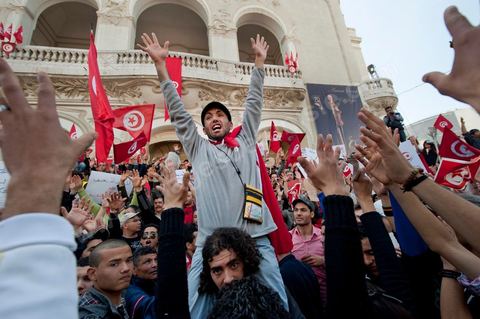
March 20, 2012: Nearly 6,000 Tunisians gathered Tuesday on Bourguiba Avenue in Tunis to celebrate Independence Day and “defend democracy” against “reactionary” forces, amid tensions fueled by the debate over identity and the role of religion. Tunisian flags were everywhere, horns blared, and the national anthem rang out: the demonstrators, who had come in response to calls on social media and from civic movements, chanted, “The people want a secular state!” “No to reactionary thinking, no to the caliphate,” or “We will not let obscurantist forces steal our revolution.” The slogans of the revolution—“work, freedom, dignity”—were also chanted in unison. “In the name of the worker and the farmer, we continue to fight,” proclaimed one banner, while another demanded “jobs, or the government’s resignation.” The 56th anniversary of independence—achieved on March 20, 1956, after 75 years of French protectorate rule—is taking place against a delicate backdrop, marked by growing tensions between the “Islamist” camp—which won the elections—and the “modernist” camp. The debate, exacerbated by incidents linked to Salafist radicals, centers on the question of Tunisian identity and the role religion should play in the country’s future constitution.
M12-609 · 2012
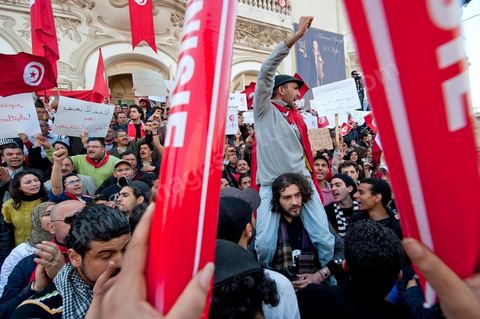
March 20, 2012: Nearly 6,000 Tunisians gathered Tuesday on Bourguiba Avenue in Tunis to celebrate Independence Day and “defend democracy” against “reactionary” forces, amid tensions fueled by the debate over identity and the role of religion. Tunisian flags were everywhere, horns blared, and the national anthem rang out: the demonstrators, who had come in response to calls on social media and from civic movements, chanted, “The people want a secular state!” “No to reactionary thinking, no to the caliphate,” or “We will not let obscurantist forces steal our revolution.” The slogans of the revolution—“work, freedom, dignity”—were also chanted in unison. “In the name of the worker and the farmer, we continue to fight,” proclaimed one banner, while another demanded “jobs, or the government’s resignation.” The 56th anniversary of independence—achieved on March 20, 1956, after 75 years of French protectorate rule—is taking place against a delicate backdrop, marked by growing tensions between the “Islamist” camp—which won the elections—and the “modernist” camp. The debate, exacerbated by incidents linked to Salafist radicals, centers on the question of Tunisian identity and the role religion should play in the country’s future constitution.
M12-607 · 2012
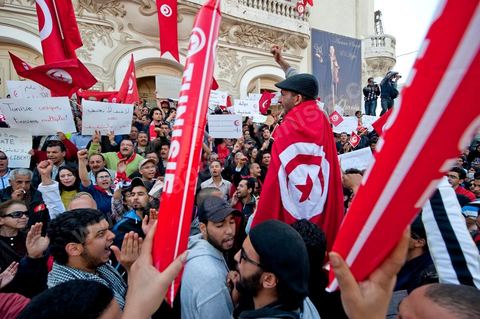
March 20, 2012: Nearly 6,000 Tunisians gathered Tuesday on Bourguiba Avenue in Tunis to celebrate Independence Day and “defend democracy” against “reactionary” forces, amid tensions fueled by the debate over identity and the role of religion. Tunisian flags were everywhere, horns blared, and the national anthem rang out: the demonstrators, who had come in response to calls on social media and from civic movements, chanted, “The people want a secular state!” “No to reactionary thinking, no to the caliphate,” or “We will not let obscurantist forces steal our revolution.” The slogans of the revolution—“work, freedom, dignity”—were also chanted in unison. “In the name of the worker and the farmer, we continue to fight,” proclaimed one banner, while another demanded “jobs, or the government’s resignation.” The 56th anniversary of independence—achieved on March 20, 1956, after 75 years of French protectorate rule—is taking place against a delicate backdrop, marked by growing tensions between the “Islamist” camp—which won the elections—and the “modernist” camp. The debate, exacerbated by incidents linked to Salafist radicals, centers on the question of Tunisian identity and the role religion should play in the country’s future constitution.
M12-606 · 2012
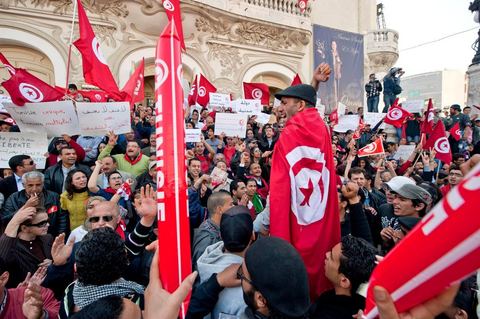
March 20, 2012: Nearly 6,000 Tunisians gathered Tuesday on Bourguiba Avenue in Tunis to celebrate Independence Day and “defend democracy” against “reactionary” forces, amid tensions fueled by the debate over identity and the role of religion. Tunisian flags were everywhere, horns blared, and the national anthem rang out: the demonstrators, who had come in response to calls on social media and from civic movements, chanted, “The people want a secular state!” “No to reactionary thinking, no to the caliphate,” or “We will not let obscurantist forces steal our revolution.” The slogans of the revolution—“work, freedom, dignity”—were also chanted in unison. “In the name of the worker and the farmer, we continue to fight,” proclaimed one banner, while another demanded “jobs, or the government’s resignation.” The 56th anniversary of independence—achieved on March 20, 1956, after 75 years of French protectorate rule—is taking place against a delicate backdrop, marked by growing tensions between the “Islamist” camp—which won the elections—and the “modernist” camp. The debate, exacerbated by incidents linked to Salafist radicals, centers on the question of Tunisian identity and the role religion should play in the country’s future constitution.
M12-604 · 2012
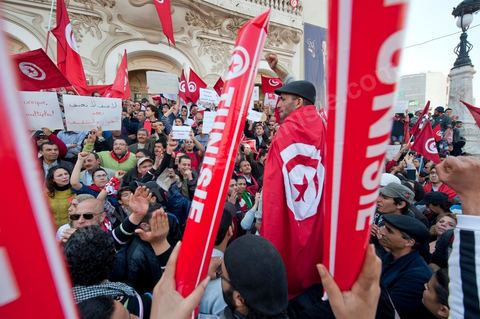
March 20, 2012: Nearly 6,000 Tunisians gathered Tuesday on Bourguiba Avenue in Tunis to celebrate Independence Day and “defend democracy” against “reactionary” forces, amid tensions fueled by the debate over identity and the role of religion. Tunisian flags were everywhere, horns blared, and the national anthem rang out: the demonstrators, who had come in response to calls on social media and from civic movements, chanted, “The people want a secular state!” “No to reactionary thinking, no to the caliphate,” or “We will not let obscurantist forces steal our revolution.” The slogans of the revolution—“work, freedom, dignity”—were also chanted in unison. “In the name of the worker and the farmer, we continue to fight,” proclaimed one banner, while another demanded “jobs, or the government’s resignation.” The 56th anniversary of independence—achieved on March 20, 1956, after 75 years of French protectorate rule—is taking place against a delicate backdrop, marked by growing tensions between the “Islamist” camp—which won the elections—and the “modernist” camp. The debate, exacerbated by incidents linked to Salafist radicals, centers on the question of Tunisian identity and the role religion should play in the country’s future constitution.
M12-605 · 2012
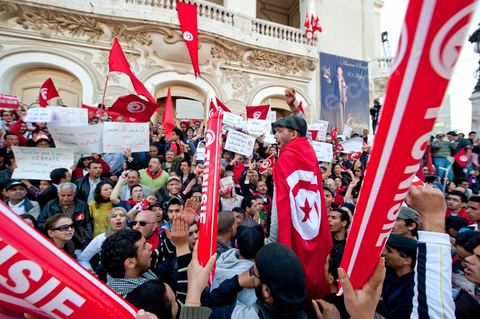
March 20, 2012: Nearly 6,000 Tunisians gathered Tuesday on Bourguiba Avenue in Tunis to celebrate Independence Day and “defend democracy” against “reactionary” forces, amid tensions fueled by the debate over identity and the role of religion. Tunisian flags were everywhere, horns blared, and the national anthem rang out: the demonstrators, who had come in response to calls on social media and from civic movements, chanted, “The people want a secular state!” “No to reactionary thinking, no to the caliphate,” or “We will not let obscurantist forces steal our revolution.” The slogans of the revolution—“work, freedom, dignity”—were also chanted in unison. “In the name of the worker and the farmer, we continue to fight,” proclaimed one banner, while another demanded “jobs, or the government’s resignation.” The 56th anniversary of independence—achieved on March 20, 1956, after 75 years of French protectorate rule—is taking place against a delicate backdrop, marked by growing tensions between the “Islamist” camp—which won the elections—and the “modernist” camp. The debate, exacerbated by incidents linked to Salafist radicals, centers on the question of Tunisian identity and the role religion should play in the country’s future constitution.
M12-603 · 2012
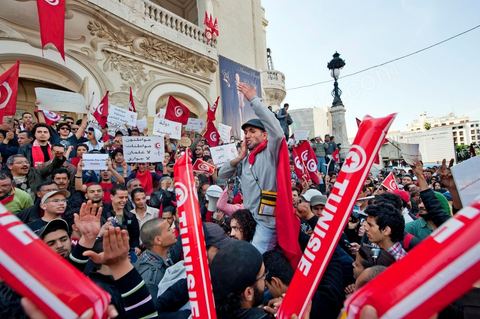
March 20, 2012: Nearly 6,000 Tunisians gathered Tuesday on Bourguiba Avenue in Tunis to celebrate Independence Day and “defend democracy” against “reactionary” forces, amid tensions fueled by the debate over identity and the role of religion. Tunisian flags were everywhere, horns blared, and the national anthem rang out: the demonstrators, who had come in response to calls on social media and from civic movements, chanted, “The people want a secular state!” “No to reactionary thinking, no to the caliphate,” or “We will not let obscurantist forces steal our revolution.” The slogans of the revolution—“work, freedom, dignity”—were also chanted in unison. “In the name of the worker and the farmer, we continue to fight,” proclaimed one banner, while another demanded “jobs, or the government’s resignation.” The 56th anniversary of independence—achieved on March 20, 1956, after 75 years of French protectorate rule—is taking place against a delicate backdrop, marked by growing tensions between the “Islamist” camp—which won the elections—and the “modernist” camp. The debate, exacerbated by incidents linked to Salafist radicals, centers on the question of Tunisian identity and the role religion should play in the country’s future constitution.
M12-602 · 2012
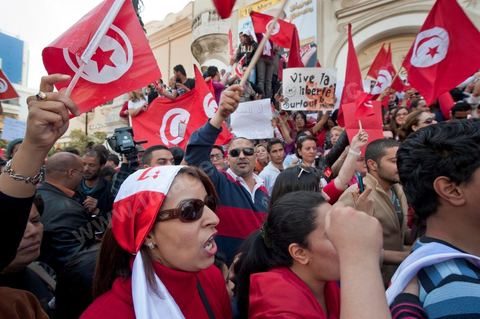
March 20, 2012: Nearly 6,000 Tunisians gathered Tuesday on Bourguiba Avenue in Tunis to celebrate Independence Day and “defend democracy” against “reactionary” forces, amid tensions fueled by the debate over identity and the role of religion. Tunisian flags were everywhere, horns blared, and the national anthem rang out: the demonstrators, who had come in response to calls on social media and from civic movements, chanted, “The people want a secular state!” “No to reactionary thinking, no to the caliphate,” or “We will not let obscurantist forces steal our revolution.” The slogans of the revolution—“work, freedom, dignity”—were also chanted in unison. “In the name of the worker and the farmer, we continue to fight,” proclaimed one banner, while another demanded “jobs, or the government’s resignation.” The 56th anniversary of independence—achieved on March 20, 1956, after 75 years of French protectorate rule—is taking place against a delicate backdrop, marked by growing tensions between the “Islamist” camp—which won the elections—and the “modernist” camp. The debate, exacerbated by incidents linked to Salafist radicals, centers on the question of Tunisian identity and the role religion should play in the country’s future constitution.
M12-601 · 2012
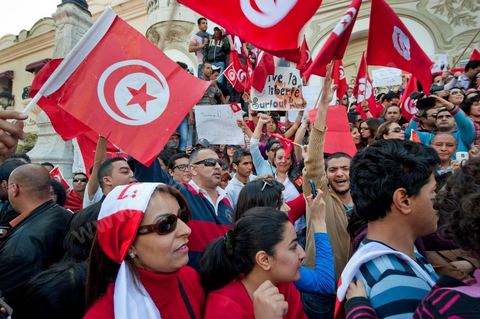
March 20, 2012: Nearly 6,000 Tunisians gathered Tuesday on Bourguiba Avenue in Tunis to celebrate Independence Day and “defend democracy” against “reactionary” forces, amid tensions fueled by the debate over identity and the role of religion. Tunisian flags were everywhere, horns blared, and the national anthem rang out: the demonstrators, who had come in response to calls on social media and from civic movements, chanted, “The people want a secular state!” “No to reactionary thinking, no to the caliphate,” or “We will not let obscurantist forces steal our revolution.” The slogans of the revolution—“work, freedom, dignity”—were also chanted in unison. “In the name of the worker and the farmer, we continue to fight,” proclaimed one banner, while another demanded “jobs, or the government’s resignation.” The 56th anniversary of independence—achieved on March 20, 1956, after 75 years of French protectorate rule—is taking place against a delicate backdrop, marked by growing tensions between the “Islamist” camp—which won the elections—and the “modernist” camp. The debate, exacerbated by incidents linked to Salafist radicals, centers on the question of Tunisian identity and the role religion should play in the country’s future constitution.
M12-600 · 2012