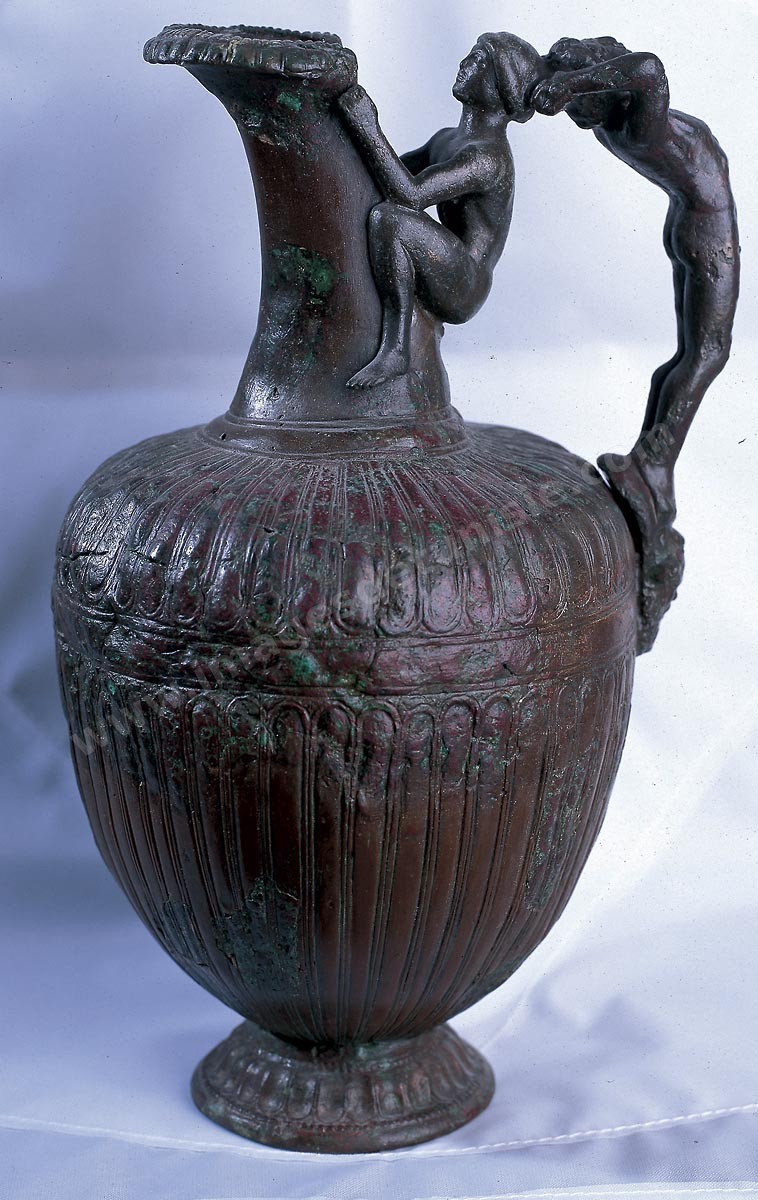
Bronze oenochoe: The body of this bronze oenochoe (wine jug) is adorned with a simple design: fluting on either side of a central band. The handle consists of two figurines: a teenager clinging to the neck of the vessel, which he holds between his legs, and a bearded figure whose body is arched backward, leaning against a mask that serves as the lower attachment, with his hands resting on the teenager’s head. Some scholars attribute this oenochoe to Etruria, others to Tarentum or even Carthage (H. 25 cm, diam. 14 cm, Carthage, 5th century BCE, Carthage Museum).© Images de Tunisie — watermarked preview

Photos from the same series

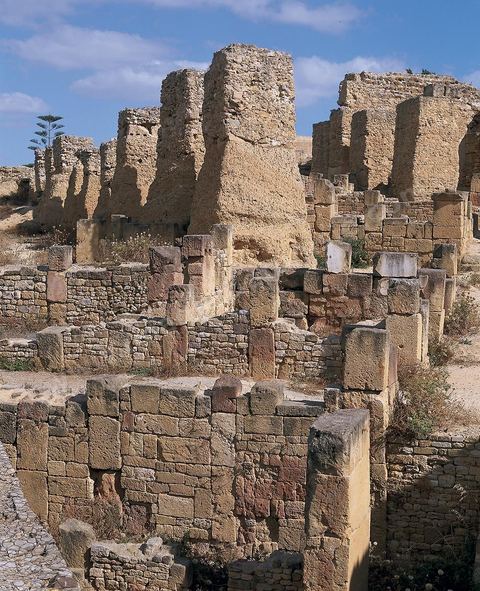
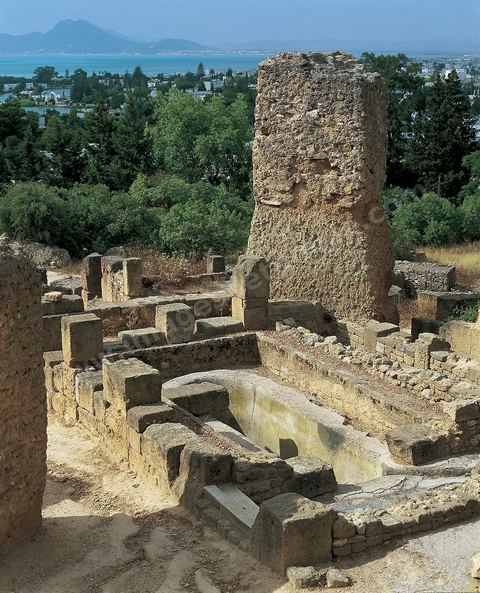
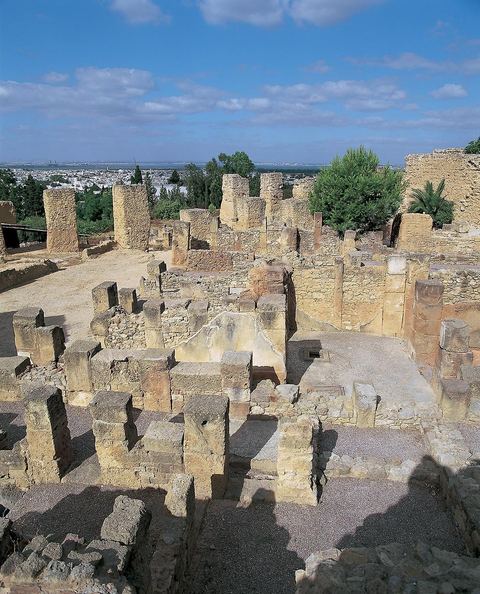
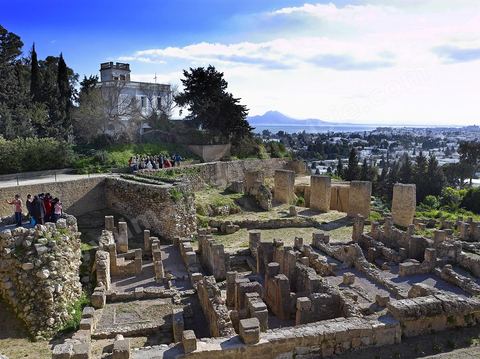
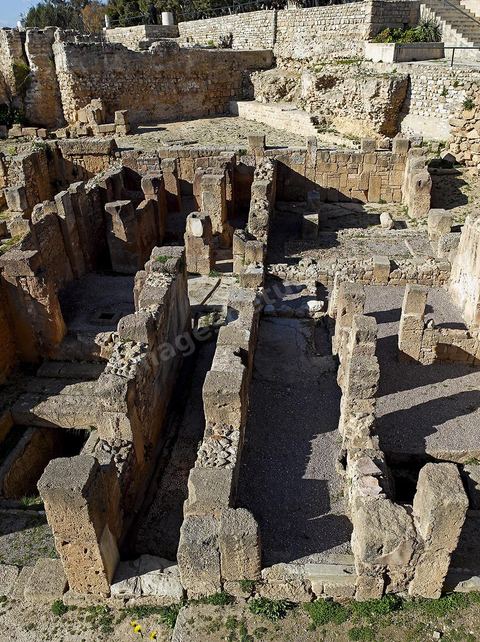
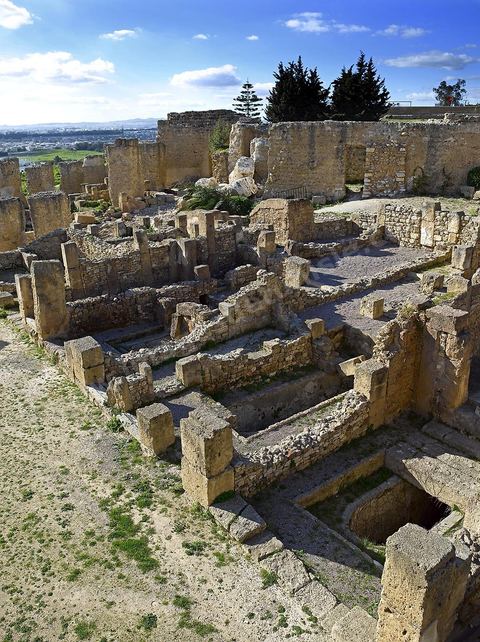
A Punic residential quarter on Byrsa Hill in Carthage. At the summit of Byrsa Hill, the site of the Roman forum, a Punic residential quarter dating from the city’s final century of existence—more precisely, the early 2nd century BCE—has been unearthed. The settlement is typical and even stereotypical, with a room facing the street that could be used as a store, a cistern installed in the basement to collect water for domestic use, and a long corridor on the right-hand side leading to a courtyard with a well, around which a series of small rooms of varying numbers are arranged.A Punic residential quarter on Byrsa Hill in Carthage. At the summit of Byrsa Hill, the site of the Roman forum, a Punic residential quarter dating from the city’s final century of existence—more precisely, the early 2nd century BCE—has been unearthed. The settlement is typical and even stereotypical, with a room facing the street that could be used as a store, a cistern installed in the basement to collect water for domestic use, and a long corridor on the right-hand side leading to a courtyard with a well, around which a series of small rooms of varying numbers are arranged.A Punic residential quarter on Byrsa Hill in Carthage. At the summit of Byrsa Hill, the site of the Roman forum, a Punic residential quarter dating from the city’s final century of existence—more precisely, the early 2nd century BCE—has been unearthed. The settlement is typical and even stereotypical, with a room facing the street that could be used as a store, a cistern installed in the basement to collect water for domestic use, and a long corridor on the right-hand side leading to a courtyard with a well, around which a series of small rooms of varying numbers are arranged.A Punic residential quarter on Byrsa Hill in Carthage. At the summit of Byrsa Hill, the site of the Roman forum, a Punic residential quarter dating from the city’s final century of existence—more precisely, the early 2nd century BCE—has been unearthed. The settlement is typical and even stereotypical, with a room facing the street that could be used as a store, a cistern installed in the basement to collect water for domestic use, and a long corridor on the right-hand side leading to a courtyard with a well, around which a series of small rooms of varying numbers are arranged.A Punic residential quarter on Byrsa Hill in Carthage. At the summit of Byrsa Hill, the site of the Roman forum, a Punic residential quarter dating from the city’s final century of existence—more precisely, the early 2nd century BCE—has been unearthed. The settlement is typical and even stereotypical, with a room facing the street that could be used as a store, a cistern installed in the basement to collect water for domestic use, and a long corridor on the right-hand side leading to a courtyard with a well, around which a series of small rooms of varying numbers are arranged.A Punic residential quarter on Byrsa Hill in Carthage. At the summit of Byrsa Hill, the site of the Roman forum, a Punic residential quarter dating from the city’s final century of existence—more precisely, the early 2nd century BCE—has been unearthed. The settlement is typical and even stereotypical, with a room facing the street that could be used as a store, a cistern installed in the basement to collect water for domestic use, and a long corridor on the right-hand side leading to a courtyard with a well, around which a series of small rooms of varying numbers are arranged.
RM

A02-082

Bronze oenochoe: The body of this bronze oenochoe (wine jug) is adorned with a simple design: fluting on either side of a central band. The handle consists of two figurines: a teenager clinging to the neck of the vessel, which he holds between his legs, and a bearded figure whose body is arched backward, leaning against a mask that serves as the lower attachment, with his hands resting on the teenager’s head. Some scholars attribute this oenochoe to Etruria, others to Tarentum or even Carthage (H. 25 cm, diam. 14 cm, Carthage, 5th century BCE, Carthage Museum).

ReferenceA02-082
CategoryVilles et Régions / Tunis and its suburbs / Carthage
LicenceRM — rights managed
Photographer© Nicolas Fauqué / www.imagesd
Copyright© Nicolas Fauqué / www.imagesdetunisie.com

No online payment: licensing is quoted individually based on usage, print run and duration of use.