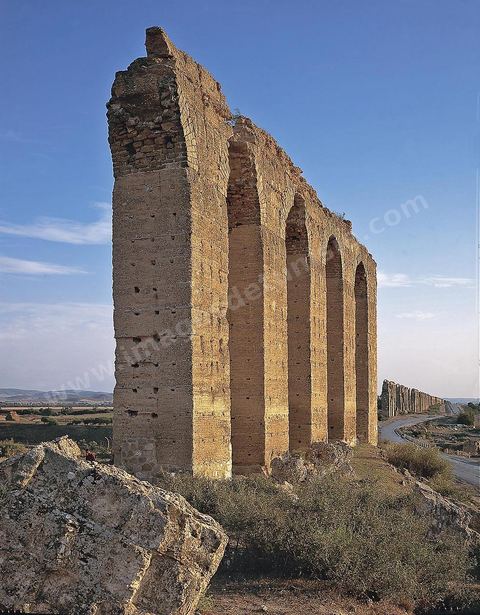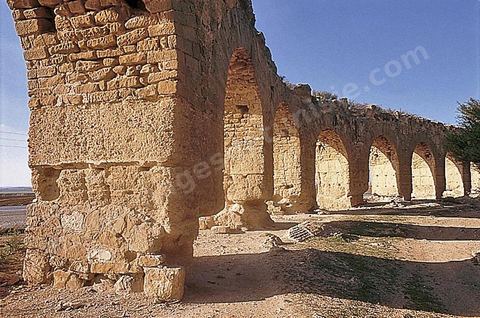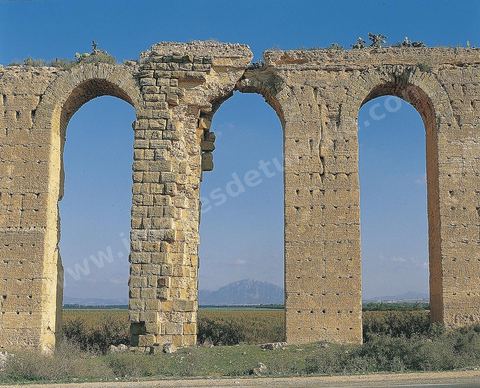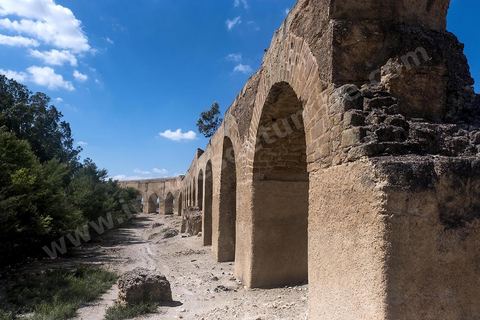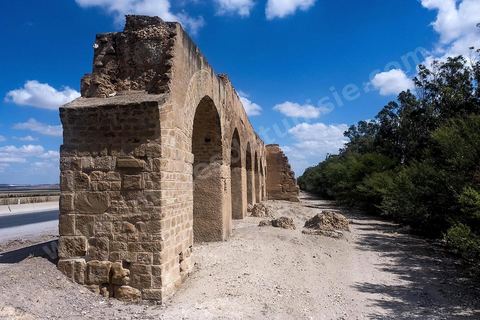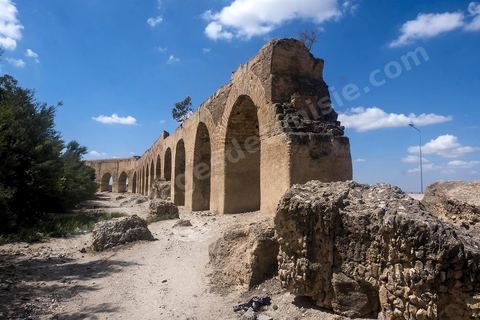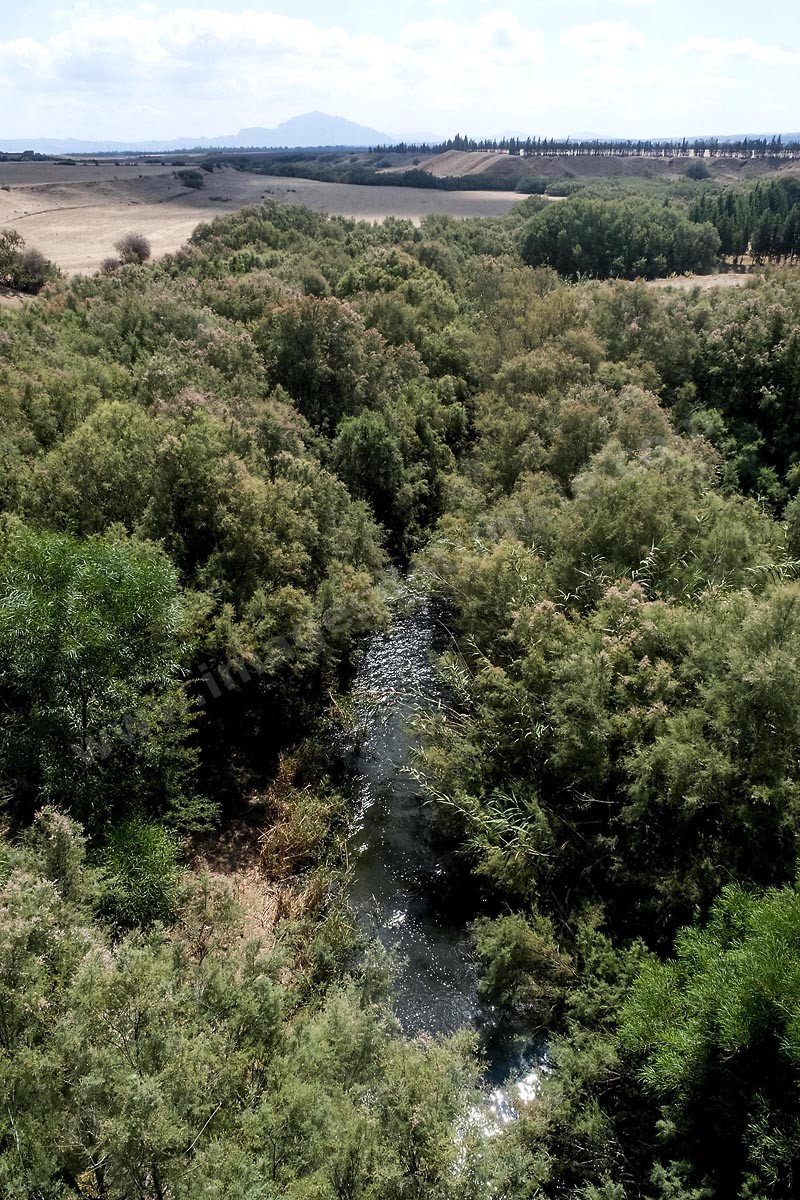
Oued Melloula passe sous l'Aqueduc romain reliant Tunis à Zaghouan. Constructeur habile, l'empereur Hadrien décide le captage des sources existant dans les massifs montagneux du Djebel Zaghouan et du Jouggar ainsi que la construction d'un immense aqueduc destiné à conduire les eaux vers les citernes de La Malga, réservoirs d'eau de 25 000 m3, situés sur une partie élevée de la colline de Carthage. La longueur totale de l'aqueduc jusqu'à Carthage, y compris les diverses ramifications, est de 132 kilomètres. Sa déclivité est précisément de 0,29 %. Il est coupé à plusieurs reprises (d'abord par les Vandales puis par les Arabes).© Images de Tunisie — watermarked preview

Photos from the same series

Roman aqueduct connecting Tunis to Zaghouan. A skilled engineer, Emperor Hadrian decided to tap into the springs in the Djebel Zaghouan and Jouggar mountain ranges and to build a massive aqueduct to carry the water to the cisterns at La Malga, water reservoirs with a capacity of 25,000 m³, located on a high point of the Carthage hill. The total length of the aqueduct to Carthage, including its various branches, is 132 kilometers. Its gradient is precisely 0.29%. It was cut off on several occasions (first by the Vandals and then by the Arabs).Roman aqueduct connecting Tunis to Zaghouan. A skilled engineer, Emperor Hadrian decided to tap into the springs in the Djebel Zaghouan and Jouggar mountain ranges and to build a massive aqueduct to carry the water to the cisterns at La Malga, water reservoirs with a capacity of 25,000 m³, located on a high point of the Carthage hill. The total length of the aqueduct to Carthage, including its various branches, is 132 kilometers. Its gradient is precisely 0.29%. It was cut off on several occasions (first by the Vandals and then by the Arabs).Roman aqueduct connecting Tunis to Zaghouan. A skilled engineer, Emperor Hadrian decided to tap into the springs in the Djebel Zaghouan and Jouggar mountain ranges and to build a massive aqueduct to carry the water to the cisterns at La Malga, water reservoirs with a capacity of 25,000 m³, located on a high point of the Carthage hill. The total length of the aqueduct to Carthage, including its various branches, is 132 kilometers. Its gradient is precisely 0.29%. It was cut off on several occasions (first by the Vandals and then by the Arabs).Roman aqueduct connecting Tunis to Zaghouan. A skilled engineer, Emperor Hadrian decided to tap into the springs in the Djebel Zaghouan and Jouggar mountain ranges and to build a massive aqueduct to carry the water to the cisterns at La Malga, water reservoirs with a capacity of 25,000 m³, located on a high point of the Carthage hill. The total length of the aqueduct to Carthage, including its various branches, is 132 kilometers. Its gradient is precisely 0.29%. It was cut off on several occasions (first by the Vandals and then by the Arabs).Roman aqueduct connecting Tunis to Zaghouan. A skilled engineer, Emperor Hadrian decided to tap into the springs in the Djebel Zaghouan and Jouggar mountain ranges and to build a massive aqueduct to carry the water to the cisterns at La Malga, water reservoirs with a capacity of 25,000 m³, located on a high point of the Carthage hill. The total length of the aqueduct to Carthage, including its various branches, is 132 kilometers. Its gradient is precisely 0.29%. It was cut off on several occasions (first by the Vandals and then by the Arabs).Roman aqueduct connecting Tunis to Zaghouan. A skilled engineer, Emperor Hadrian decided to tap into the springs in the Djebel Zaghouan and Jouggar mountain ranges and to build a massive aqueduct to carry the water to the cisterns at La Malga, water reservoirs with a capacity of 25,000 m³, located on a high point of the Carthage hill. The total length of the aqueduct to Carthage, including its various branches, is 132 kilometers. Its gradient is precisely 0.29%. It was cut off on several occasions (first by the Vandals and then by the Arabs).
RM

A06-019

Oued Melloula passe sous l'Aqueduc romain reliant Tunis à Zaghouan. Constructeur habile, l'empereur Hadrien décide le captage des sources existant dans les massifs montagneux du Djebel Zaghouan et du Jouggar ainsi que la construction d'un immense aqueduc destiné à conduire les eaux vers les citernes de La Malga, réservoirs d'eau de 25 000 m3, situés sur une partie élevée de la colline de Carthage. La longueur totale de l'aqueduc jusqu'à Carthage, y compris les diverses ramifications, est de 132 kilomètres. Sa déclivité est précisément de 0,29 %. Il est coupé à plusieurs reprises (d'abord par les Vandales puis par les Arabes).

ReferenceA06-019
CategoryVilles et Régions / Tunis and its suburbs / Aqueduc de Zaghouan
LicenceRM — rights managed
Date taken2016
Photographer© Nicolas Fauqué / www.imagesd
Copyright© Nicolas Fauqué / www.imagesdetunisie.com

No online payment: licensing is quoted individually based on usage, print run and duration of use.