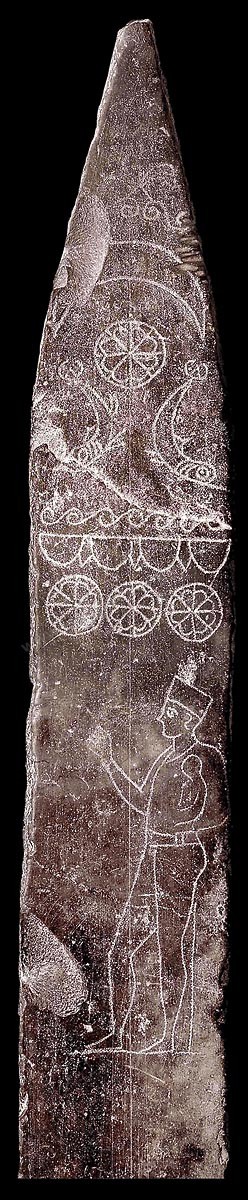
Stèle en calcaire, en forme d’obélisque, portant un décor gravé représentant un prêtre ( kohen ), vêtu comme ceux d’Égypte d’une robe de lin transparente et coiffé du bonnet cylindrique des kohanim. Sa main droite est levée dans un geste de prière, et il tient sur son bras gauche un enfant qu’il s’apprête à sacrifier selon la conception traditionnelle du tophet, ou à «restituer» à la divinité selon des interprétations récentes. Le fronton de la stèle est orné du disque solaire et du croissant ( symboles de Baal et de Tanit ) surplombant deux dauphins qui évoquent l’Océan céleste. Cette stèle est l’un des arguments principaux de ceux qui pensent que des sacrifices d’enfants étaient effectués dans le tophet ( H. 120 cm, tophet de Carthage, IIIe siècle, musée du Bardo ). Section punique - musée du Bardo© Images de Tunisie — watermarked preview

Photos from the same series

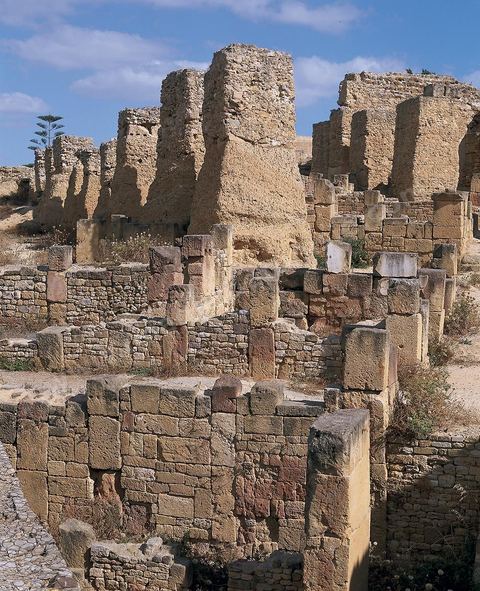
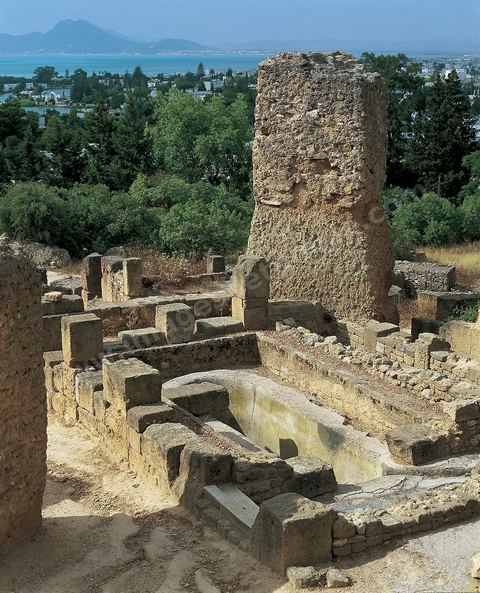
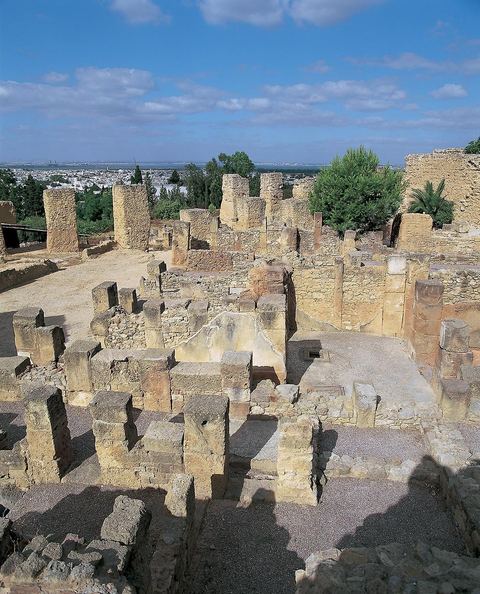
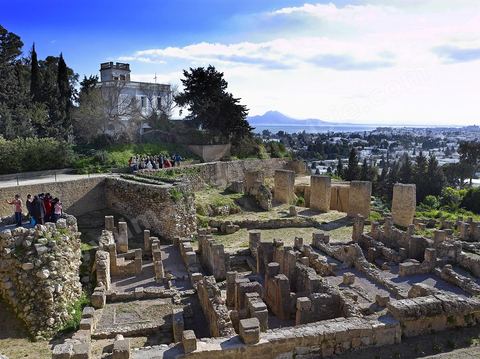
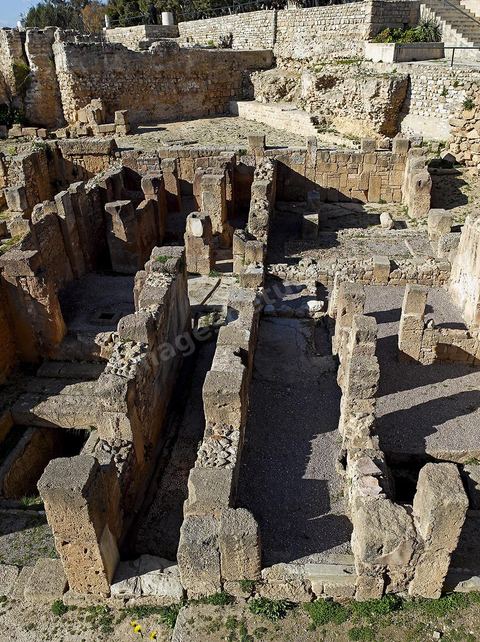
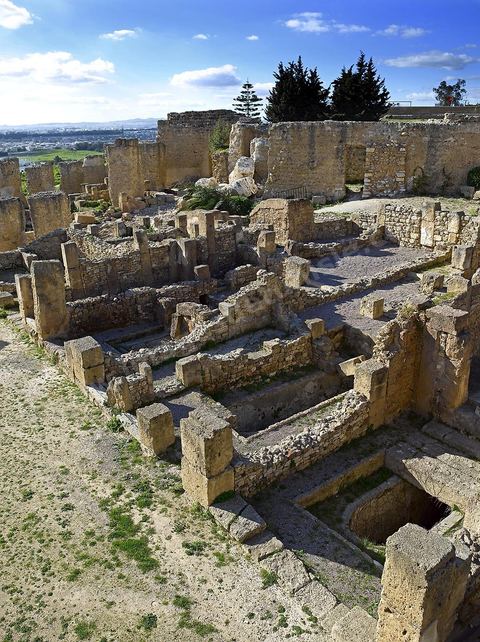
A Punic residential quarter on Byrsa Hill in Carthage. At the summit of Byrsa Hill, the site of the Roman forum, a Punic residential quarter dating from the city’s final century of existence—more precisely, the early 2nd century BCE—has been unearthed. The settlement is typical and even stereotypical, with a room facing the street that could be used as a store, a cistern installed in the basement to collect water for domestic use, and a long corridor on the right-hand side leading to a courtyard with a well, around which a series of small rooms of varying numbers are arranged.A Punic residential quarter on Byrsa Hill in Carthage. At the summit of Byrsa Hill, the site of the Roman forum, a Punic residential quarter dating from the city’s final century of existence—more precisely, the early 2nd century BCE—has been unearthed. The settlement is typical and even stereotypical, with a room facing the street that could be used as a store, a cistern installed in the basement to collect water for domestic use, and a long corridor on the right-hand side leading to a courtyard with a well, around which a series of small rooms of varying numbers are arranged.A Punic residential quarter on Byrsa Hill in Carthage. At the summit of Byrsa Hill, the site of the Roman forum, a Punic residential quarter dating from the city’s final century of existence—more precisely, the early 2nd century BCE—has been unearthed. The settlement is typical and even stereotypical, with a room facing the street that could be used as a store, a cistern installed in the basement to collect water for domestic use, and a long corridor on the right-hand side leading to a courtyard with a well, around which a series of small rooms of varying numbers are arranged.A Punic residential quarter on Byrsa Hill in Carthage. At the summit of Byrsa Hill, the site of the Roman forum, a Punic residential quarter dating from the city’s final century of existence—more precisely, the early 2nd century BCE—has been unearthed. The settlement is typical and even stereotypical, with a room facing the street that could be used as a store, a cistern installed in the basement to collect water for domestic use, and a long corridor on the right-hand side leading to a courtyard with a well, around which a series of small rooms of varying numbers are arranged.A Punic residential quarter on Byrsa Hill in Carthage. At the summit of Byrsa Hill, the site of the Roman forum, a Punic residential quarter dating from the city’s final century of existence—more precisely, the early 2nd century BCE—has been unearthed. The settlement is typical and even stereotypical, with a room facing the street that could be used as a store, a cistern installed in the basement to collect water for domestic use, and a long corridor on the right-hand side leading to a courtyard with a well, around which a series of small rooms of varying numbers are arranged.A Punic residential quarter on Byrsa Hill in Carthage. At the summit of Byrsa Hill, the site of the Roman forum, a Punic residential quarter dating from the city’s final century of existence—more precisely, the early 2nd century BCE—has been unearthed. The settlement is typical and even stereotypical, with a room facing the street that could be used as a store, a cistern installed in the basement to collect water for domestic use, and a long corridor on the right-hand side leading to a courtyard with a well, around which a series of small rooms of varying numbers are arranged.
RM

A14-47

Stèle en calcaire, en forme d’obélisque, portant un décor gravé représentant un prêtre ( kohen ), vêtu comme ceux d’Égypte d’une robe de lin transparente et coiffé du bonnet cylindrique des kohanim. Sa main droite est levée dans un geste de prière, et il tient sur son bras gauche un enfant qu’il s’apprête à sacrifier selon la conception traditionnelle du tophet, ou à «restituer» à la divinité selon des interprétations récentes. Le fronton de la stèle est orné du disque solaire et du croissant ( symboles de Baal et de Tanit ) surplombant deux dauphins qui évoquent l’Océan céleste. Cette stèle est l’un des arguments principaux de ceux qui pensent que des sacrifices d’enfants étaient effectués dans le tophet ( H. 120 cm, tophet de Carthage, IIIe siècle, musée du Bardo ). Section punique - musée du Bardo

ReferenceA14-47
CategoryVilles et Régions / Tunis and its suburbs / Carthage
LicenceRM — rights managed
Photographer© Nicolas Fauqué / www.imagesd
Copyright© Nicolas Fauqué / www.imagesdetunisie.com

No online payment: licensing is quoted individually based on usage, print run and duration of use.