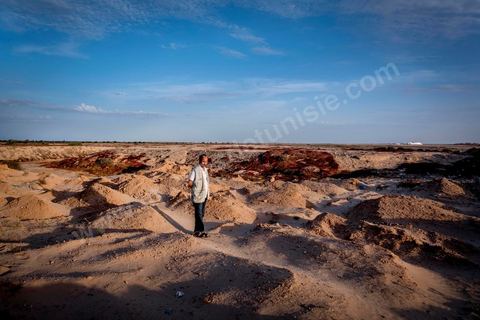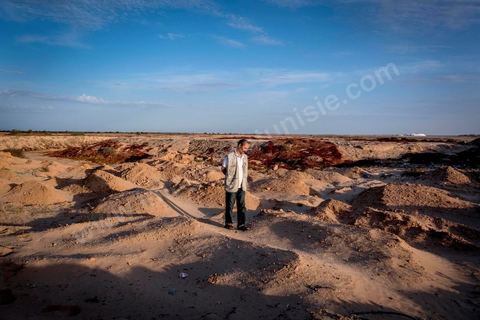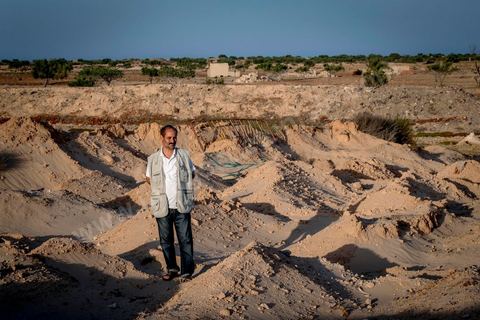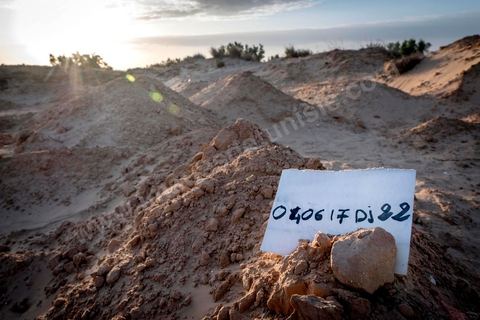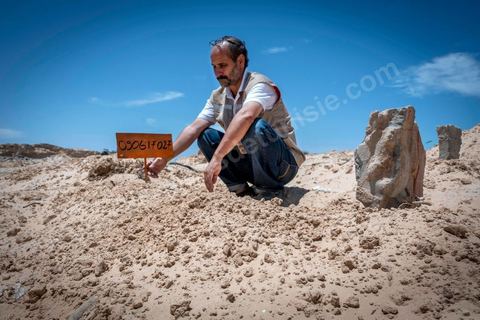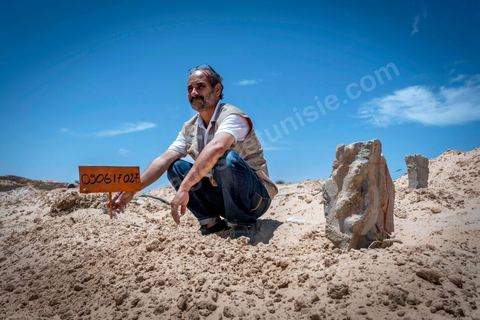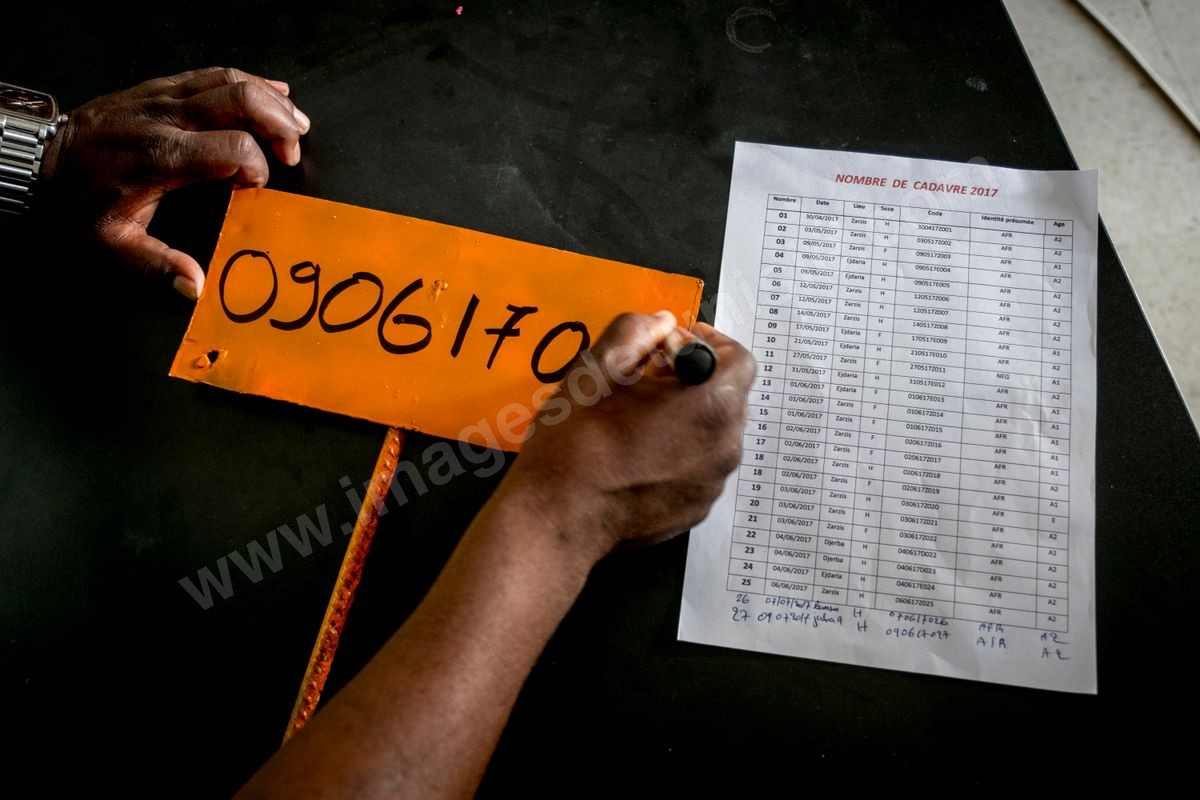
June 11, 2017: After receiving training from NGOs, they have been working for the past month to register, collect information, photograph the bodies to identify them, and keep records of each buried migrant. In Zarzis, on the Tunisian coast near the Libyan border, Chemseddine Marzoug, a former fisherman who is now unemployed, has been volunteering for 10 years to provide a sandy burial for those who have drowned in the Mediterranean. As volunteers for the Tunisian Red Crescent, Chemseddine and his colleague Mohamed Trabelsi have been burying the bodies of migrants found at sea or washed up on the beaches of southern Tunisia for 10 years in a makeshift cemetery at a municipal landfill. This spring, the death toll has been very high—27 bodies were recovered last month. © Images de Tunisie — watermarked preview

Photos from the same series

11 juin 2017 : Chaque monticule de sable correspond à un corps, un homme, une femme ou un enfant mort dans leur voyage vers un meilleur avenir. A Zarzis, sur le littoral tunisien, frontalier de la Libye, Chemseddine Marzoug, ancien pêcheur au chomage, offre bénévolement depuis 10 ans une sépulture de sable aux noyés de la Méditerranée. Bénévoles pour le croissant rouge tunisien Chemseddine et son collègue Mohamed Trabelsi enterrent depuis 10 ans les corps des migrants trouvés en mer ou échoués sur les plages du sud tunisien dans un cimetière improvisé dans une décharge municipale. En cette saison de printemps, les morts sont très nombreux 27 corps ont été repêchés ce dernier mois. 11 juin 2017 : Chaque monticule de sable correspond à un corps, un homme, une femme ou un enfant mort dans leur voyage vers un meilleur avenir. A Zarzis, sur le littoral tunisien, frontalier de la Libye, Chemseddine Marzoug, ancien pêcheur au chomage, offre bénévolement depuis 10 ans une sépulture de sable aux noyés de la Méditerranée. Bénévoles pour le croissant rouge tunisien Chemseddine et son collègue Mohamed Trabelsi enterrent depuis 10 ans les corps des migrants trouvés en mer ou échoués sur les plages du sud tunisien dans un cimetière improvisé dans une décharge municipale. En cette saison de printemps, les morts sont très nombreux 27 corps ont été repêchés ce dernier mois. 11 juin 2017 : Chaque monticule de sable correspond à un corps, un homme, une femme ou un enfant mort dans leur voyage vers un meilleur avenir. A Zarzis, sur le littoral tunisien, frontalier de la Libye, Chemseddine Marzoug, ancien pêcheur au chomage, offre bénévolement depuis 10 ans une sépulture de sable aux noyés de la Méditerranée. Bénévoles pour le croissant rouge tunisien Chemseddine et son collègue Mohamed Trabelsi enterrent depuis 10 ans les corps des migrants trouvés en mer ou échoués sur les plages du sud tunisien dans un cimetière improvisé dans une décharge municipale. En cette saison de printemps, les morts sont très nombreux 27 corps ont été repêchés ce dernier mois. 11 juin 2017 : Chaque monticule de sable correspond à un corps, un homme, une femme ou un enfant mort dans leur voyage vers un meilleur avenir. A Zarzis, sur le littoral tunisien, frontalier de la Libye, Chemseddine Marzoug, ancien pêcheur au chomage, offre bénévolement depuis 10 ans une sépulture de sable aux noyés de la Méditerranée. Bénévoles pour le croissant rouge tunisien Chemseddine et son collègue Mohamed Trabelsi enterrent depuis 10 ans les corps des migrants trouvés en mer ou échoués sur les plages du sud tunisien dans un cimetière improvisé dans une décharge municipale. En cette saison de printemps, les morts sont très nombreux 27 corps ont été repêchés ce dernier mois. June 11, 2017: After receiving training from NGOs, they have been working for the past month to register, collect information, photograph the bodies to identify them, and keep records of each buried migrant. In Zarzis, on the Tunisian coast near the Libyan border, Chemseddine Marzoug, a former fisherman who is now unemployed, has been volunteering for 10 years to provide a sandy burial for those who have drowned in the Mediterranean. As volunteers for the Tunisian Red Crescent, Chemseddine and his colleague Mohamed Trabelsi have been burying the bodies of migrants found at sea or washed up on the beaches of southern Tunisia for 10 years in a makeshift cemetery at a municipal landfill. This spring, the death toll has been very high—27 bodies were recovered last month. June 11, 2017: After receiving training from NGOs, they have been working for the past month to register, collect information, photograph the bodies to identify them, and keep records of each buried migrant. In Zarzis, on the Tunisian coast near the Libyan border, Chemseddine Marzoug, a former fisherman who is now unemployed, has been volunteering for 10 years to provide a sandy burial for those who have drowned in the Mediterranean. As volunteers for the Tunisian Red Crescent, Chemseddine and his colleague Mohamed Trabelsi have been burying the bodies of migrants found at sea or washed up on the beaches of southern Tunisia for 10 years in a makeshift cemetery at a municipal landfill. This spring, the death toll has been very high—27 bodies were recovered last month.
RM

M36-265

June 11, 2017: After receiving training from NGOs, they have been working for the past month to register, collect information, photograph the bodies to identify them, and keep records of each buried migrant. In Zarzis, on the Tunisian coast near the Libyan border, Chemseddine Marzoug, a former fisherman who is now unemployed, has been volunteering for 10 years to provide a sandy burial for those who have drowned in the Mediterranean. As volunteers for the Tunisian Red Crescent, Chemseddine and his colleague Mohamed Trabelsi have been burying the bodies of migrants found at sea or washed up on the beaches of southern Tunisia for 10 years in a makeshift cemetery at a municipal landfill. This spring, the death toll has been very high—27 bodies were recovered last month.

ReferenceM36-265
CategoryActualités / 2017 / M36-200 Chamseddine Marzoug Buries Migrants in Zarzis, June 10, 2017
LicenceRM — rights managed
Date taken2017
PhotographerNicolas Fauqué
Copyright© Nicolas Fauqué / www.imagesdetunisie.com

No online payment: licensing is quoted individually based on usage, print run and duration of use.