Carthage
1–150 of 229 · page 3/5
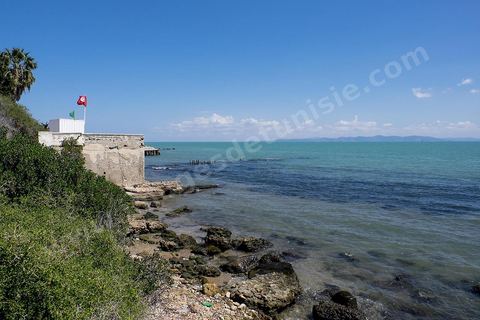
Seaside in Carthage
A02-160 · 2015
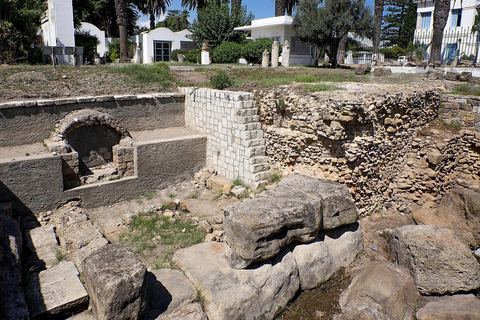
Site punique du quartier Magon
A02-108 · 2015
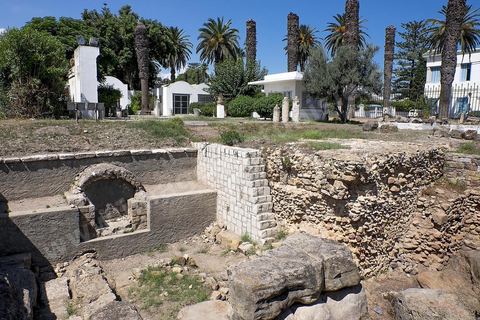
Site punique du quartier Magon
A02-107 · 2015
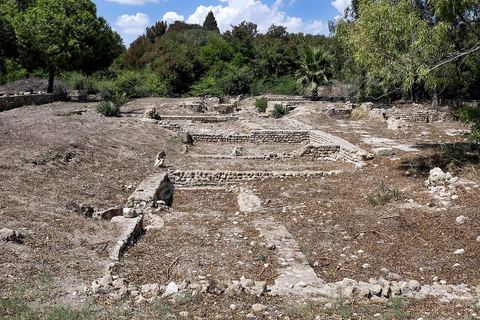
Site du musée paléochrétien de Carthage
A02-106 · 2015
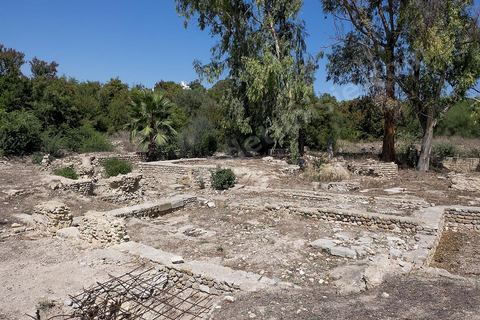
Site du musée paléochrétien de Carthage
A02-105 · 2015
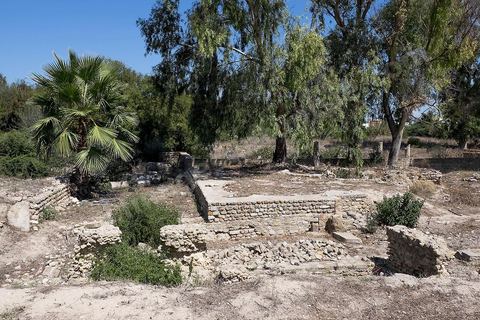
Site du musée paléochrétien de Carthage
A02-104 · 2015
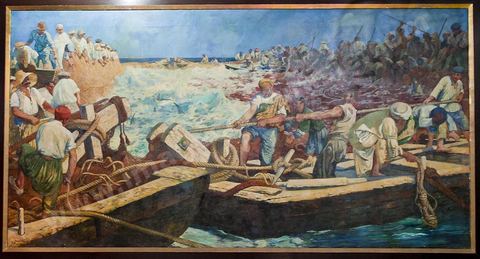
A02-155
A02-155 · 2010
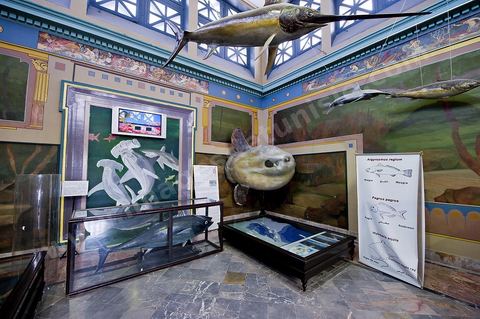
A02-154
A02-154 · 2010
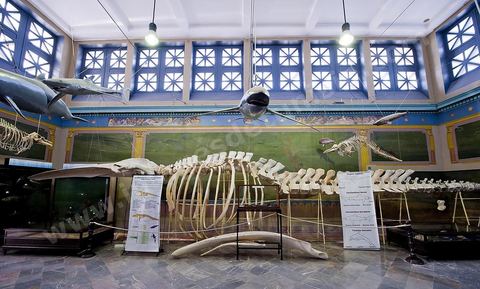
A02-153
A02-153 · 2010
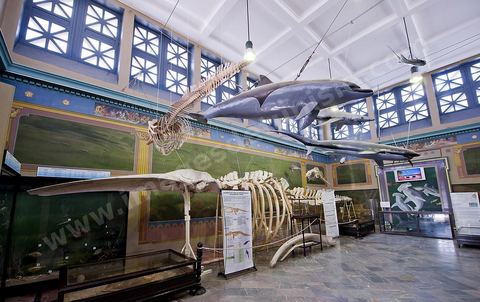
A02-152
A02-152 · 2010
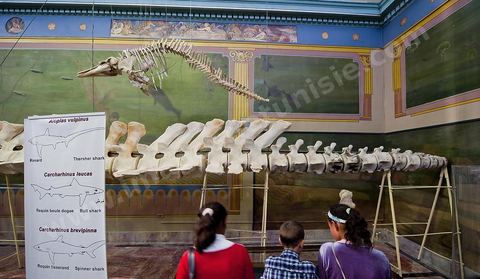
A02-151
A02-151 · 2010
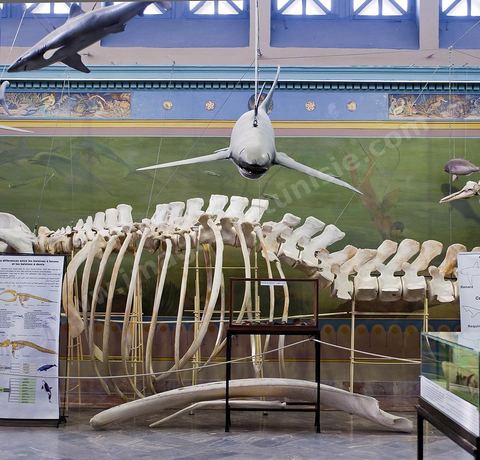
A02-150
A02-150 · 2010
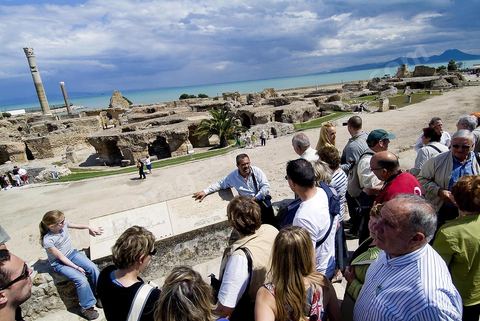
The Antonine Baths of Carthage are the largest Roman bath complex ever built on African soil. Of the original structures, only a few remnants of the ground floor—consisting of service areas located near the Carthaginian waterfront—remain. In fact, the site served as a stone quarry for centuries to build numerous monuments, both in Tunis and in many cities across the northern Mediterranean basin, such as Pisa; its proximity to the shore exacerbated the looting. The ruins extend over a length of more than 200 meters along the shoreline. The anastylosis of a column from the frigidarium by a Tunisian archaeological mission in 1985, as part of the international campaign led by UNESCO (1972–1992), gives a sense of the site’s magnificence at the height of the Roman city’s glory; the lost vaults rose to a height of over 29 meters—roughly the height of an eight-story building.
A02-029 · 2008
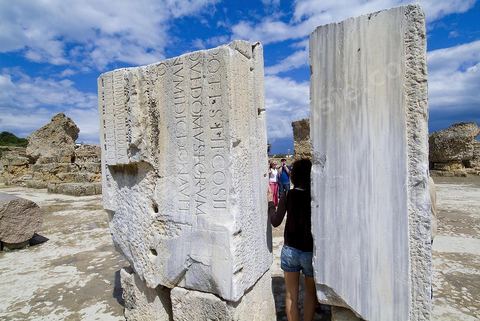
The Antonine Baths of Carthage are the largest Roman bath complex ever built on African soil. Of the original structures, only a few remnants of the ground floor—consisting of service areas located near the Carthaginian waterfront—remain. In fact, the site served as a stone quarry for centuries to build numerous monuments, both in Tunis and in many cities across the northern Mediterranean basin, such as Pisa; its proximity to the shore exacerbated the looting. The ruins extend over a length of more than 200 meters along the shoreline. The anastylosis of a column from the frigidarium by a Tunisian archaeological mission in 1985, as part of the international campaign led by UNESCO (1972–1992), gives a sense of the site’s magnificence at the height of the Roman city’s glory; the lost vaults rose to a height of over 29 meters—roughly the height of an eight-story building.
A02-037 · 2008
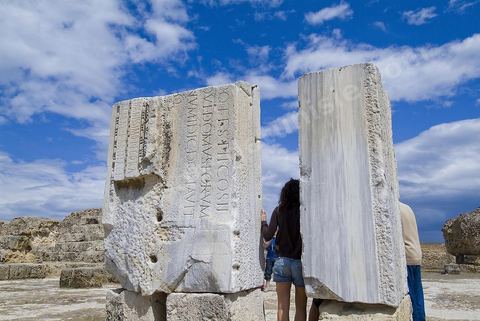
The Antonine Baths of Carthage are the largest Roman bath complex ever built on African soil. Of the original structures, only a few remnants of the ground floor—consisting of service areas located near the Carthaginian waterfront—remain. In fact, the site served as a stone quarry for centuries to build numerous monuments, both in Tunis and in many cities across the northern Mediterranean basin, such as Pisa; its proximity to the shore exacerbated the looting. The ruins extend over a length of more than 200 meters along the shoreline. The anastylosis of a column from the frigidarium by a Tunisian archaeological mission in 1985, as part of the international campaign led by UNESCO (1972–1992), gives a sense of the site’s magnificence at the height of the Roman city’s glory; the lost vaults rose to a height of over 29 meters—roughly the height of an eight-story building.
A02-036 · 2008
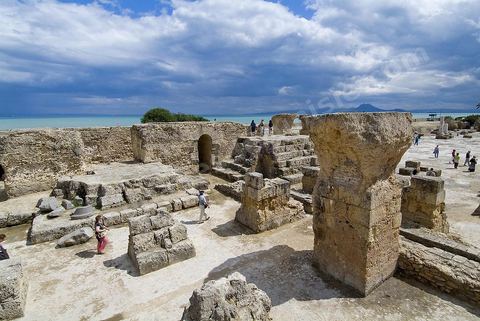
The Antonine Baths of Carthage are the largest Roman bath complex ever built on African soil. Of the original structures, only a few remnants of the ground floor—consisting of service areas located near the Carthaginian waterfront—remain. In fact, the site served as a stone quarry for centuries to build numerous monuments, both in Tunis and in many cities across the northern Mediterranean basin, such as Pisa; its proximity to the shore exacerbated the looting. The ruins extend over a length of more than 200 meters along the shoreline. The anastylosis of a column from the frigidarium by a Tunisian archaeological mission in 1985, as part of the international campaign led by UNESCO (1972–1992), gives a sense of the site’s magnificence at the height of the Roman city’s glory; the lost vaults rose to a height of over 29 meters—roughly the height of an eight-story building.
A02-035 · 2008
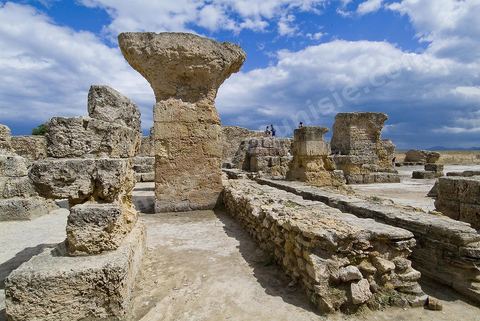
The Antonine Baths of Carthage are the largest Roman bath complex ever built on African soil. Of the original structures, only a few remnants of the ground floor—consisting of service areas located near the Carthaginian waterfront—remain. In fact, the site served as a stone quarry for centuries to build numerous monuments, both in Tunis and in many cities across the northern Mediterranean basin, such as Pisa; its proximity to the shore exacerbated the looting. The ruins extend over a length of more than 200 meters along the shoreline. The anastylosis of a column from the frigidarium by a Tunisian archaeological mission in 1985, as part of the international campaign led by UNESCO (1972–1992), gives a sense of the site’s magnificence at the height of the Roman city’s glory; the lost vaults rose to a height of over 29 meters—roughly the height of an eight-story building.
A02-034 · 2008
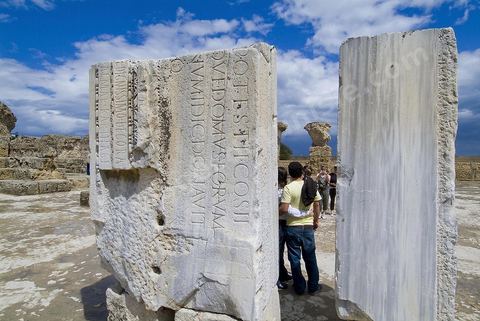
The Antonine Baths of Carthage are the largest Roman bath complex ever built on African soil. Of the original structures, only a few remnants of the ground floor—consisting of service areas located near the Carthaginian waterfront—remain. In fact, the site served as a stone quarry for centuries to build numerous monuments, both in Tunis and in many cities across the northern Mediterranean basin, such as Pisa; its proximity to the shore exacerbated the looting. The ruins extend over a length of more than 200 meters along the shoreline. The anastylosis of a column from the frigidarium by a Tunisian archaeological mission in 1985, as part of the international campaign led by UNESCO (1972–1992), gives a sense of the site’s magnificence at the height of the Roman city’s glory; the lost vaults rose to a height of over 29 meters—roughly the height of an eight-story building.
A02-030 · 2008
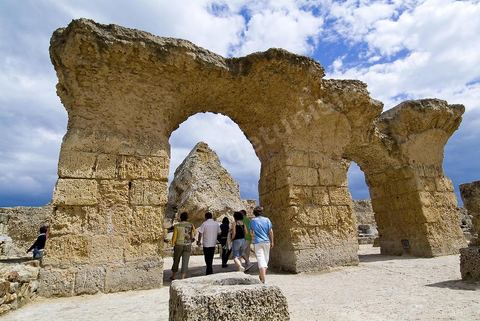
The Antonine Baths of Carthage are the largest Roman bath complex ever built on African soil. Of the original structures, only a few remnants of the ground floor—consisting of service areas located near the Carthaginian waterfront—remain. In fact, the site served as a stone quarry for centuries to build numerous monuments, both in Tunis and in many cities across the northern Mediterranean basin, such as Pisa; its proximity to the shore exacerbated the looting. The ruins extend over a length of more than 200 meters along the shoreline. The anastylosis of a column from the frigidarium by a Tunisian archaeological mission in 1985, as part of the international campaign led by UNESCO (1972–1992), gives a sense of the site’s magnificence at the height of the Roman city’s glory; the lost vaults rose to a height of over 29 meters—roughly the height of an eight-story building.
A02-033 · 2008
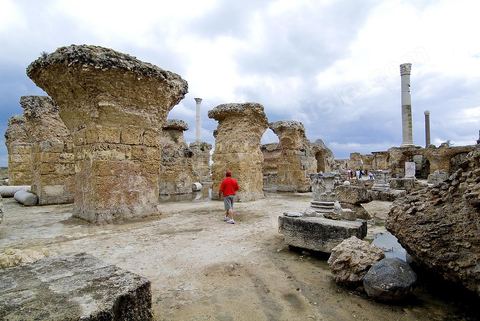
The Antonine Baths of Carthage are the largest Roman bath complex ever built on African soil. Of the original structures, only a few remnants of the ground floor—consisting of service areas located near the Carthaginian waterfront—remain. In fact, the site served as a stone quarry for centuries to build numerous monuments, both in Tunis and in many cities across the northern Mediterranean basin, such as Pisa; its proximity to the shore exacerbated the looting. The ruins extend over a length of more than 200 meters along the shoreline. The anastylosis of a column from the frigidarium by a Tunisian archaeological mission in 1985, as part of the international campaign led by UNESCO (1972–1992), gives a sense of the site’s magnificence at the height of the Roman city’s glory; the lost vaults rose to a height of over 29 meters—roughly the height of an eight-story building.
A02-031 · 2008
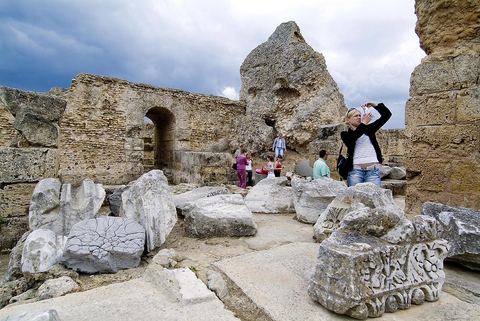
The Antonine Baths of Carthage are the largest Roman bath complex ever built on African soil. Of the original structures, only a few remnants of the ground floor—consisting of service areas located near the Carthaginian waterfront—remain. In fact, the site served as a stone quarry for centuries to build numerous monuments, both in Tunis and in many cities across the northern Mediterranean basin, such as Pisa; its proximity to the shore exacerbated the looting. The ruins extend over a length of more than 200 meters along the shoreline. The anastylosis of a column from the frigidarium by a Tunisian archaeological mission in 1985, as part of the international campaign led by UNESCO (1972–1992), gives a sense of the site’s magnificence at the height of the Roman city’s glory; the lost vaults rose to a height of over 29 meters—roughly the height of an eight-story building.
A02-032 · 2008
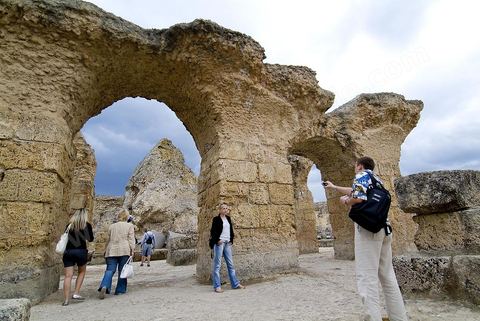
The Antonine Baths of Carthage are the largest Roman bath complex ever built on African soil. Of the original structures, only a few remnants of the ground floor—consisting of service areas located near the Carthaginian waterfront—remain. In fact, the site served as a stone quarry for centuries to build numerous monuments, both in Tunis and in many cities across the northern Mediterranean basin, such as Pisa; its proximity to the shore exacerbated the looting. The ruins extend over a length of more than 200 meters along the shoreline. The anastylosis of a column from the frigidarium by a Tunisian archaeological mission in 1985, as part of the international campaign led by UNESCO (1972–1992), gives a sense of the site’s magnificence at the height of the Roman city’s glory; the lost vaults rose to a height of over 29 meters—roughly the height of an eight-story building.
A02-028 · 2008
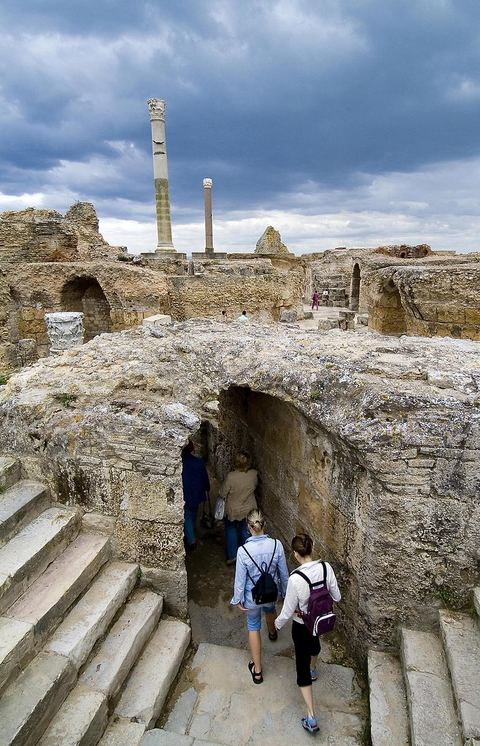
The Antonine Baths of Carthage are the largest Roman bath complex ever built on African soil. Of the original structures, only a few remnants of the ground floor—consisting of service areas located near the Carthaginian waterfront—remain. In fact, the site served as a stone quarry for centuries to build numerous monuments, both in Tunis and in many cities across the northern Mediterranean basin, such as Pisa; its proximity to the shore exacerbated the looting. The ruins extend over a length of more than 200 meters along the shoreline. The anastylosis of a column from the frigidarium by a Tunisian archaeological mission in 1985, as part of the international campaign led by UNESCO (1972–1992), gives a sense of the site’s magnificence at the height of the Roman city’s glory; the lost vaults rose to a height of over 29 meters—roughly the height of an eight-story building.
A02-026 · 2008
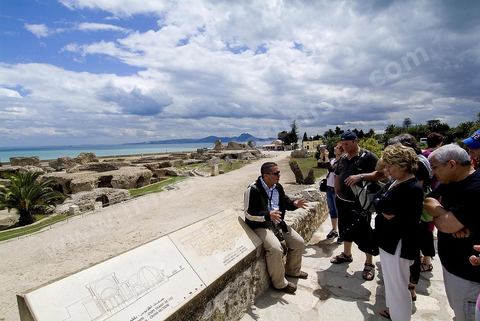
The Antonine Baths of Carthage are the largest Roman bath complex ever built on African soil. Of the original structures, only a few remnants of the ground floor—consisting of service areas located near the Carthaginian waterfront—remain. In fact, the site served as a stone quarry for centuries to build numerous monuments, both in Tunis and in many cities across the northern Mediterranean basin, such as Pisa; its proximity to the shore exacerbated the looting. The ruins extend over a length of more than 200 meters along the shoreline. The anastylosis of a column from the frigidarium by a Tunisian archaeological mission in 1985, as part of the international campaign led by UNESCO (1972–1992), gives a sense of the site’s magnificence at the height of the Roman city’s glory; the lost vaults rose to a height of over 29 meters—roughly the height of an eight-story building.
A02-027 · 2008
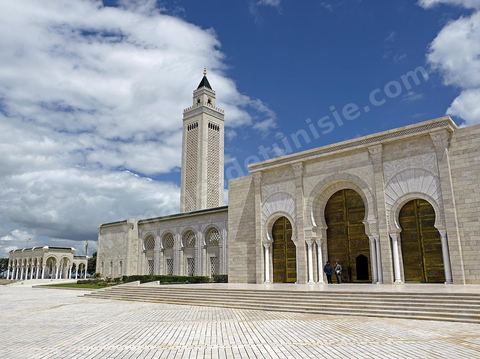
La mosquée El Abidine de Carthage est située au-dessus de la ville de Carthage. Elle est érigée au lieu-dit « La Colline de l'Odéon », au cœur du site archéologique de Carthage. Ouvert en 2003, l'édifice comporte une salle de prière pouvant accueillir 1 000 fidèles, une cour intérieure couvrant 1 500 m2, une esplanade de 2 500 m2 et un minaret d'une base de 9 mètres et haut de 55 mètres.
A02-204 · 2008
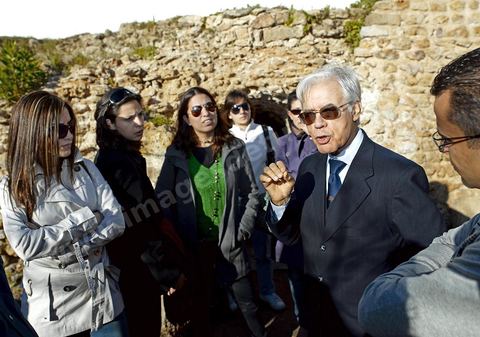
The Tophet is a sacred Punic enclosure where, according to a well-established but now disputed historical account, the Carthaginians are said to have sacrificed their children to the protective deities Tanit and Ba'al Hammon. This garden contains a large number of Punic stelae, many of which bear the symbol of Tanit.
A02-025 · 2008
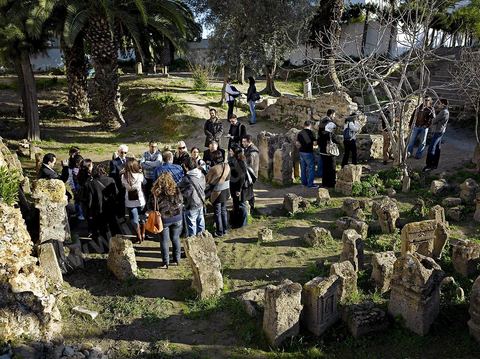
The Tophet is a sacred Punic enclosure where, according to a well-established but now disputed historical account, the Carthaginians are said to have sacrificed their children to the protective deities Tanit and Ba'al Hammon. This garden contains a large number of Punic stelae, many of which bear the symbol of Tanit.
A02-024 · 2008
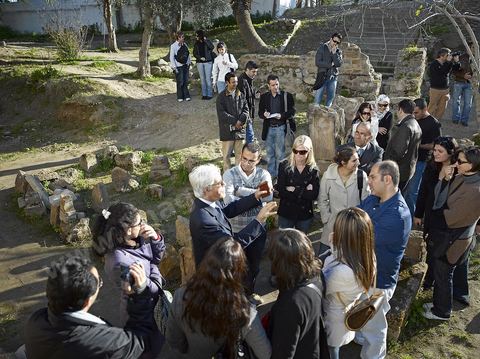
The Tophet is a sacred Punic enclosure where, according to a well-established but now disputed historical account, the Carthaginians are said to have sacrificed their children to the protective deities Tanit and Ba'al Hammon. This garden contains a large number of Punic stelae, many of which bear the symbol of Tanit.
A02-023 · 2008
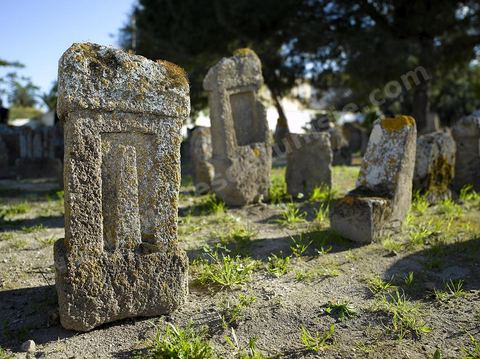
The Tophet is a sacred Punic enclosure where, according to a well-established but now disputed historical account, the Carthaginians are said to have sacrificed their children to the protective deities Tanit and Ba'al Hammon. This garden contains a large number of Punic stelae, many of which bear the symbol of Tanit.
A02-022 · 2008
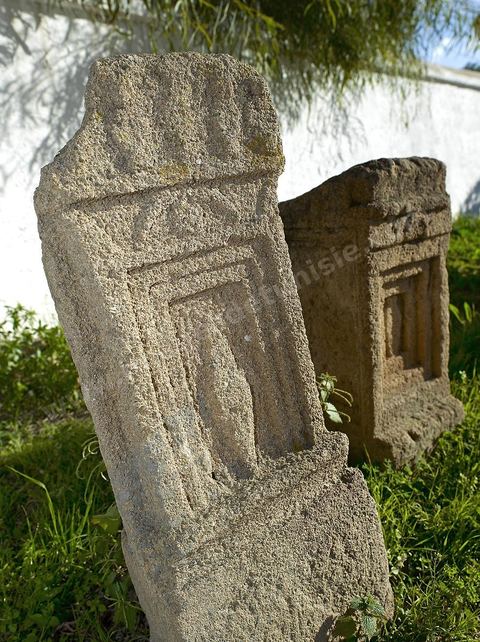
The Tophet is a sacred Punic enclosure where, according to a well-established but now disputed historical account, the Carthaginians are said to have sacrificed their children to the protective deities Tanit and Ba'al Hammon. This garden contains a large number of Punic stelae, many of which bear the symbol of Tanit.
A02-020 · 2008
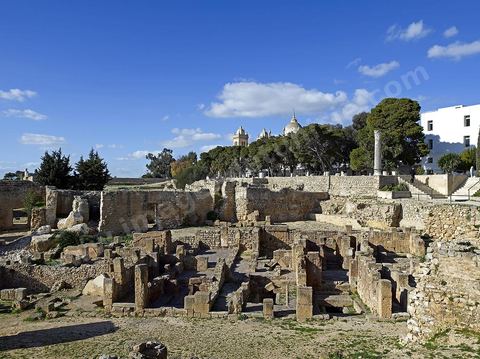
A Punic residential quarter on Byrsa Hill in Carthage. At the summit of Byrsa Hill, the site of the Roman forum, a Punic residential quarter dating from the city’s final century of existence—more precisely, the early 2nd century BCE—has been unearthed. The settlement is typical and even stereotypical, with a room facing the street that could be used as a store, a cistern installed in the basement to collect water for domestic use, and a long corridor on the right-hand side leading to a courtyard with a well, around which a series of small rooms of varying numbers are arranged.
A02-014 · 2008
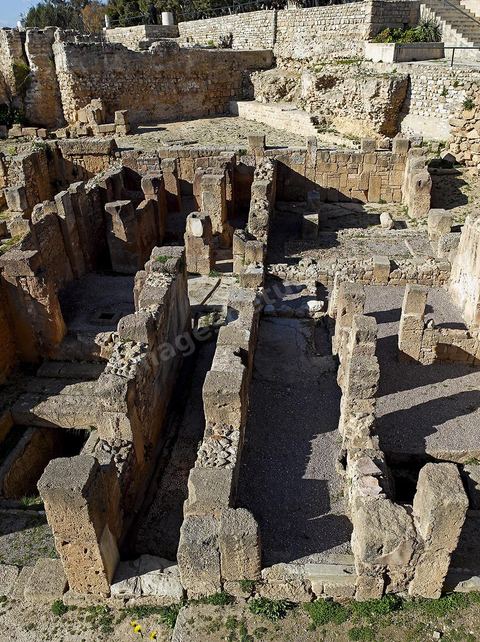
A Punic residential quarter on Byrsa Hill in Carthage. At the summit of Byrsa Hill, the site of the Roman forum, a Punic residential quarter dating from the city’s final century of existence—more precisely, the early 2nd century BCE—has been unearthed. The settlement is typical and even stereotypical, with a room facing the street that could be used as a store, a cistern installed in the basement to collect water for domestic use, and a long corridor on the right-hand side leading to a courtyard with a well, around which a series of small rooms of varying numbers are arranged.
A02-008 · 2008
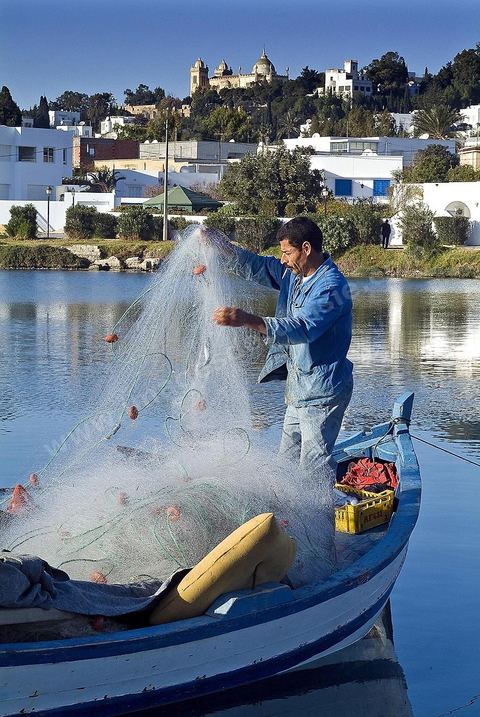
Fishermen in the Punic ports of Carthage
A02-142 · 2008
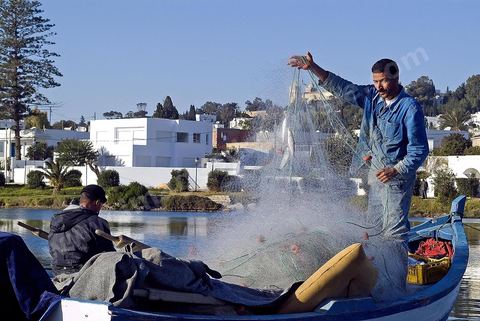
Fishermen in the Punic ports of Carthage
A02-140 · 2008
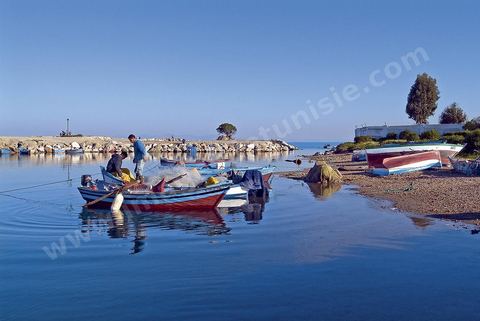
Fishermen in the Punic ports of Carthage
A02-141 · 2008
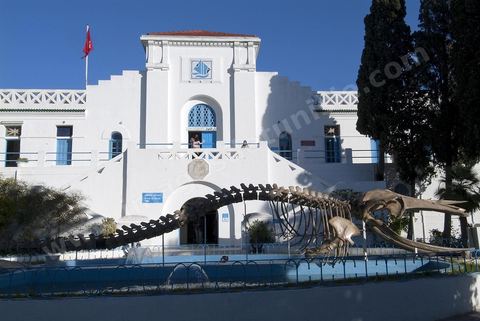
Dar el Hout, Musée océanographique de Carthage au coeur des ports puniques.
A02-147 · 2008
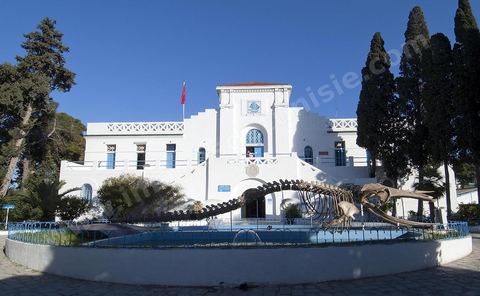
Dar el Hout, Musée océanographique de Carthage au coeur des ports puniques.
A02-148 · 2008
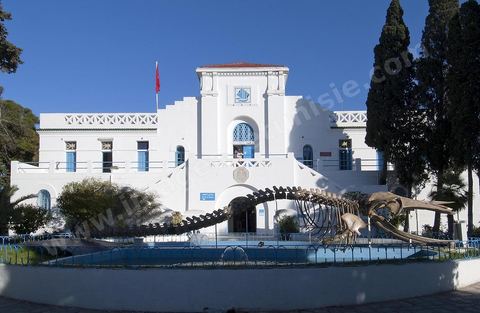
Dar el Hout, Musée océanographique de Carthage au coeur des ports puniques.
A02-149 · 2008
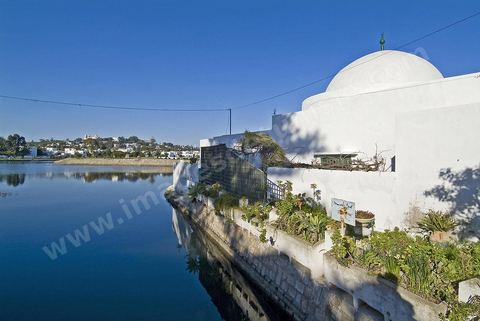
Marabout dans les ports puniques de Carthage
A02-143 · 2008
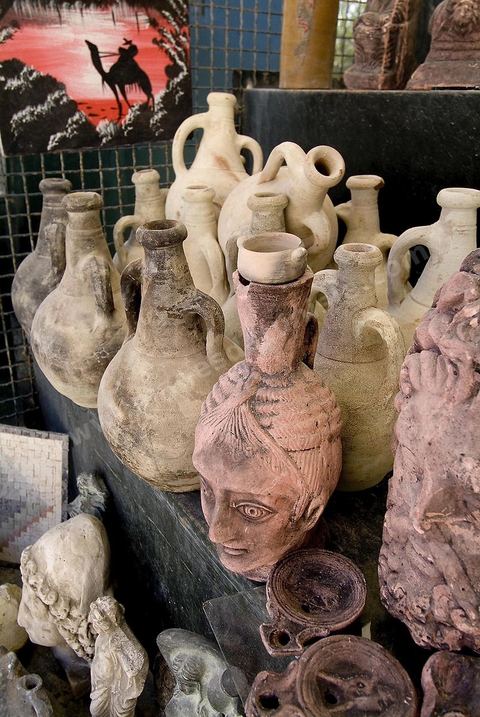
Souvenir vendor in front of the Archaeological Museum of Carthage
A02-304 · 2008
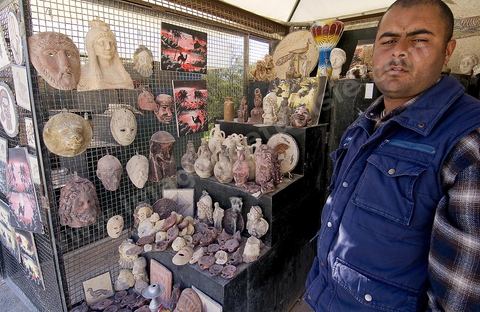
Souvenir vendor in front of the Archaeological Museum of Carthage
A02-303 · 2008
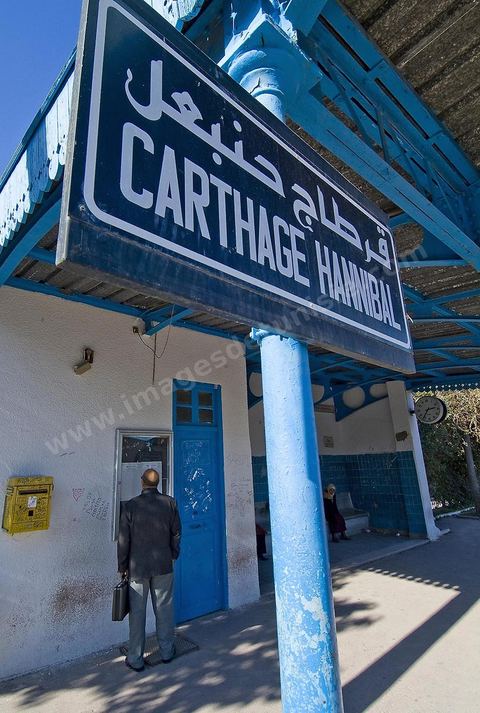
TGM Carthage Hannibal Station in Carthage
A02-302 · 2008
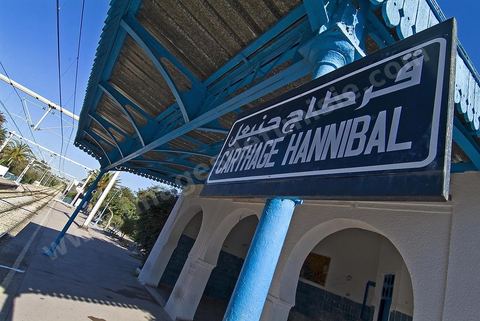
TGM Carthage Hannibal Station in Carthage
A02-300 · 2008
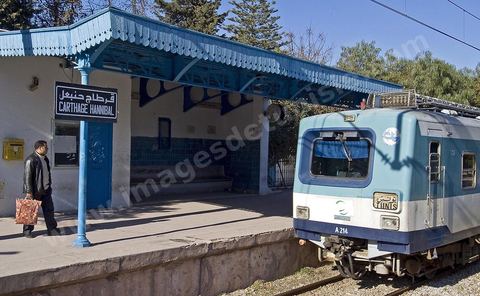
TGM Carthage Hannibal Station in Carthage
A02-301 · 2008
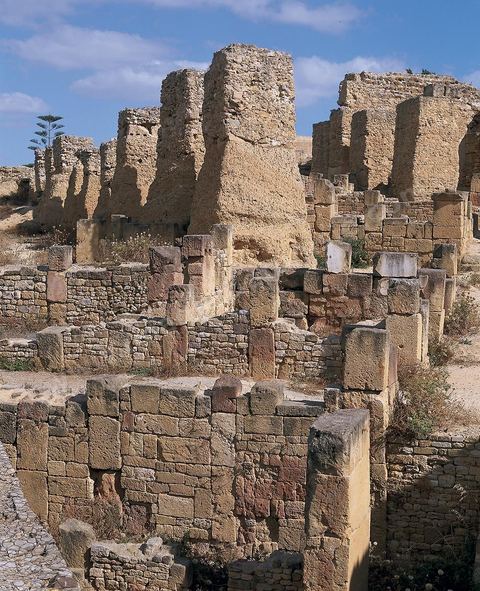
A Punic residential quarter on Byrsa Hill in Carthage. At the summit of Byrsa Hill, the site of the Roman forum, a Punic residential quarter dating from the city’s final century of existence—more precisely, the early 2nd century BCE—has been unearthed. The settlement is typical and even stereotypical, with a room facing the street that could be used as a store, a cistern installed in the basement to collect water for domestic use, and a long corridor on the right-hand side leading to a courtyard with a well, around which a series of small rooms of varying numbers are arranged.
A02-001
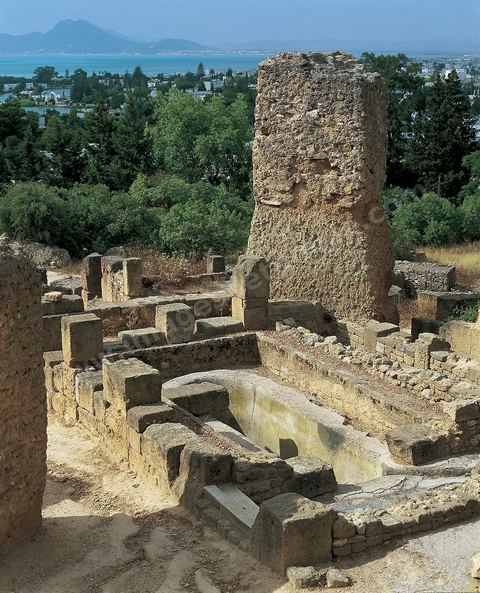
A Punic residential quarter on Byrsa Hill in Carthage. At the summit of Byrsa Hill, the site of the Roman forum, a Punic residential quarter dating from the city’s final century of existence—more precisely, the early 2nd century BCE—has been unearthed. The settlement is typical and even stereotypical, with a room facing the street that could be used as a store, a cistern installed in the basement to collect water for domestic use, and a long corridor on the right-hand side leading to a courtyard with a well, around which a series of small rooms of varying numbers are arranged.
A02-002
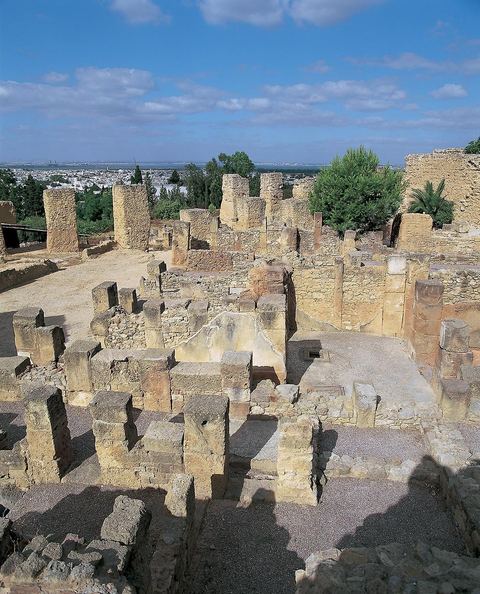
A Punic residential quarter on Byrsa Hill in Carthage. At the summit of Byrsa Hill, the site of the Roman forum, a Punic residential quarter dating from the city’s final century of existence—more precisely, the early 2nd century BCE—has been unearthed. The settlement is typical and even stereotypical, with a room facing the street that could be used as a store, a cistern installed in the basement to collect water for domestic use, and a long corridor on the right-hand side leading to a courtyard with a well, around which a series of small rooms of varying numbers are arranged.
A02-003
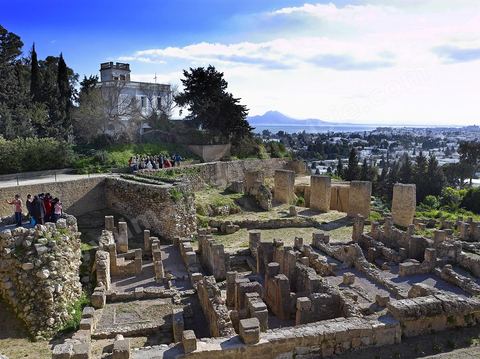
A Punic residential quarter on Byrsa Hill in Carthage. At the summit of Byrsa Hill, the site of the Roman forum, a Punic residential quarter dating from the city’s final century of existence—more precisely, the early 2nd century BCE—has been unearthed. The settlement is typical and even stereotypical, with a room facing the street that could be used as a store, a cistern installed in the basement to collect water for domestic use, and a long corridor on the right-hand side leading to a courtyard with a well, around which a series of small rooms of varying numbers are arranged.
A02-004
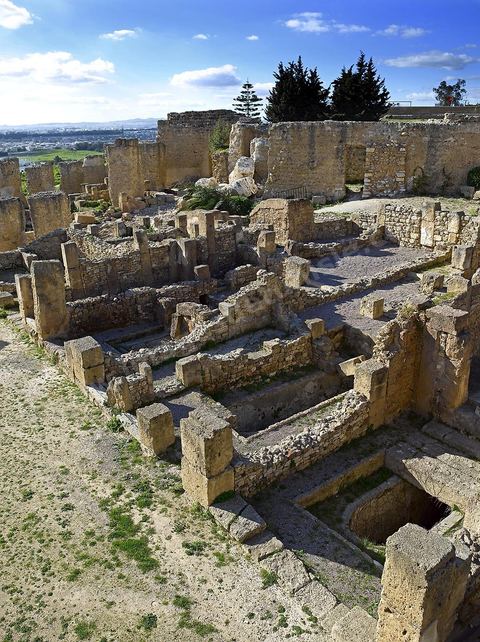
A Punic residential quarter on Byrsa Hill in Carthage. At the summit of Byrsa Hill, the site of the Roman forum, a Punic residential quarter dating from the city’s final century of existence—more precisely, the early 2nd century BCE—has been unearthed. The settlement is typical and even stereotypical, with a room facing the street that could be used as a store, a cistern installed in the basement to collect water for domestic use, and a long corridor on the right-hand side leading to a courtyard with a well, around which a series of small rooms of varying numbers are arranged.
A02-009
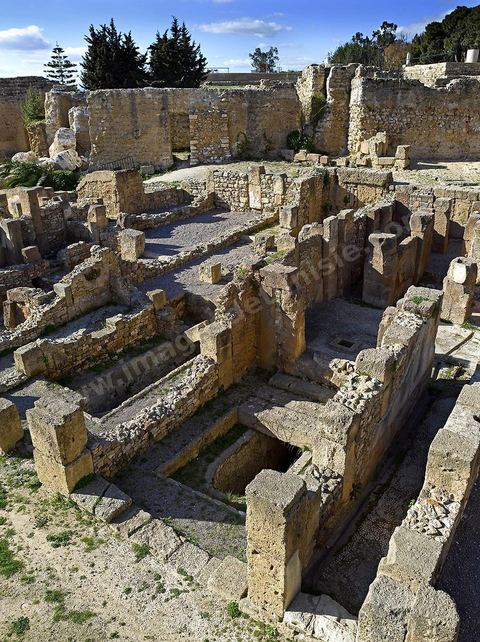
A Punic residential quarter on Byrsa Hill in Carthage. At the summit of Byrsa Hill, the site of the Roman forum, a Punic residential quarter dating from the city’s final century of existence—more precisely, the early 2nd century BCE—has been unearthed. The settlement is typical and even stereotypical, with a room facing the street that could be used as a store, a cistern installed in the basement to collect water for domestic use, and a long corridor on the right-hand side leading to a courtyard with a well, around which a series of small rooms of varying numbers are arranged.
A02-010