El Djem
1–150 of 190 · page 3/4
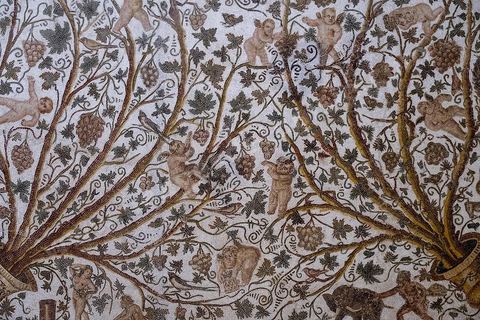
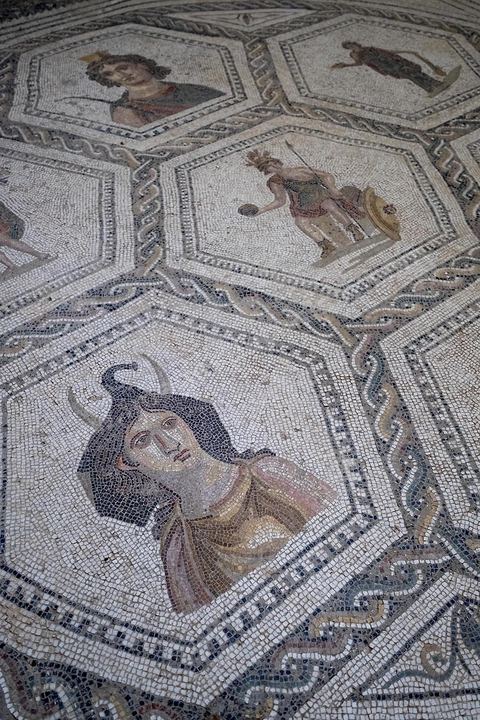
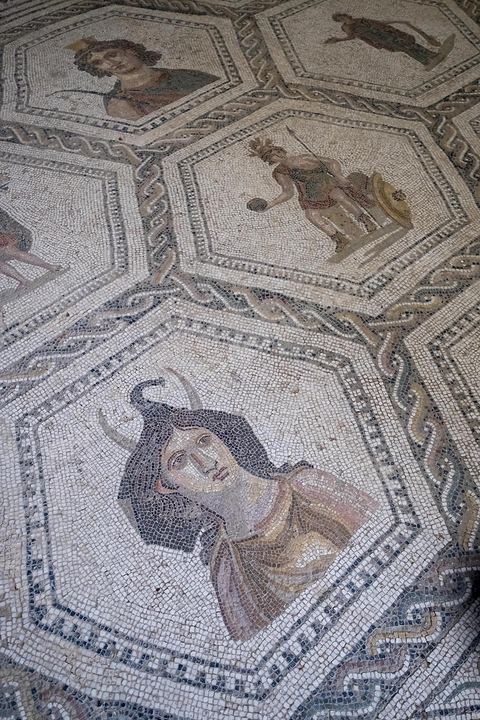
Détails de la mosaïque de Silène, seconde moitié du IIIème siècle après JC. Le musée archéologique de El Djem, cité antique de Thysdrus, a été aménagé à l’emplacement d’une villa romaine dont il restitue l’organisation spatiale : une cour centrale entourée d’un péristyle – préau – qui donne accès aux chambres. Là, sont exposés des objets – sculptures, tableaux en mosaïque, céramique, etc. – provenant de campagnes de fouilles menées à Thysdrus aussi bien que dans les environs de la cité.
El_Djem_12 · 2018
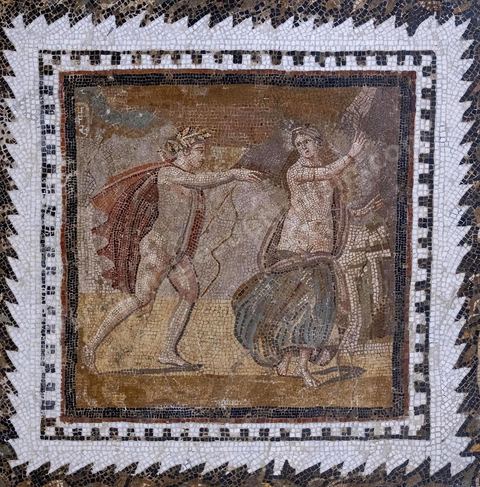
Details of the “Amours of Apollo” mosaic, late 2nd century AD. The Archaeological Museum of El Djem, in the ancient city of Thysdrus, was established on the site of a Roman villa, whose spatial layout it recreates: a central courtyard surrounded by a peristyle—an open-air portico—that provides access to the rooms. On display there are artifacts—sculptures, mosaic panels, ceramics, and more—from excavations conducted in Thysdrus as well as in the surrounding area.
El_Djem_13 · 2018
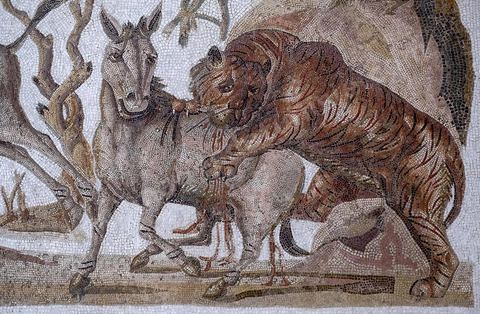
Detail of a mosaic depicting a tiger attacking an onager, mid-2nd century AD. The Archaeological Museum of El Djem, in the ancient city of Thysdrus, was established on the site of a Roman villa, whose spatial layout it recreates: a central courtyard surrounded by a peristyle—an open-air portico—that provides access to the rooms. On display there are artifacts—sculptures, mosaic panels, ceramics, etc.—from excavations conducted in Thysdrus as well as in the surrounding area.
El_Djem_14 · 2018
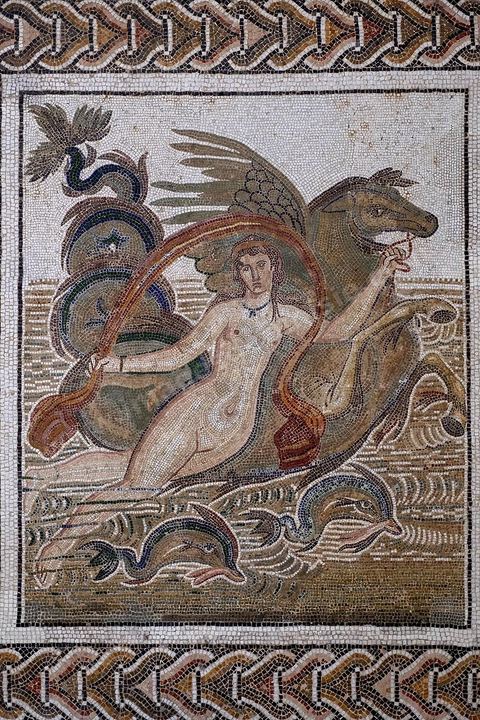
Mosaic depicting a Nereid on a seahorse, late 2nd century AD. The archaeological museum of El Djem, the ancient city of Thysdrus, was established on the site of a Roman villa, whose spatial layout it recreates: a central courtyard surrounded by a peristyle—an open-air portico—that provides access to the rooms. On display there are artifacts—sculptures, mosaic panels, ceramics, and more—from excavations conducted in Thysdrus as well as in the surrounding area.
El_Djem_15 · 2018
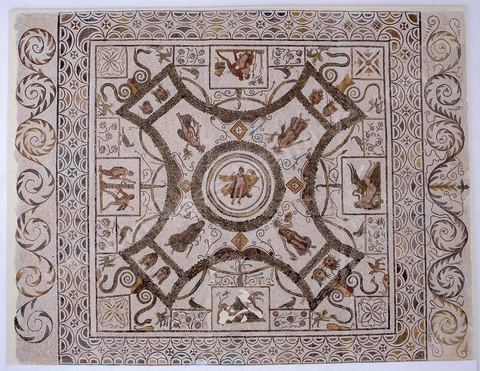
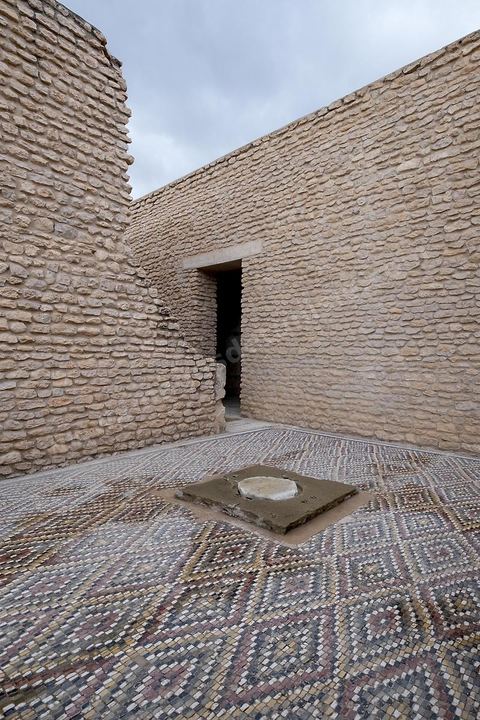
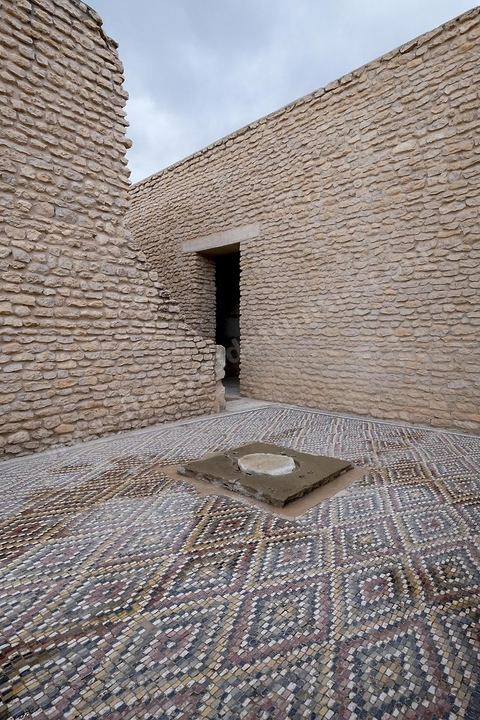
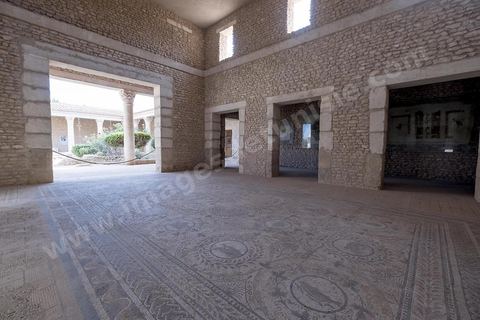
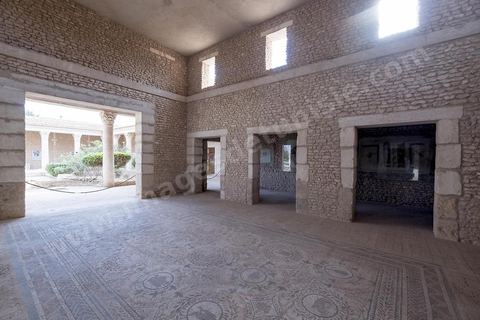
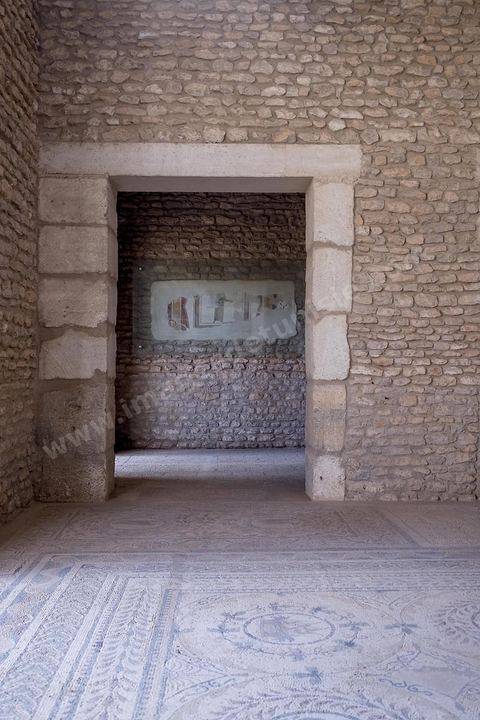
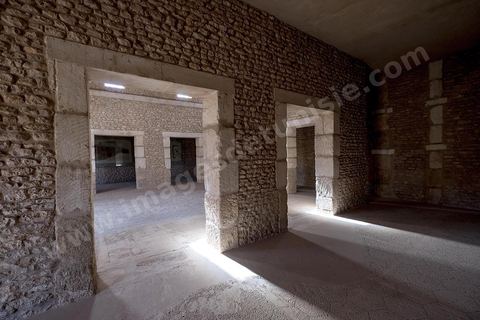
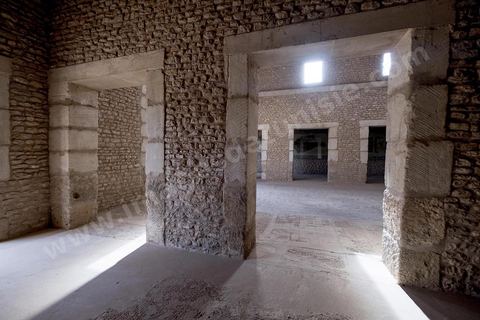
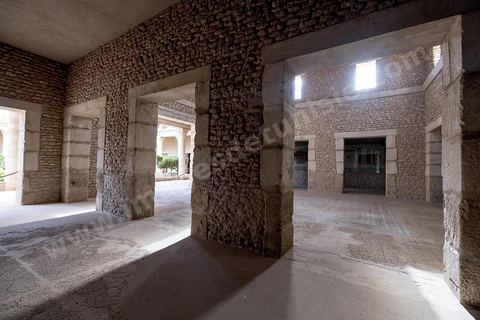
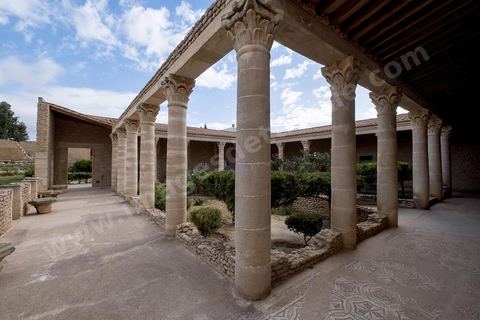
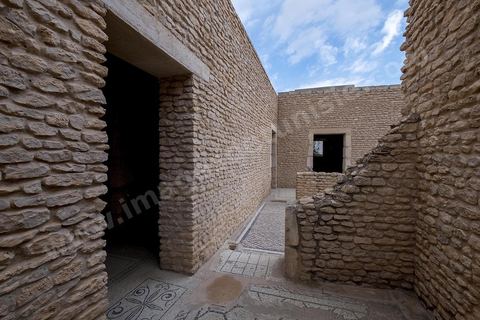
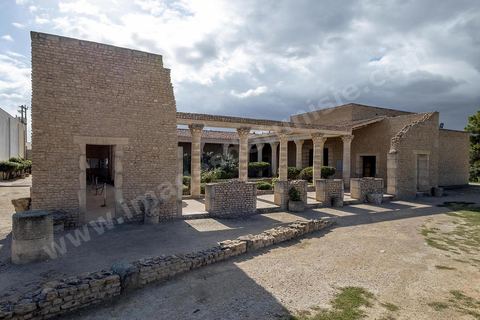
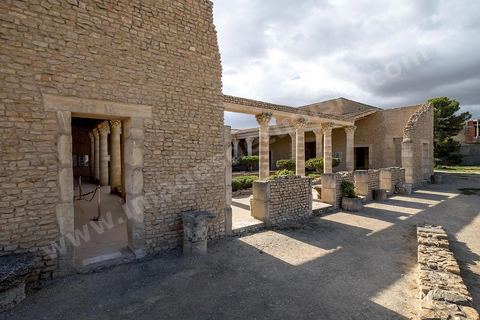
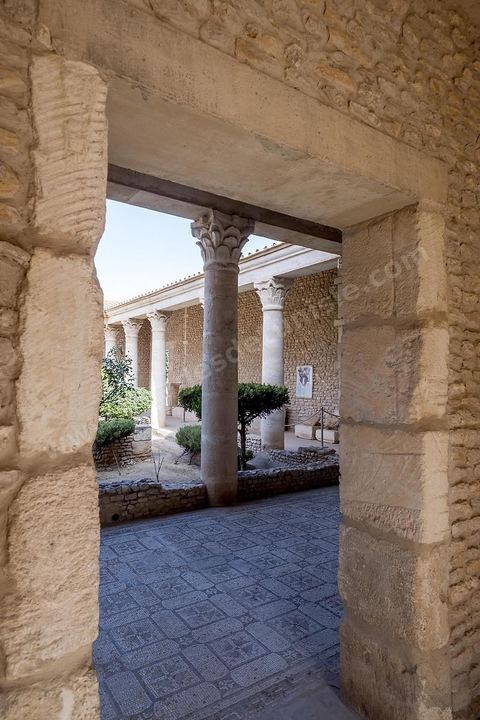
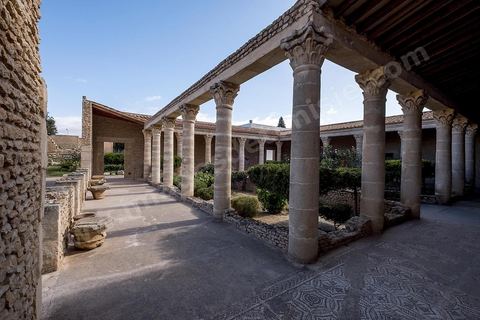
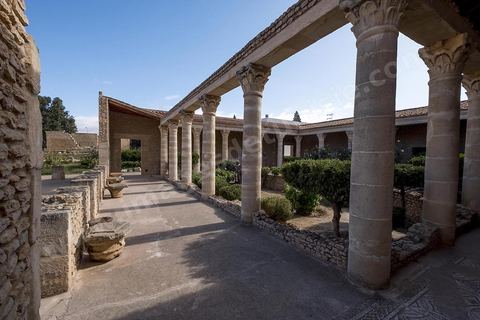
The Archaeological Museum of El Djem, the ancient city of Thysdrus, was built on the site of a Roman villa, whose spatial layout it recreates: a central courtyard surrounded by a peristyle—an open-air portico—that provides access to the rooms. On display there are artifacts—sculptures, mosaics, ceramics, and more—from excavations conducted in Thysdrus as well as in the surrounding area.
El_Djem_16 · 2018
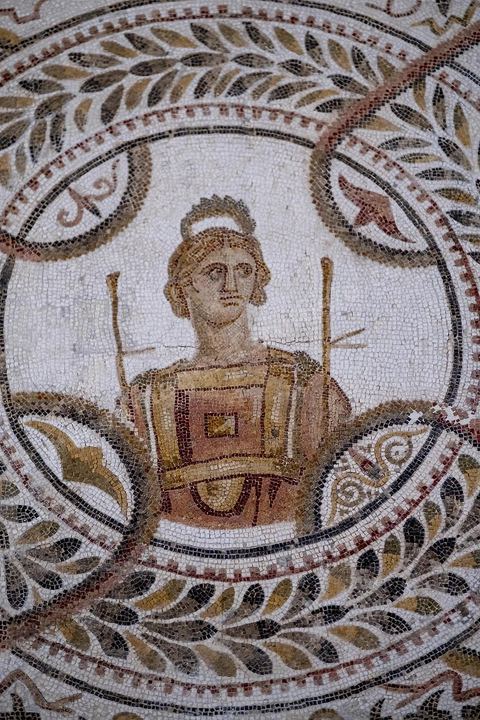
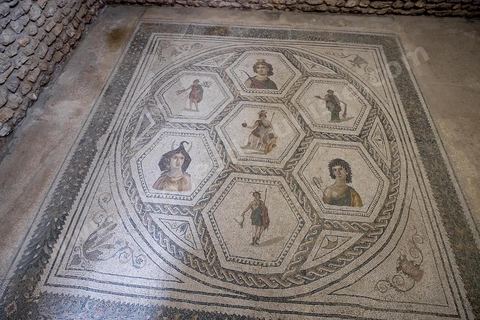
Details of the mosaic depicting the nine muses surrounded by laurel wreaths, late 3rd century AD. The Archaeological Museum of El Djem, in the ancient city of Thysdrus, was established on the site of a Roman villa, whose spatial layout it recreates: a central courtyard surrounded by a peristyle—an open-air portico—that provides access to the rooms. On display there are artifacts—sculptures, mosaic panels, ceramics, etc.—from excavations conducted in Thysdrus as well as in the surrounding area.
El_Djem_17 · 2018
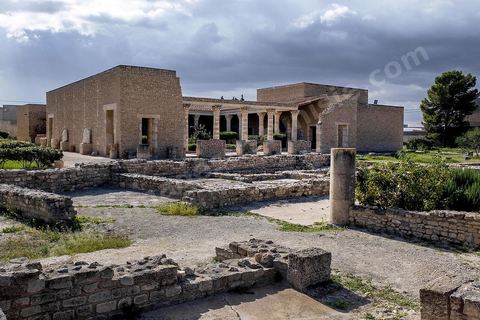
At the heart of the archaeological museum in El Djem, the ancient city of Thysdrus, a full-scale reconstruction of “the House of Africa” has been completed. This sumptuous aristocratic residence was built around 170 A.D. It was discovered by chance in the 1990s and takes its name from two mosaic panels whose central medallions depict, respectively, the goddess Africa and the province of Africa—the only known representations of the African continent.
El_Djem_20 · 2018
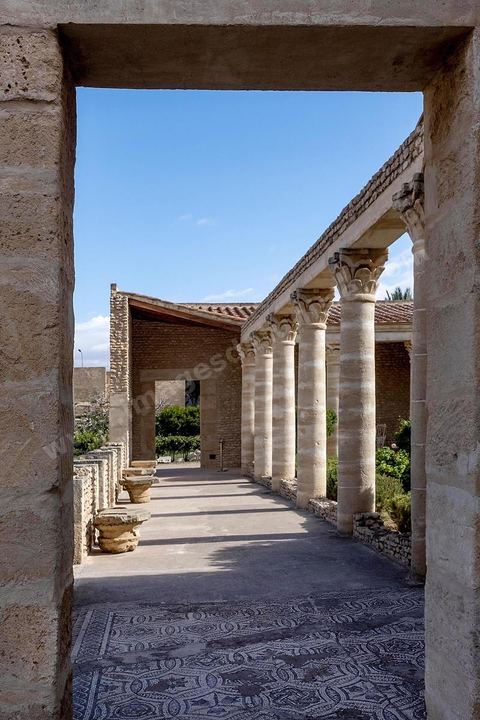
At the heart of the archaeological museum in El Djem, the ancient city of Thysdrus, a full-scale reconstruction of “the House of Africa” has been completed. This sumptuous aristocratic residence was built around 170 A.D. It was discovered by chance in the 1990s and takes its name from two mosaic panels whose central medallions depict, respectively, the goddess Africa and the province of Africa—the only known representations of the African continent.
El_Djem_21 · 2018
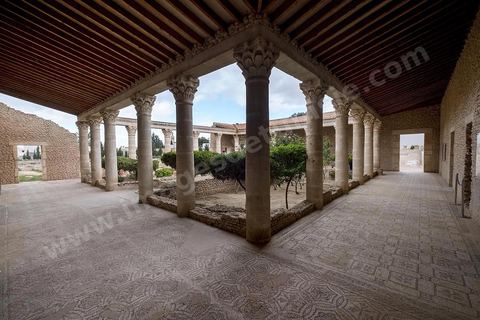
At the heart of the archaeological museum in El Djem, the ancient city of Thysdrus, a full-scale reconstruction of “the House of Africa” has been completed. This sumptuous aristocratic residence was built around 170 A.D. It was discovered by chance in the 1990s and takes its name from two mosaic panels whose central medallions depict, respectively, the goddess Africa and the province of Africa—the only known representations of the African continent.
El_Djem_22 · 2018
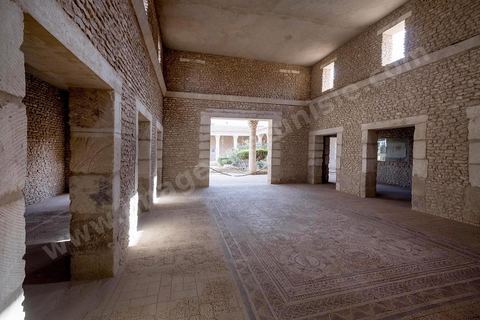
At the heart of the archaeological museum in El Djem, the ancient city of Thysdrus, a full-scale reconstruction of “the House of Africa” has been completed. This sumptuous aristocratic residence was built around 170 A.D. It was discovered by chance in the 1990s and takes its name from two mosaic panels whose central medallions depict, respectively, the goddess Africa and the province of Africa—the only known representations of the African continent.
El_Djem_23 · 2018
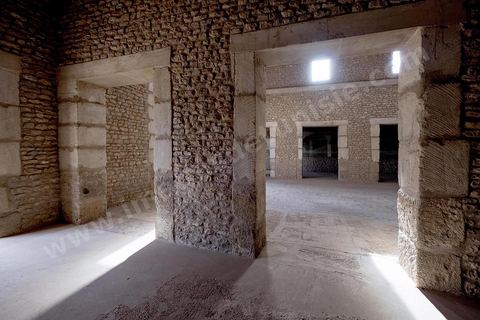
At the heart of the archaeological museum in El Djem, the ancient city of Thysdrus, a full-scale reconstruction of “the House of Africa” has been completed. This sumptuous aristocratic residence was built around 170 A.D. It was discovered by chance in the 1990s and takes its name from two mosaic panels whose central medallions depict, respectively, the goddess Africa and the province of Africa—the only known representations of the African continent.
El_Djem_24 · 2018
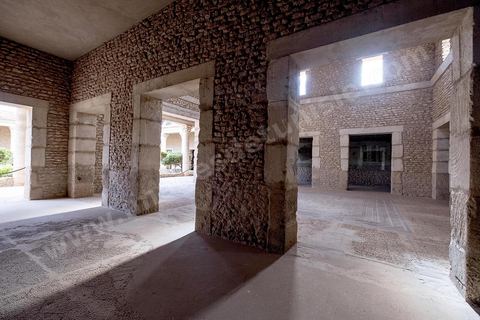
At the heart of the archaeological museum in El Djem, the ancient city of Thysdrus, a full-scale reconstruction of “the House of Africa” has been completed. This sumptuous aristocratic residence was built around 170 A.D. It was discovered by chance in the 1990s and takes its name from two mosaic panels whose central medallions depict, respectively, the goddess Africa and the province of Africa—the only known representations of the African continent.
El_Djem_25 · 2018
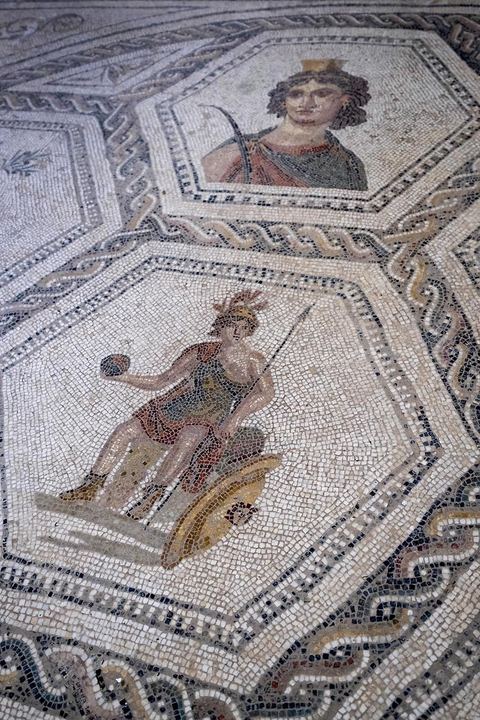
Details of the mosaic depicting Rome and its Provinces, mid-2nd century AD. In the heart of the Archaeological Museum of El Djem, the ancient city of Thysdrus, a full-scale reconstruction of “the House of Africa” has been created. This sumptuous aristocratic residence was built around 170 AD It was discovered by chance in the 1990s and takes its name from two mosaic panels, each featuring in its central medallion—one the goddess Africa, the other the province of Africa—the only known depictions of the African continent.
El_Djem_26 · 2018
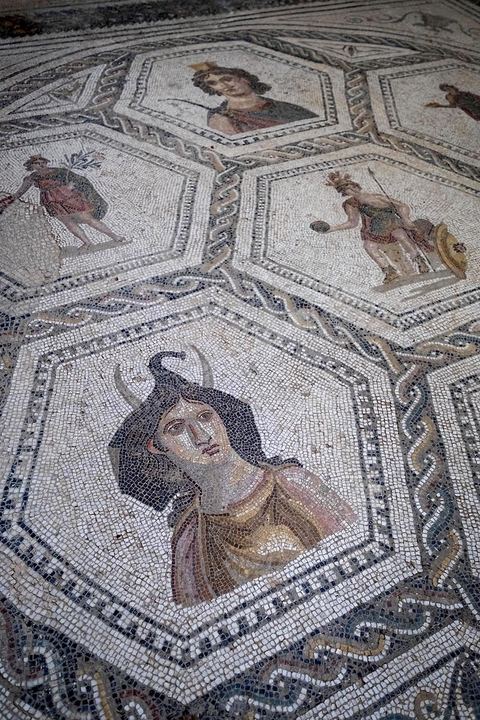
Details of the mosaic depicting Rome and its Provinces, mid-2nd century AD. In the heart of the Archaeological Museum of El Djem, the ancient city of Thysdrus, a full-scale reconstruction of “the House of Africa” has been created. This sumptuous aristocratic residence was built around 170 AD It was discovered by chance in the 1990s and takes its name from two mosaic panels, each featuring in its central medallion—one the goddess Africa, the other the province of Africa—the only known depictions of the African continent.
El_Djem_27 · 2018
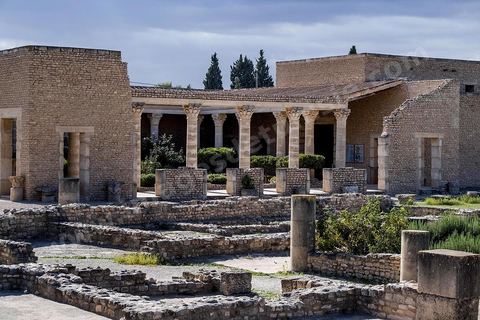
At the heart of the archaeological museum in El Djem, the ancient city of Thysdrus, a full-scale reconstruction of “the House of Africa” has been completed. This sumptuous aristocratic residence was built around 170 A.D. It was discovered by chance in the 1990s and takes its name from two mosaic panels whose central medallions depict, respectively, the goddess Africa and the province of Africa—the only known representations of the African continent.
El_Djem_28 · 2018
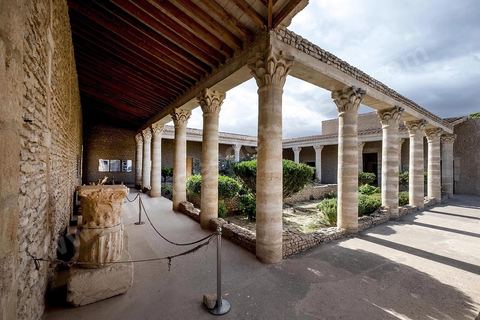
At the heart of the archaeological museum in El Djem, the ancient city of Thysdrus, a full-scale reconstruction of “the House of Africa” has been completed. This sumptuous aristocratic residence was built around 170 A.D. It was discovered by chance in the 1990s and takes its name from two mosaic panels whose central medallions depict, respectively, the goddess Africa and the province of Africa—the only known representations of the African continent.
El_Djem_29 · 2018
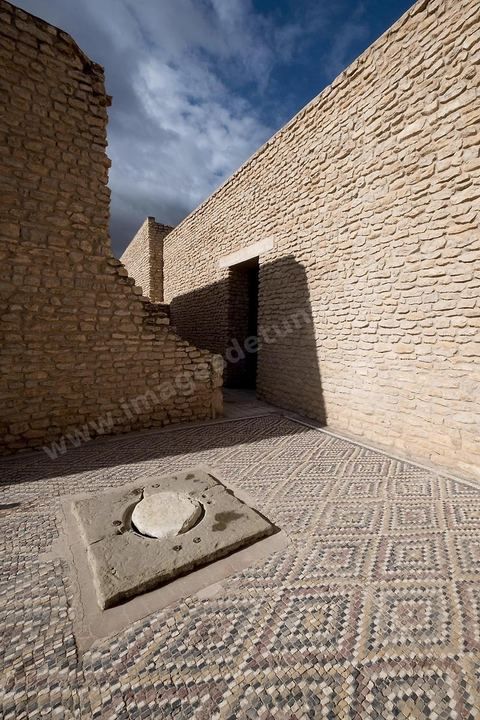
At the heart of the archaeological museum in El Djem, the ancient city of Thysdrus, a full-scale reconstruction of “the House of Africa” has been completed. This sumptuous aristocratic residence was built around 170 A.D. It was discovered by chance in the 1990s and takes its name from two mosaic panels whose central medallions depict, respectively, the goddess Africa and the province of Africa—the only known representations of the African continent.
El_Djem_30 · 2018
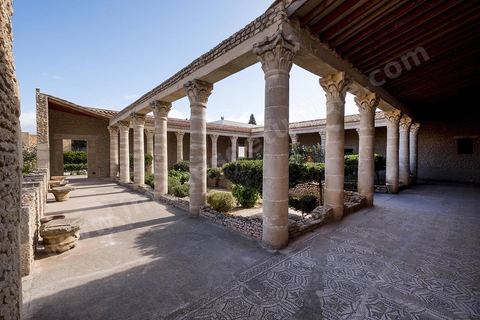
At the heart of the archaeological museum in El Djem, the ancient city of Thysdrus, a full-scale reconstruction of “the House of Africa” has been completed. This sumptuous aristocratic residence was built around 170 A.D. It was discovered by chance in the 1990s and takes its name from two mosaic panels whose central medallions depict, respectively, the goddess Africa and the province of Africa—the only known representations of the African continent.
El_Djem_31 · 2018
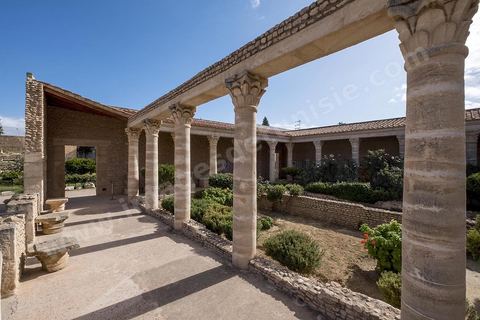
At the heart of the archaeological museum in El Djem, the ancient city of Thysdrus, a full-scale reconstruction of “the House of Africa” has been completed. This sumptuous aristocratic residence was built around 170 A.D. It was discovered by chance in the 1990s and takes its name from two mosaic panels whose central medallions depict, respectively, the goddess Africa and the province of Africa—the only known representations of the African continent.
El_Djem_32 · 2018
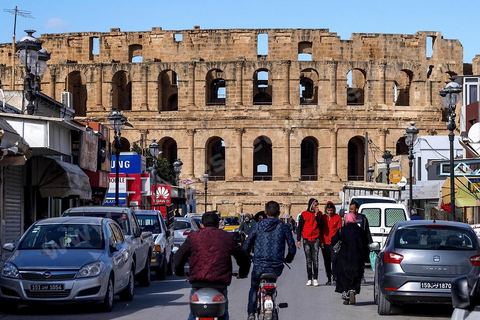
The Roman Amphitheater of El Djem. It is by far the most imposing Roman monument in North Africa; its round, massive silhouette rises from a flat, desert plain, making it visible from a great distance. Almost elliptical in shape, the monument measures 149 m long by 124 m wide and 36 m high. The seating tiers, which have since disappeared and have been partially reconstructed, could accommodate up to 30,000 spectators.
El_Djem_40 · 2018
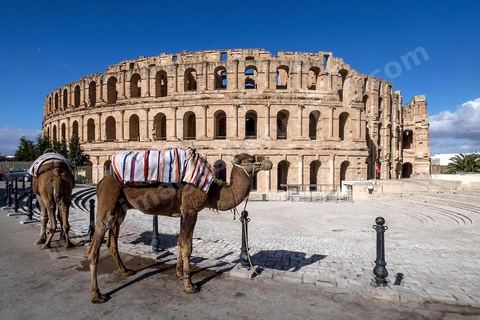
The Roman Amphitheater of El Djem. It is by far the most imposing Roman monument in North Africa; its round, massive silhouette rises from a flat, desert plain, making it visible from a great distance. Almost elliptical in shape, the monument measures 149 m long by 124 m wide and 36 m high. The seating tiers, which have since disappeared and have been partially reconstructed, could accommodate up to 30,000 spectators.
El_Djem_41 · 2018
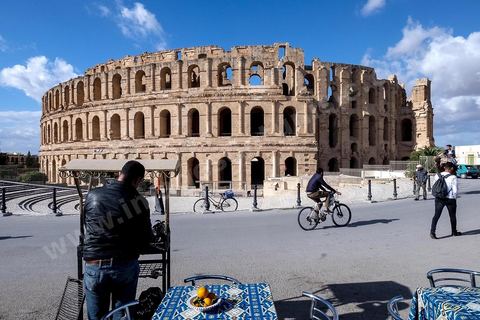
The Roman Amphitheater of El Djem. It is by far the most imposing Roman monument in North Africa; its round, massive silhouette rises from a flat, desert plain, making it visible from a great distance. Almost elliptical in shape, the monument measures 149 m long by 124 m wide and 36 m high. The seating tiers, which have since disappeared and have been partially reconstructed, could accommodate up to 30,000 spectators.
El_Djem_42 · 2018
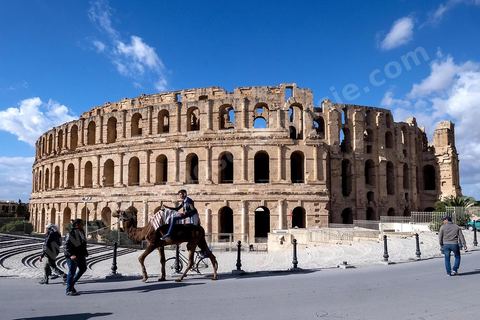
The Roman Amphitheater of El Djem. It is by far the most imposing Roman monument in North Africa; its round, massive silhouette rises from a flat, desert plain, making it visible from a great distance. Almost elliptical in shape, the monument measures 149 m long by 124 m wide and 36 m high. The seating tiers, which have since disappeared and have been partially reconstructed, could accommodate up to 30,000 spectators.
El_Djem_43 · 2018
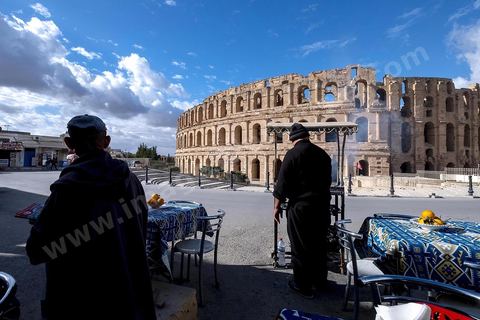
The Roman Amphitheater of El Djem. It is by far the most imposing Roman monument in North Africa; its round, massive silhouette rises from a flat, desert plain, making it visible from a great distance. Almost elliptical in shape, the monument measures 149 m long by 124 m wide and 36 m high. The seating tiers, which have since disappeared and have been partially reconstructed, could accommodate up to 30,000 spectators.
El_Djem_44 · 2018
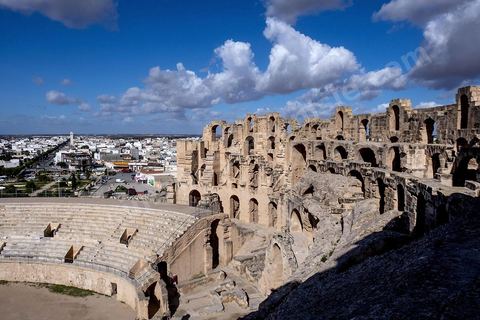
The Roman Amphitheater of El Djem. It is by far the most imposing Roman monument in North Africa; its round, massive silhouette rises from a flat, desert plain, making it visible from a great distance. Almost elliptical in shape, the monument measures 149 m long by 124 m wide and 36 m high. The seating tiers, which have since disappeared and have been partially reconstructed, could accommodate up to 30,000 spectators.
El_Djem_45 · 2018
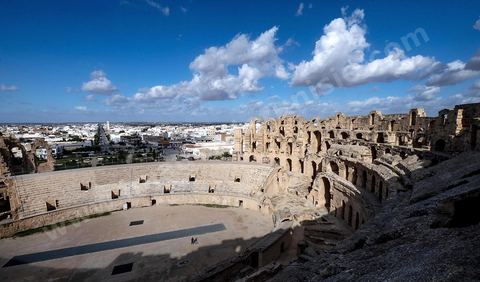
The Roman Amphitheater of El Djem. It is by far the most imposing Roman monument in North Africa; its round, massive silhouette rises from a flat, desert plain, making it visible from a great distance. Almost elliptical in shape, the monument measures 149 m long by 124 m wide and 36 m high. The seating tiers, which have since disappeared and have been partially reconstructed, could accommodate up to 30,000 spectators.
El_Djem_46 · 2018
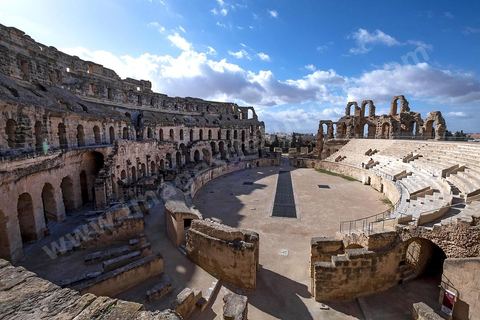
The Roman Amphitheater of El Djem. It is by far the most imposing Roman monument in North Africa; its round, massive silhouette rises from a flat, desert plain, making it visible from a great distance. Almost elliptical in shape, the monument measures 149 m long by 124 m wide and 36 m high. The seating tiers, which have since disappeared and have been partially reconstructed, could accommodate up to 30,000 spectators.
El_Djem_47 · 2018
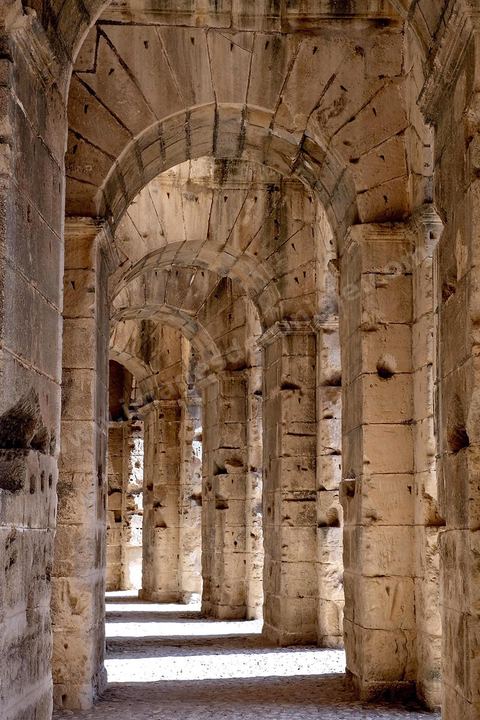
The Roman Amphitheater of El Djem. It is by far the most imposing Roman monument in North Africa; its round, massive silhouette rises from a flat, desert plain, making it visible from a great distance. Almost elliptical in shape, the monument measures 149 m long by 124 m wide and 36 m high. The seating tiers, which have since disappeared and have been partially reconstructed, could accommodate up to 30,000 spectators.
El_Djem_48 · 2018
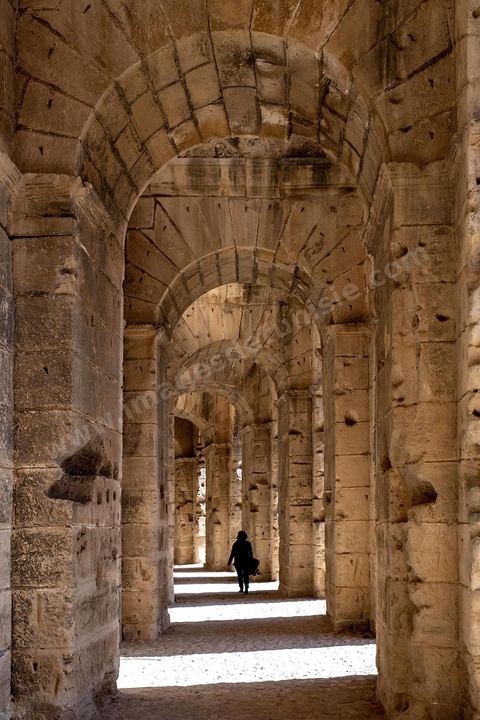
The Roman Amphitheater of El Djem. It is by far the most imposing Roman monument in North Africa; its round, massive silhouette rises from a flat, desert plain, making it visible from a great distance. Almost elliptical in shape, the monument measures 149 m long by 124 m wide and 36 m high. The seating tiers, which have since disappeared and have been partially reconstructed, could accommodate up to 30,000 spectators.
El_Djem_49 · 2018
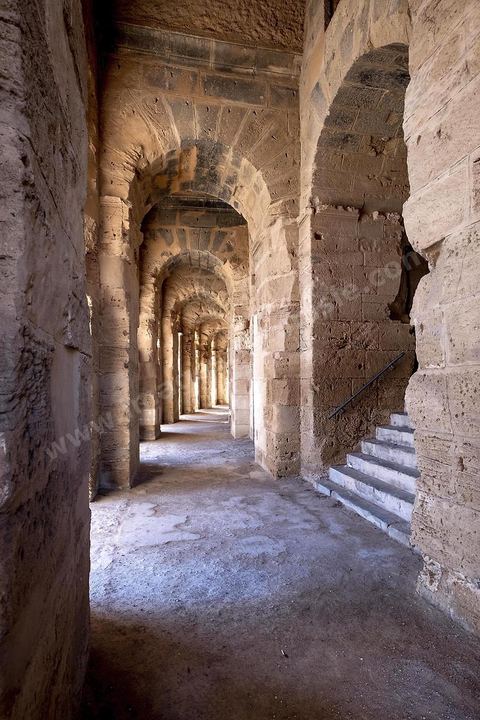
The Roman Amphitheater of El Djem. It is by far the most imposing Roman monument in North Africa; its round, massive silhouette rises from a flat, desert plain, making it visible from a great distance. Almost elliptical in shape, the monument measures 149 m long by 124 m wide and 36 m high. The seating tiers, which have since disappeared and have been partially reconstructed, could accommodate up to 30,000 spectators.
El_Djem_50 · 2018
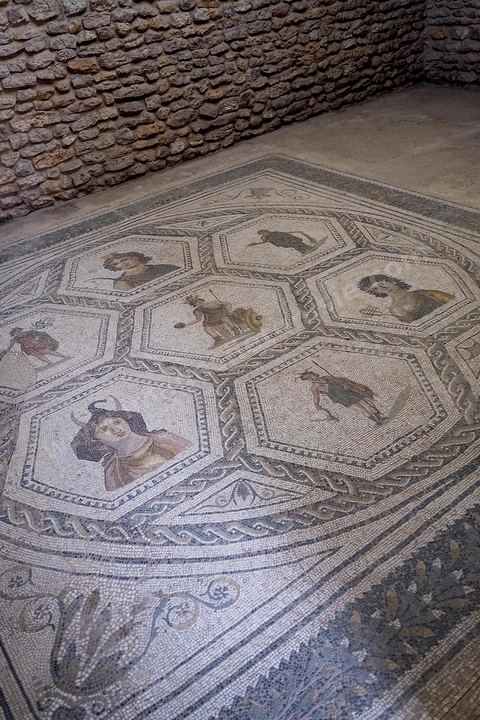
XPR21440
XPR21440 · 2018
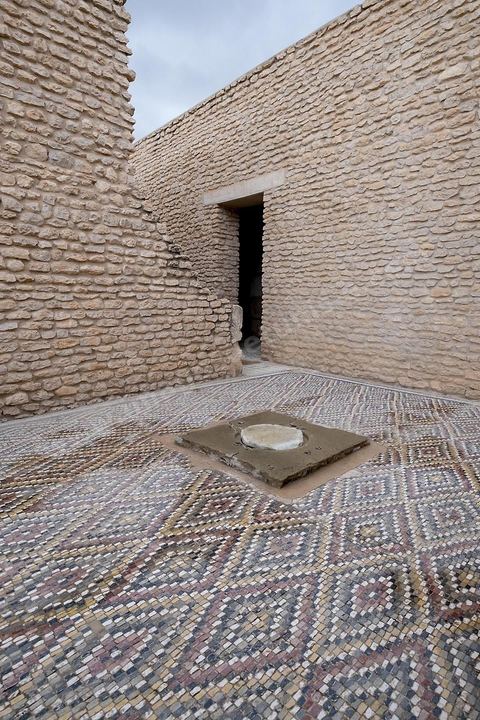
XPR21471
XPR21471 · 2018
XPR21492
XPR21492 · 2018
XPR21503
XPR21503 · 2018
XPR21548
XPR21548 · 2018
XPR21560
XPR21560 · 2018
XPR21577
XPR21577 · 2018
XPR21583
XPR21583 · 2018
XPR21600
XPR21600 · 2018
XPR21614
XPR21614 · 2018
XPR21644
XPR21644 · 2018
XPR21690
XPR21690 · 2018
XPR21712
XPR21712 · 2018
XPR21737
XPR21737 · 2018
XPR21747
XPR21747 · 2018
XPR21758
XPR21758 · 2018
XPR21761
XPR21761 · 2018
XPR21779
XPR21779 · 2018
XPR21788
XPR21788 · 2018
XPR21791
XPR21791 · 2018