L02-100 Liberation Caravan in Tunis, Day 1 - 230111
1–44 of 44
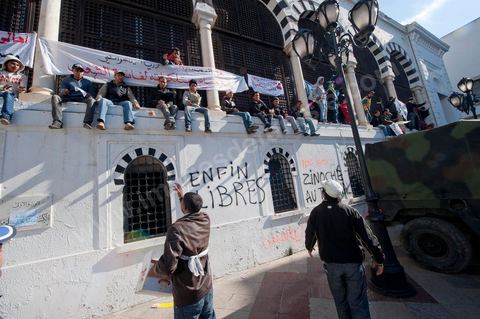
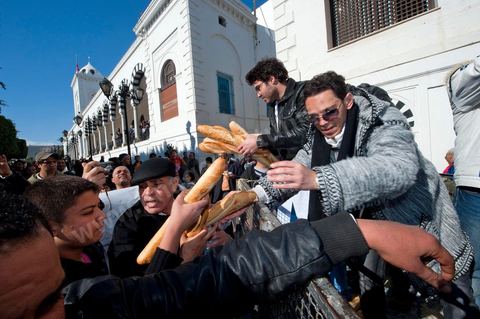
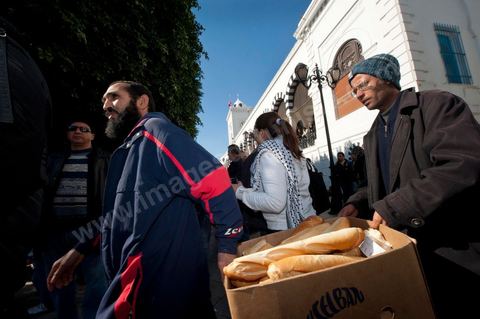
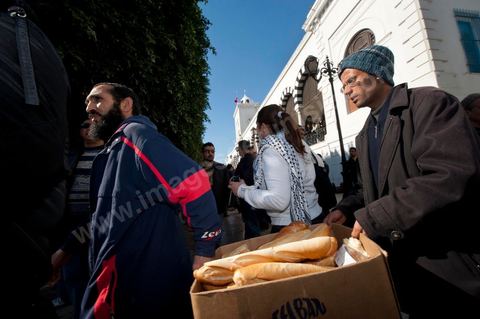
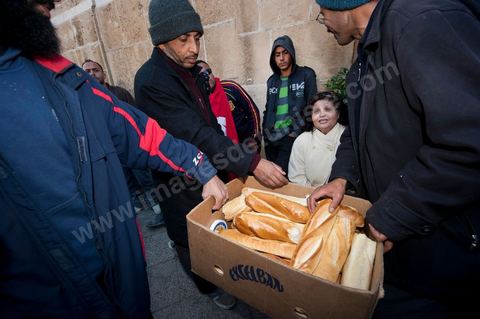
January 23: The “Caravan of Liberation” arrives in Tunis. Nearly a thousand protesters from the regions of Sidi Bouzid and Kasserine have come to “bring down the government.” After spending the night on the roads of Tunisia, these men, women, and children—the driving force behind this revolution—gathered in front of the Prime Minister’s Office to demand the government’s resignation. They were supported by the people of Tunis, who brought them food and listened to the stories of these martyrs of the Revolution.
L02-100 · 2011
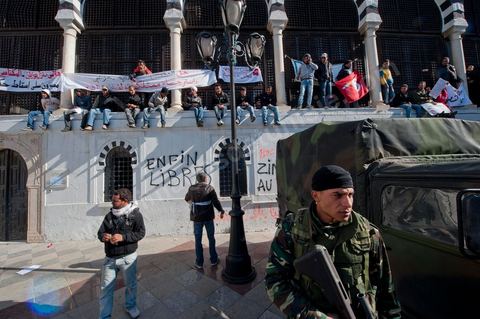
January 23: The “Caravan of Liberation” arrives in Tunis. Nearly a thousand protesters from the regions of Sidi Bouzid and Kasserine have come to “bring down the government.” After spending the night on the roads of Tunisia, these men, women, and children—the driving force behind this revolution—gathered in front of the Prime Minister’s Office to demand the government’s resignation. They were supported by the people of Tunis, who brought them food and listened to the stories of these martyrs of the Revolution.
L02-101 · 2011
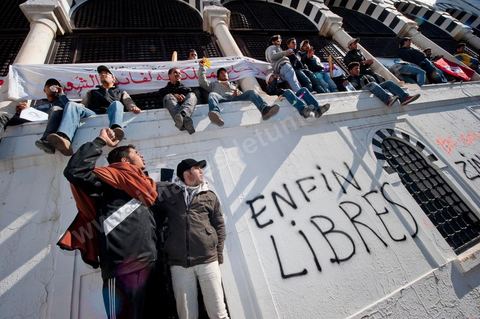
January 23: The “Caravan of Liberation” arrives in Tunis. Nearly a thousand protesters from the regions of Sidi Bouzid and Kasserine have come to “bring down the government.” After spending the night on the roads of Tunisia, these men, women, and children—the driving force behind this revolution—gathered in front of the Prime Minister’s Office to demand the government’s resignation. They were supported by the people of Tunis, who brought them food and listened to the stories of these martyrs of the Revolution.
L02-102 · 2011
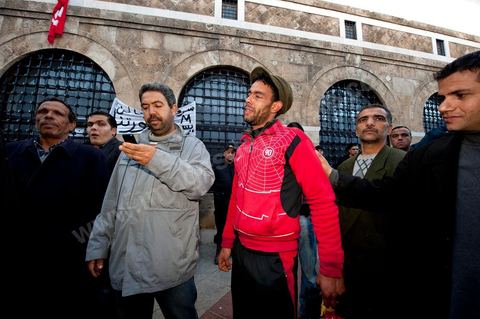
Journée du 23 janvier : arrivée à Tunis de la "Caravane de la Libération". Près d'un millier de manifestants venant des régions de Sidi Bouzid et Kasserine pour " faire tomber le gouvernement". Après une nuit sur les routes de Tunisie, ces hommes, femmes et enfants à l'origine de cette révolution viennent s'installer devant les portes du Premier Ministère pour demander la démission du gouvernement. Soutenus par les tunisois qui leur apportent de la nourriture et écoutent les histoires de ces martyrs de la Révolution. Un jeune homme de Sidi Bouzid pleure la mort de son frère tué à Sidi Bouzid par la police.
L02-103 · 2011
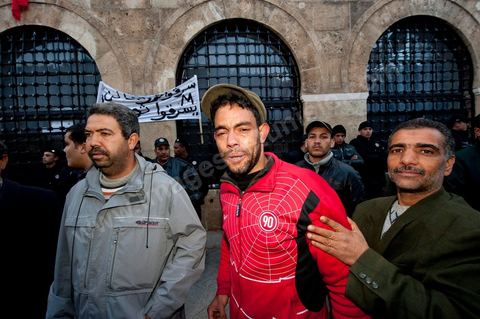
Journée du 23 janvier : arrivée à Tunis de la "Caravane de la Libération". Près d'un millier de manifestants venant des régions de Sidi Bouzid et Kasserine pour " faire tomber le gouvernement". Après une nuit sur les routes de Tunisie, ces hommes, femmes et enfants à l'origine de cette révolution viennent s'installer devant les portes du Premier Ministère pour demander la démission du gouvernement. Soutenus par les tunisois qui leur apportent de la nourriture et écoutent les histoires de ces martyrs de la Révolution. Un jeune homme de Sidi Bouzid pleure la mort de son frère tué à Sidi Bouzid par la police.
L02-104 · 2011
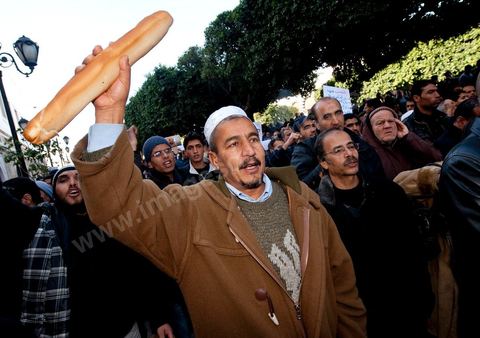
January 23: The “Caravan of Liberation” arrives in Tunis. Nearly a thousand protesters from the regions of Sidi Bouzid and Kasserine have come to “bring down the government.” After spending the night on the roads of Tunisia, these men, women, and children—the driving force behind this revolution—gathered in front of the Prime Minister’s Office to demand the government’s resignation. They were supported by the people of Tunis, who brought them food and listened to the stories of these martyrs of the Revolution.
L02-105 · 2011
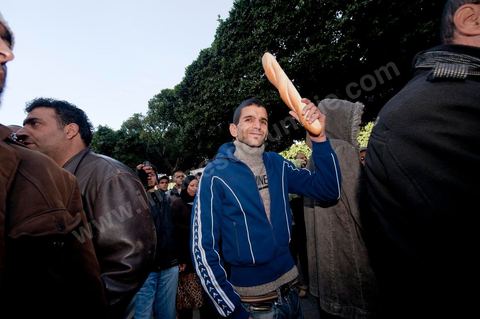
January 23: The “Caravan of Liberation” arrives in Tunis. Nearly a thousand protesters from the regions of Sidi Bouzid and Kasserine have come to “bring down the government.” After spending the night on the roads of Tunisia, these men, women, and children—the driving force behind this revolution—gathered in front of the Prime Minister’s Office to demand the government’s resignation. They were supported by the people of Tunis, who brought them food and listened to the stories of these martyrs of the Revolution.
L02-106 · 2011
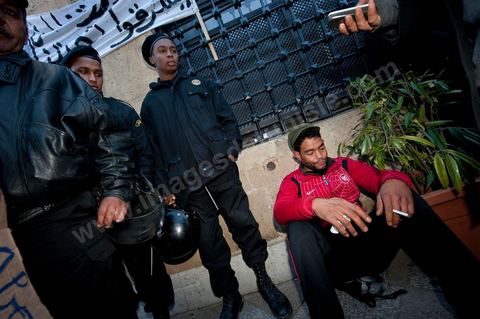
Journée du 23 janvier : arrivée à Tunis de la "Caravane de la Libération". Près d'un millier de manifestants venant des régions de Sidi Bouzid et Kasserine pour " faire tomber le gouvernement". Après une nuit sur les routes de Tunisie, ces hommes, femmes et enfants à l'origine de cette révolution viennent s'installer devant les portes du Premier Ministère pour demander la démission du gouvernement. Soutenus par les tunisois qui leur apportent de la nourriture et écoutent les histoires de ces martyrs de la Révolution. Un jeune homme de Sidi Bouzid pleure la mort de son frère tué à Sidi Bouzid par la police.
L02-107 · 2011
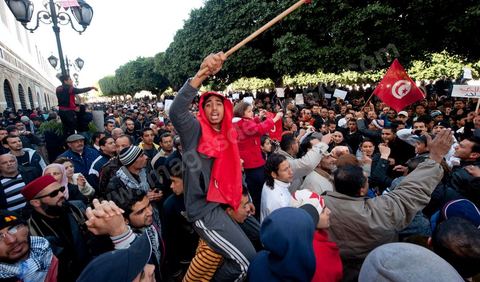
January 23: The “Caravan of Liberation” arrives in Tunis. Nearly a thousand protesters from the regions of Sidi Bouzid and Kasserine have come to “bring down the government.” After spending the night on the roads of Tunisia, these men, women, and children—the driving force behind this revolution—gathered in front of the Prime Minister’s Office to demand the government’s resignation. They were supported by the people of Tunis, who brought them food and listened to the stories of these martyrs of the Revolution.
L02-108 · 2011
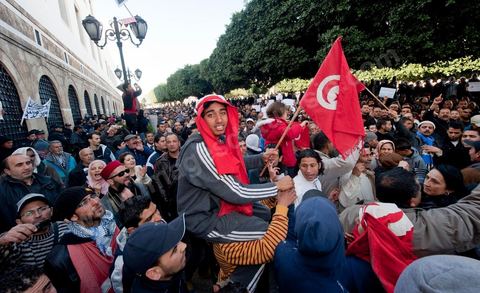
January 23: The “Caravan of Liberation” arrives in Tunis. Nearly a thousand protesters from the regions of Sidi Bouzid and Kasserine have come to “bring down the government.” After spending the night on the roads of Tunisia, these men, women, and children—the driving force behind this revolution—gathered in front of the Prime Minister’s Office to demand the government’s resignation. They were supported by the people of Tunis, who brought them food and listened to the stories of these martyrs of the Revolution.
L02-109 · 2011
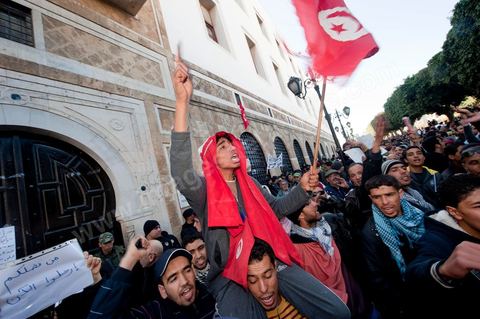
January 23: The “Caravan of Liberation” arrives in Tunis. Nearly a thousand protesters from the regions of Sidi Bouzid and Kasserine have come to “bring down the government.” After spending the night on the roads of Tunisia, these men, women, and children—the driving force behind this revolution—gathered in front of the Prime Minister’s Office to demand the government’s resignation. They were supported by the people of Tunis, who brought them food and listened to the stories of these martyrs of the Revolution.
L02-110 · 2011
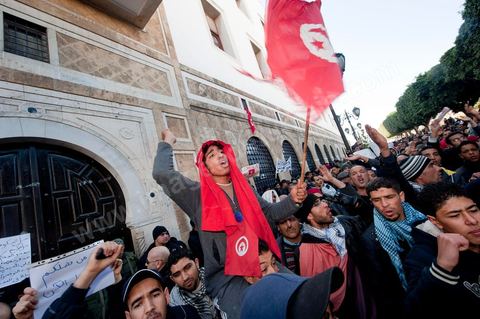
January 23: The “Caravan of Liberation” arrives in Tunis. Nearly a thousand protesters from the regions of Sidi Bouzid and Kasserine have come to “bring down the government.” After spending the night on the roads of Tunisia, these men, women, and children—the driving force behind this revolution—gathered in front of the Prime Minister’s Office to demand the government’s resignation. They were supported by the people of Tunis, who brought them food and listened to the stories of these martyrs of the Revolution.
L02-111 · 2011
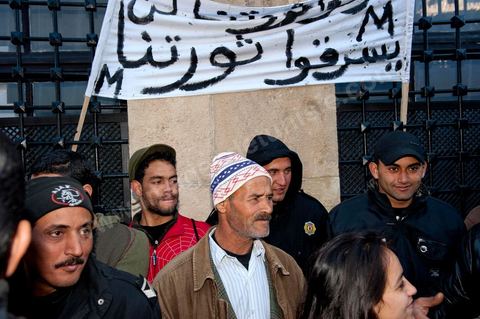
Journée du 23 janvier : arrivée à Tunis de la "Caravane de la Libération". Près d'un millier de manifestants venant des régions de Sidi Bouzid et Kasserine pour " faire tomber le gouvernement". Après une nuit sur les routes de Tunisie, ces hommes, femmes et enfants à l'origine de cette révolution viennent s'installer devant les portes du Premier Ministère pour demander la démission du gouvernement. Soutenus par les tunisois qui leur apportent de la nourriture et écoutent les histoires de ces martyrs de la Révolution. Un jeune homme de Sidi Bouzid pleure la mort de son frère tué à Sidi Bouzid par la police.
L02-112 · 2011
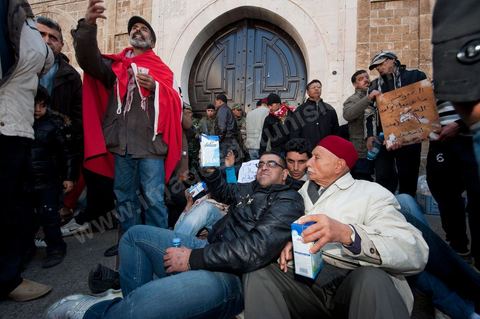
Journée du 23 janvier : arrivée à Tunis de la "Caravane de la Libération". Près d'un millier de manifestants venant des régions de Sidi Bouzid et Kasserine pour " faire tomber le gouvernement". Après une nuit sur les routes de Tunisie, ces hommes, femmes et enfants à l'origine de cette révolution viennent s'installer devant les portes du Premier Ministère pour demander la démission du gouvernement. Soutenus par les tunisois qui leur apportent de la nourriture et écoutent les histoires de ces martyrs de la Révolution. Couchés devant les portes du premier ministre, ils décident de ne pas bouger tant que le gouvernement ne démissionne. C'est leur Révolution.
L02-113 · 2011
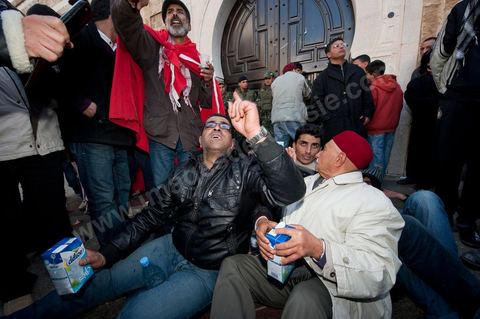
Journée du 23 janvier : arrivée à Tunis de la "Caravane de la Libération". Près d'un millier de manifestants venant des régions de Sidi Bouzid et Kasserine pour " faire tomber le gouvernement". Après une nuit sur les routes de Tunisie, ces hommes, femmes et enfants à l'origine de cette révolution viennent s'installer devant les portes du Premier Ministère pour demander la démission du gouvernement. Soutenus par les tunisois qui leur apportent de la nourriture et écoutent les histoires de ces martyrs de la Révolution. Couchés devant les portes du premier ministre, ils décident de ne pas bouger tant que le gouvernement ne démissionne. C'est leur Révolution.
L02-114 · 2011
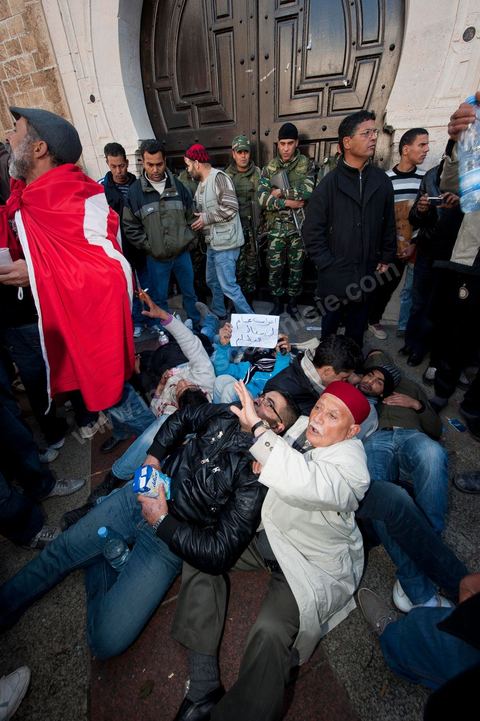
Journée du 23 janvier : arrivée à Tunis de la "Caravane de la Libération". Près d'un millier de manifestants venant des régions de Sidi Bouzid et Kasserine pour " faire tomber le gouvernement". Après une nuit sur les routes de Tunisie, ces hommes, femmes et enfants à l'origine de cette révolution viennent s'installer devant les portes du Premier Ministère pour demander la démission du gouvernement. Soutenus par les tunisois qui leur apportent de la nourriture et écoutent les histoires de ces martyrs de la Révolution. Couchés devant les portes du premier ministre, ils décident de ne pas bouger tant que le gouvernement ne démissionne. C'est leur Révolution.
L02-115 · 2011
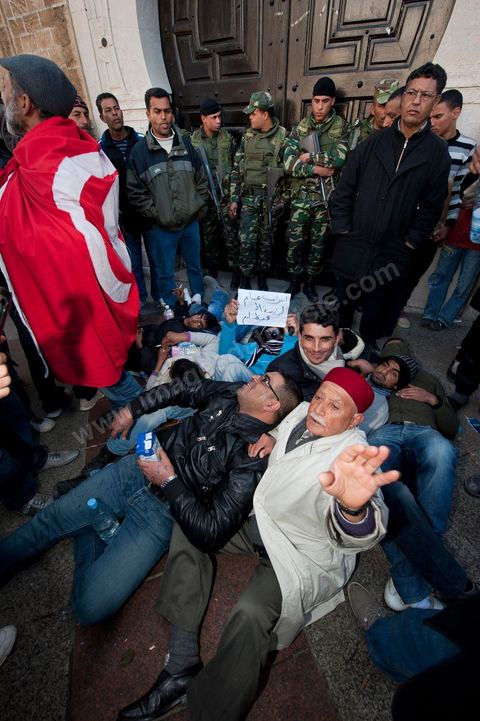
Journée du 23 janvier : arrivée à Tunis de la "Caravane de la Libération". Près d'un millier de manifestants venant des régions de Sidi Bouzid et Kasserine pour " faire tomber le gouvernement". Après une nuit sur les routes de Tunisie, ces hommes, femmes et enfants à l'origine de cette révolution viennent s'installer devant les portes du Premier Ministère pour demander la démission du gouvernement. Soutenus par les tunisois qui leur apportent de la nourriture et écoutent les histoires de ces martyrs de la Révolution. Couchés devant les portes du premier ministre, ils décident de ne pas bouger tant que le gouvernement ne démissionne. C'est leur Révolution.
L02-116 · 2011
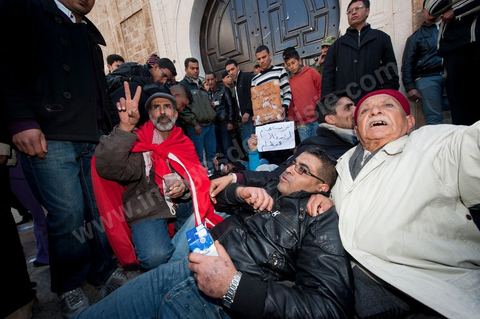
Journée du 23 janvier : arrivée à Tunis de la "Caravane de la Libération". Près d'un millier de manifestants venant des régions de Sidi Bouzid et Kasserine pour " faire tomber le gouvernement". Après une nuit sur les routes de Tunisie, ces hommes, femmes et enfants à l'origine de cette révolution viennent s'installer devant les portes du Premier Ministère pour demander la démission du gouvernement. Soutenus par les tunisois qui leur apportent de la nourriture et écoutent les histoires de ces martyrs de la Révolution. Couchés devant les portes du premier ministre, ils décident de ne pas bouger tant que le gouvernement ne démissionne. C'est leur Révolution.
L02-117 · 2011
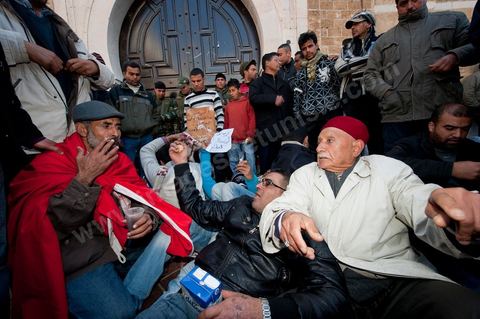
Journée du 23 janvier : arrivée à Tunis de la "Caravane de la Libération". Près d'un millier de manifestants venant des régions de Sidi Bouzid et Kasserine pour " faire tomber le gouvernement". Après une nuit sur les routes de Tunisie, ces hommes, femmes et enfants à l'origine de cette révolution viennent s'installer devant les portes du Premier Ministère pour demander la démission du gouvernement. Soutenus par les tunisois qui leur apportent de la nourriture et écoutent les histoires de ces martyrs de la Révolution. Couchés devant les portes du premier ministre, ils décident de ne pas bouger tant que le gouvernement ne démissionne. C'est leur Révolution.
L02-118 · 2011
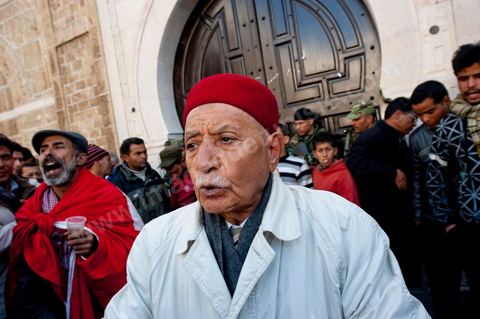
Journée du 23 janvier : arrivée à Tunis de la "Caravane de la Libération". Près d'un millier de manifestants venant des régions de Sidi Bouzid et Kasserine pour " faire tomber le gouvernement". Après une nuit sur les routes de Tunisie, ces hommes, femmes et enfants à l'origine de cette révolution viennent s'installer devant les portes du Premier Ministère pour demander la démission du gouvernement. Soutenus par les tunisois qui leur apportent de la nourriture et écoutent les histoires de ces martyrs de la Révolution. Couchés devant les portes du premier ministre, ils décident de ne pas bouger tant que le gouvernement ne démissionne. C'est leur Révolution.
L02-119 · 2011
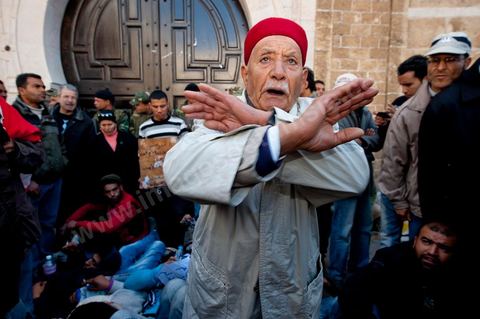
Journée du 23 janvier : arrivée à Tunis de la "Caravane de la Libération". Près d'un millier de manifestants venant des régions de Sidi Bouzid et Kasserine pour " faire tomber le gouvernement". Après une nuit sur les routes de Tunisie, ces hommes, femmes et enfants à l'origine de cette révolution viennent s'installer devant les portes du Premier Ministère pour demander la démission du gouvernement. Soutenus par les tunisois qui leur apportent de la nourriture et écoutent les histoires de ces martyrs de la Révolution. Couchés devant les portes du premier ministre, ils décident de ne pas bouger tant que le gouvernement ne démissionne. C'est leur Révolution.
L02-120 · 2011
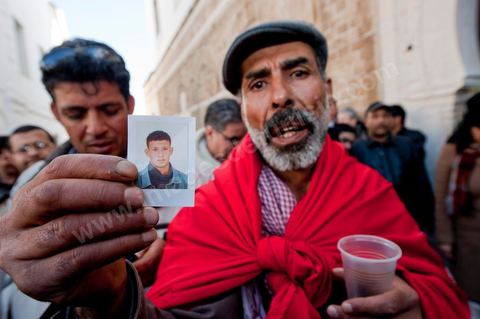
Journée du 23 janvier : arrivée à Tunis de la "Caravane de la Libération". Près d'un millier de manifestants venant des régions de Sidi Bouzid et Kasserine pour " faire tomber le gouvernement". Après une nuit sur les routes de Tunisie, ces hommes, femmes et enfants à l'origine de cette révolution viennent s'installer devant les portes du Premier Ministère pour demander la démission du gouvernement. Soutenus par les tunisois qui leur apportent de la nourriture et écoutent les histoires de ces martyrs de la Révolution. Couchés devant les portes du premier ministre, ils décident de ne pas bouger tant que le gouvernement ne démissionne. C'est leur Révolution.
L02-121 · 2011
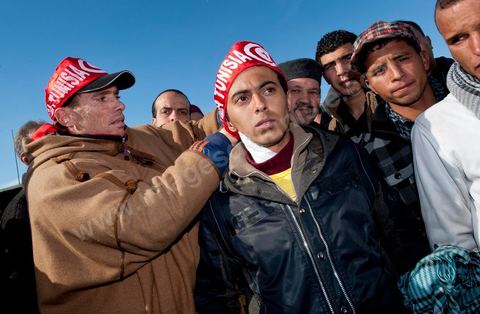
January 23: The “Caravan of Liberation” arrives in Tunis. Nearly a thousand protesters from the Sidi Bouzid and Kasserine regions gather to “bring down the government.” After spending the night on the roads of Tunisia, these men, women, and children—the driving force behind this revolution—gathered in front of the Prime Minister’s Office to demand the government’s resignation. They were supported by the people of Tunis, who brought them food and listened to the stories of these martyrs of the Revolution. Young boys injured by the police.
L02-122 · 2011
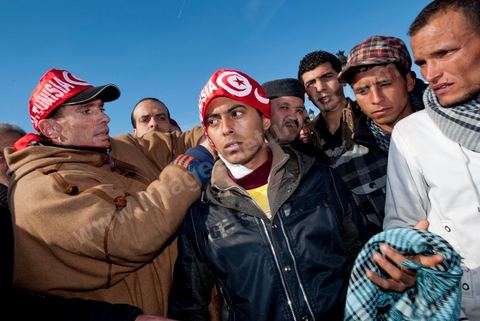
January 23: The “Caravan of Liberation” arrives in Tunis. Nearly a thousand protesters from the Sidi Bouzid and Kasserine regions gather to “bring down the government.” After spending the night on the roads of Tunisia, these men, women, and children—the driving force behind this revolution—gathered in front of the Prime Minister’s Office to demand the government’s resignation. They were supported by the people of Tunis, who brought them food and listened to the stories of these martyrs of the Revolution. Young boys injured by the police.
L02-123 · 2011
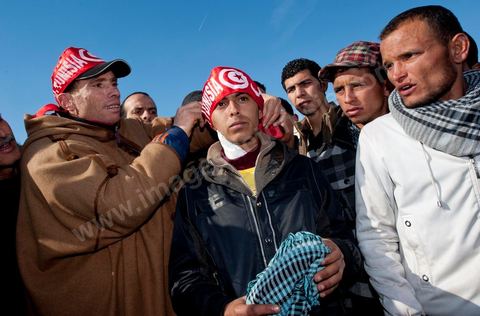
January 23: The “Caravan of Liberation” arrives in Tunis. Nearly a thousand protesters from the Sidi Bouzid and Kasserine regions gather to “bring down the government.” After spending the night on the roads of Tunisia, these men, women, and children—the driving force behind this revolution—gathered in front of the Prime Minister’s Office to demand the government’s resignation. They were supported by the people of Tunis, who brought them food and listened to the stories of these martyrs of the Revolution. Young boys injured by the police.
L02-124 · 2011
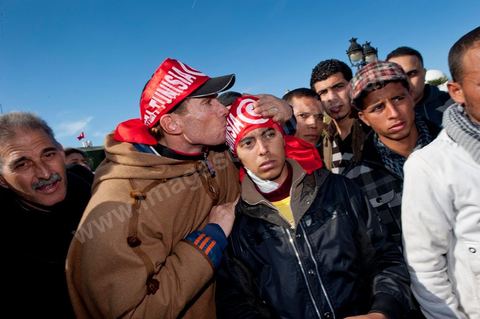
January 23: The “Caravan of Liberation” arrives in Tunis. Nearly a thousand protesters from the Sidi Bouzid and Kasserine regions gather to “bring down the government.” After spending the night on the roads of Tunisia, these men, women, and children—the driving force behind this revolution—gathered in front of the Prime Minister’s Office to demand the government’s resignation. They were supported by the people of Tunis, who brought them food and listened to the stories of these martyrs of the Revolution. Young boys injured by the police.
L02-125 · 2011
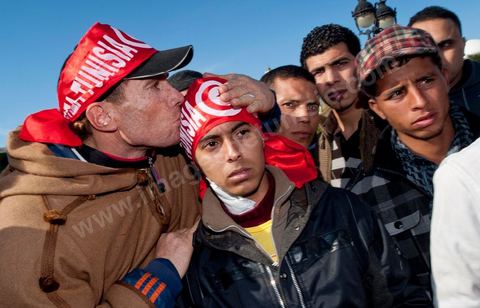
January 23: The “Caravan of Liberation” arrives in Tunis. Nearly a thousand protesters from the Sidi Bouzid and Kasserine regions gather to “bring down the government.” After spending the night on the roads of Tunisia, these men, women, and children—the driving force behind this revolution—gathered in front of the Prime Minister’s Office to demand the government’s resignation. They were supported by the people of Tunis, who brought them food and listened to the stories of these martyrs of the Revolution. Young boys injured by the police.
L02-126 · 2011
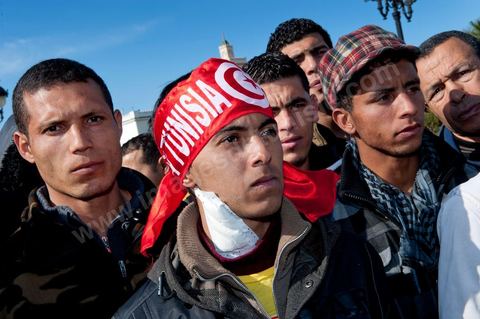
January 23: The “Caravan of Liberation” arrives in Tunis. Nearly a thousand protesters from the Sidi Bouzid and Kasserine regions gather to “bring down the government.” After spending the night on the roads of Tunisia, these men, women, and children—the driving force behind this revolution—gathered in front of the Prime Minister’s Office to demand the government’s resignation. They were supported by the people of Tunis, who brought them food and listened to the stories of these martyrs of the Revolution. Young boys injured by the police.
L02-127 · 2011
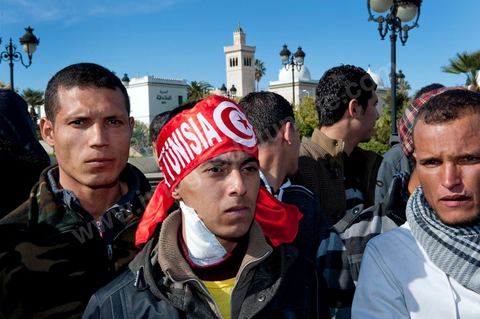
January 23: The “Caravan of Liberation” arrives in Tunis. Nearly a thousand protesters from the Sidi Bouzid and Kasserine regions gather to “bring down the government.” After spending the night on the roads of Tunisia, these men, women, and children—the driving force behind this revolution—gathered in front of the Prime Minister’s Office to demand the government’s resignation. They were supported by the people of Tunis, who brought them food and listened to the stories of these martyrs of the Revolution. Young boys injured by the police.
L02-128 · 2011
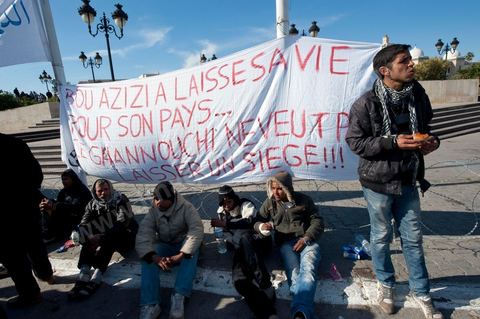
January 23: The “Caravan of Liberation” arrives in Tunis. Nearly a thousand protesters from the regions of Sidi Bouzid and Kasserine have come to “bring down the government.” After spending the night on the roads of Tunisia, these men, women, and children—the driving force behind this revolution—gathered in front of the Prime Minister’s Office to demand the government’s resignation. They were supported by the people of Tunis, who brought them food and listened to the stories of these martyrs of the Revolution.
L02-129 · 2011
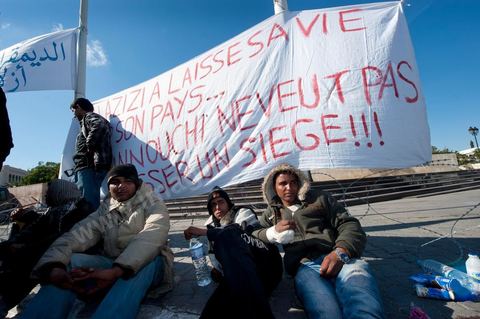
January 23: The “Caravan of Liberation” arrives in Tunis. Nearly a thousand protesters from the regions of Sidi Bouzid and Kasserine have come to “bring down the government.” After spending the night on the roads of Tunisia, these men, women, and children—the driving force behind this revolution—gathered in front of the Prime Minister’s Office to demand the government’s resignation. They were supported by the people of Tunis, who brought them food and listened to the stories of these martyrs of the Revolution.
L02-130 · 2011
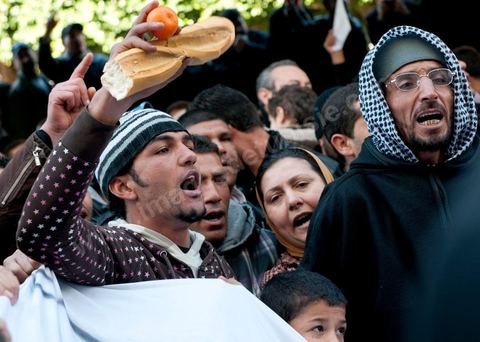
January 23: The “Caravan of Liberation” arrives in Tunis. Nearly a thousand protesters from the regions of Sidi Bouzid and Kasserine have come to “bring down the government.” After spending the night on the roads of Tunisia, these men, women, and children—the driving force behind this revolution—gathered in front of the Prime Minister’s Office to demand the government’s resignation. They were supported by the people of Tunis, who brought them food and listened to the stories of these martyrs of the Revolution.
L02-131 · 2011
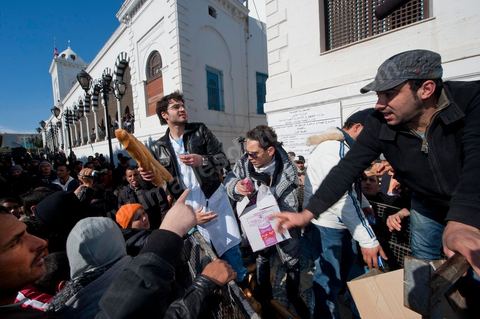
January 23: The “Caravan of Liberation” arrives in Tunis. Nearly a thousand protesters from the regions of Sidi Bouzid and Kasserine have come to “bring down the government.” After spending the night on the roads of Tunisia, these men, women, and children—the driving force behind this revolution—gathered in front of the Prime Minister’s Office to demand the government’s resignation. They were supported by the people of Tunis, who brought them food and listened to the stories of these martyrs of the Revolution.
L02-132 · 2011
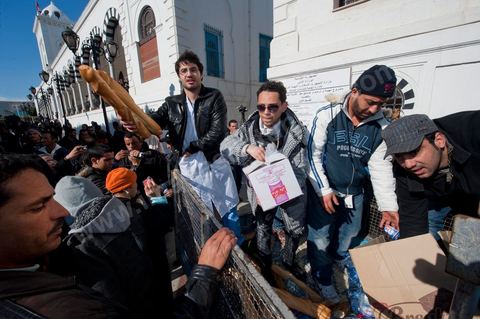
January 23: The “Caravan of Liberation” arrives in Tunis. Nearly a thousand protesters from the regions of Sidi Bouzid and Kasserine have come to “bring down the government.” After spending the night on the roads of Tunisia, these men, women, and children—the driving force behind this revolution—gathered in front of the Prime Minister’s Office to demand the government’s resignation. They were supported by the people of Tunis, who brought them food and listened to the stories of these martyrs of the Revolution.
L02-133 · 2011
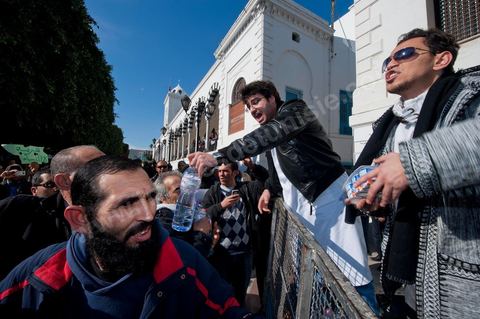
January 23: The “Caravan of Liberation” arrives in Tunis. Nearly a thousand protesters from the regions of Sidi Bouzid and Kasserine have come to “bring down the government.” After spending the night on the roads of Tunisia, these men, women, and children—the driving force behind this revolution—gathered in front of the Prime Minister’s Office to demand the government’s resignation. They were supported by the people of Tunis, who brought them food and listened to the stories of these martyrs of the Revolution.
L02-134 · 2011
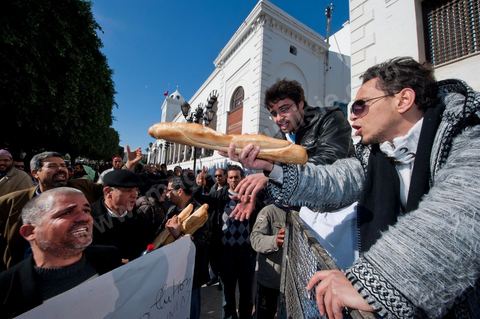
January 23: The “Caravan of Liberation” arrives in Tunis. Nearly a thousand protesters from the regions of Sidi Bouzid and Kasserine have come to “bring down the government.” After spending the night on the roads of Tunisia, these men, women, and children—the driving force behind this revolution—gathered in front of the Prime Minister’s Office to demand the government’s resignation. They were supported by the people of Tunis, who brought them food and listened to the stories of these martyrs of the Revolution.
L02-135 · 2011
January 23: The “Caravan of Liberation” arrives in Tunis. Nearly a thousand protesters from the regions of Sidi Bouzid and Kasserine have come to “bring down the government.” After spending the night on the roads of Tunisia, these men, women, and children—the driving force behind this revolution—gathered in front of the Prime Minister’s Office to demand the government’s resignation. They were supported by the people of Tunis, who brought them food and listened to the stories of these martyrs of the Revolution.
L02-136 · 2011
January 23: The “Caravan of Liberation” arrives in Tunis. Nearly a thousand protesters from the regions of Sidi Bouzid and Kasserine have come to “bring down the government.” After spending the night on the roads of Tunisia, these men, women, and children—the driving force behind this revolution—gathered in front of the Prime Minister’s Office to demand the government’s resignation. They were supported by the people of Tunis, who brought them food and listened to the stories of these martyrs of the Revolution.
L02-137 · 2011
January 23: The “Caravan of Liberation” arrives in Tunis. Nearly a thousand protesters from the regions of Sidi Bouzid and Kasserine have come to “bring down the government.” After spending the night on the roads of Tunisia, these men, women, and children—the driving force behind this revolution—gathered in front of the Prime Minister’s Office to demand the government’s resignation. They were supported by the people of Tunis, who brought them food and listened to the stories of these martyrs of the Revolution.
L02-138 · 2011
January 23: The “Caravan of Liberation” arrives in Tunis. Nearly a thousand protesters from the regions of Sidi Bouzid and Kasserine have come to “bring down the government.” After spending the night on the roads of Tunisia, these men, women, and children—the driving force behind this revolution—gathered in front of the Prime Minister’s Office to demand the government’s resignation. They were supported by the people of Tunis, who brought them food and listened to the stories of these martyrs of the Revolution.
L02-139 · 2011
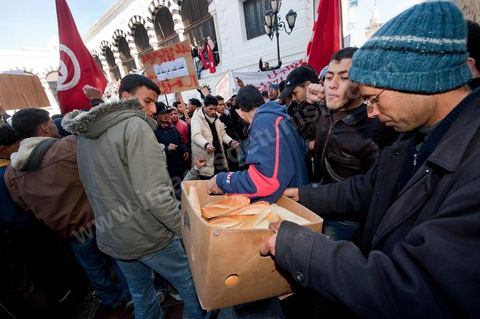
January 23: The “Caravan of Liberation” arrives in Tunis. Nearly a thousand protesters from the regions of Sidi Bouzid and Kasserine have come to “bring down the government.” After spending the night on the roads of Tunisia, these men, women, and children—the driving force behind this revolution—gathered in front of the Prime Minister’s Office to demand the government’s resignation. They were supported by the people of Tunis, who brought them food and listened to the stories of these martyrs of the Revolution.
L02-140 · 2011
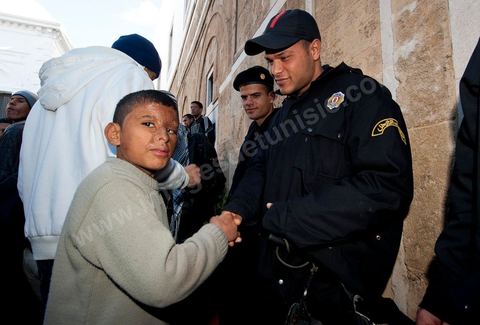
January 23: The “Caravan of Liberation” arrives in Tunis. Nearly a thousand protesters from the regions of Sidi Bouzid and Kasserine have come to “bring down the government.” After spending the night on the roads of Tunisia, these men, women, and children—the driving force behind this revolution—gathered in front of the Prime Minister’s Office to demand the government’s resignation. They were supported by the people of Tunis, who brought them food and listened to the stories of these martyrs of the Revolution.
L02-141 · 2011
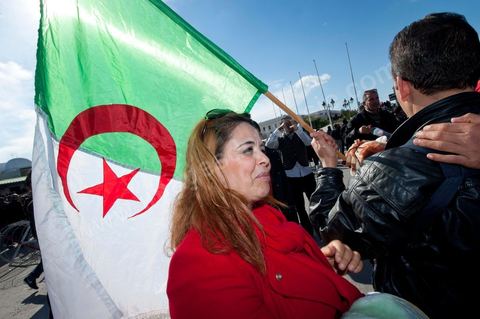
January 23: The “Caravan of Liberation” arrives in Tunis. Nearly a thousand protesters from the regions of Sidi Bouzid and Kasserine gather to “bring down the government.” After spending the night on the roads of Tunisia, these men, women, and children—the driving force behind this revolution—gathered in front of the Prime Minister’s Office to demand the government’s resignation. They were supported by the people of Tunis, who brought them food and listened to the stories of these martyrs of the Revolution. An Algerian couple.
L02-142 · 2011
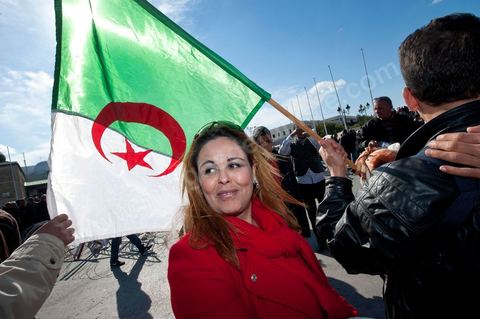
January 23: The “Caravan of Liberation” arrives in Tunis. Nearly a thousand protesters from the regions of Sidi Bouzid and Kasserine gather to “bring down the government.” After spending the night on the roads of Tunisia, these men, women, and children—the driving force behind this revolution—gathered in front of the Prime Minister’s Office to demand the government’s resignation. They were supported by the people of Tunis, who brought them food and listened to the stories of these martyrs of the Revolution. An Algerian couple.
L02-143 · 2011