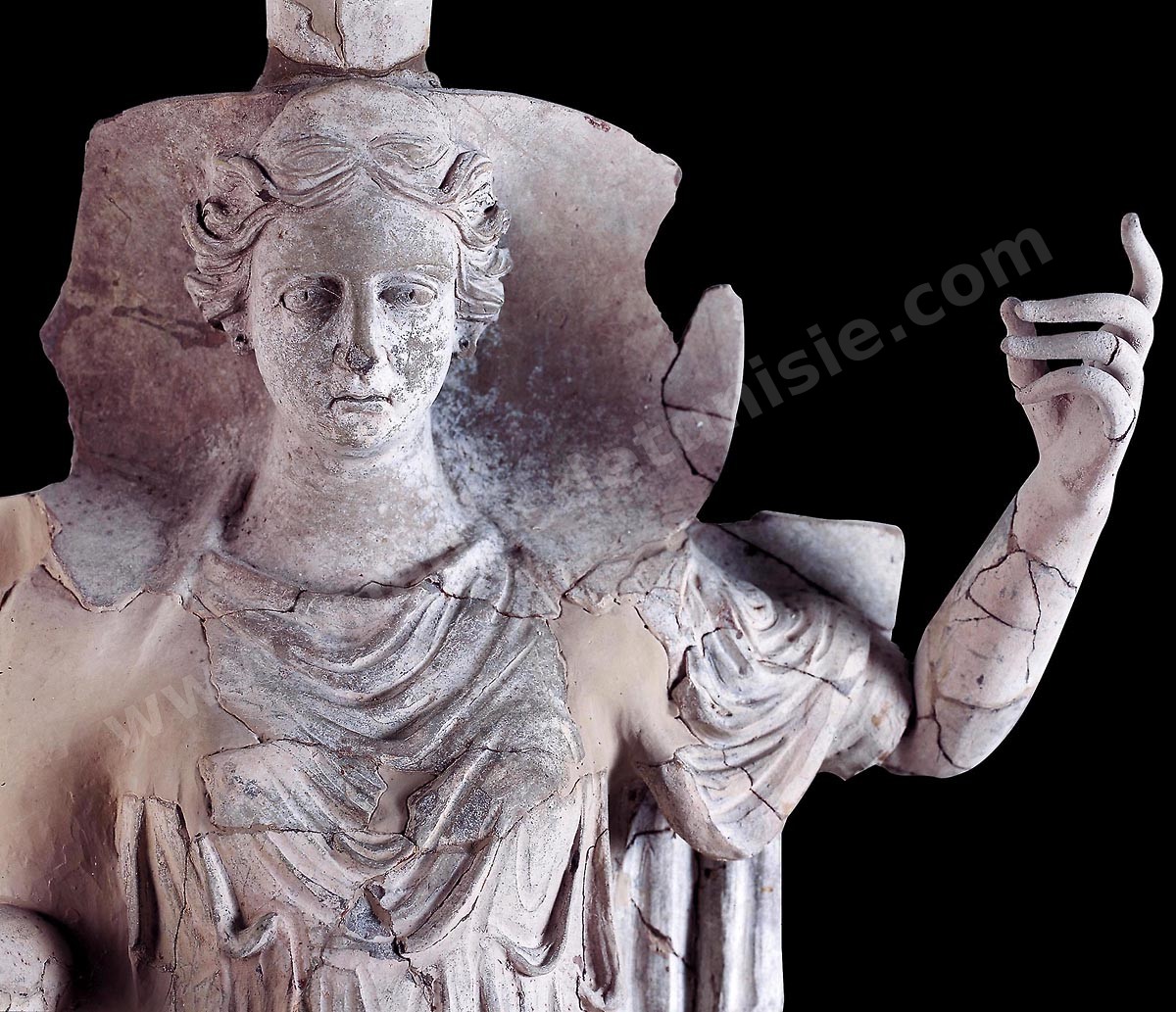
Statue de Déméter en terre cuite, presque grandeur nature, assise sur un trône en posture divine, vêtue d’une robe plissée, la tête coiffée d’une tiare cylindrique en forme de boisseau ou polos, et encadrée d’un voile rigide évoquant une conque. Son culte et celui de Coré furent officiellement introduits à Carthage en 396‑av. J.-C. pour réparer la profanation d’un de ses temples à Syracuse. Très présente dans les sanctuaires ruraux du Cap Bon, on l’y trouve tantôt associée à Baal Hammon et Tanit , tantôt accompagnée de ses parèdres Coré et Pluton, comme à Korba. Elle semble porter la réminiscence d’un modèle dû aux coroplathes siciliens des IVe-IIIe siècles av. J.-C. ( sanctuaire rural près de Korba , fin‑IVe-début IIIe siècle av. J.-C., musée du Bardo ).© Images de Tunisie — watermarked preview

Photos from the same series

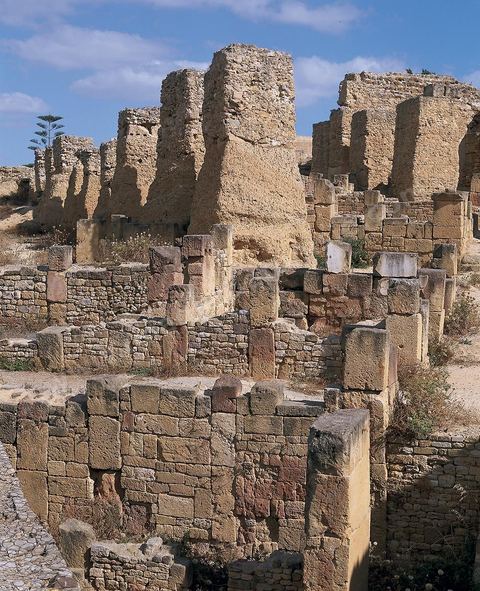
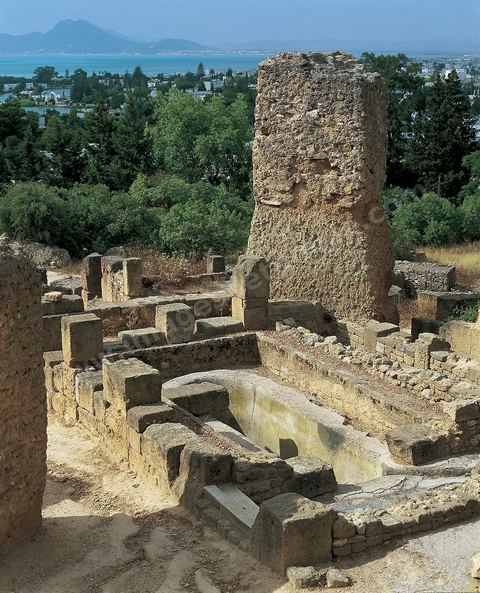
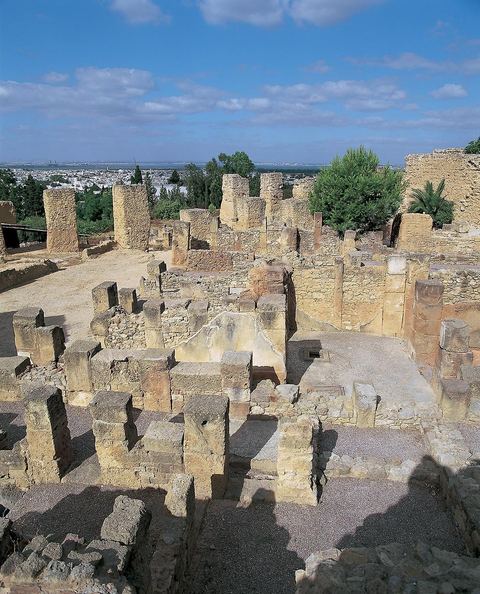
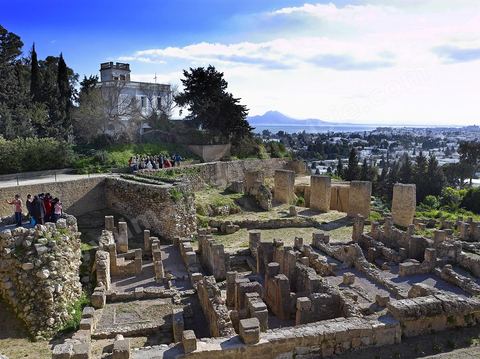
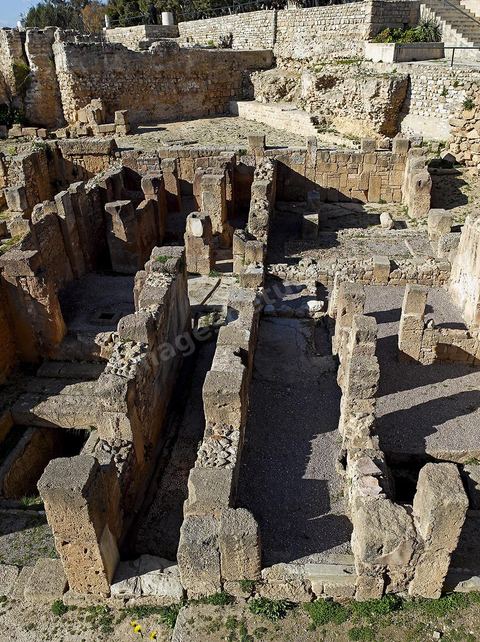
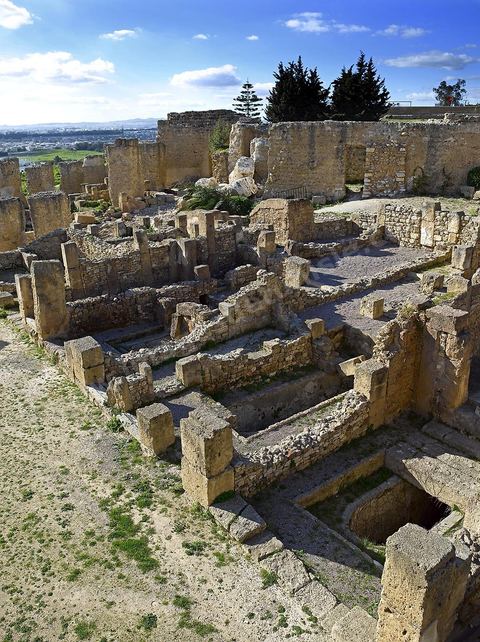
A Punic residential quarter on Byrsa Hill in Carthage. At the summit of Byrsa Hill, the site of the Roman forum, a Punic residential quarter dating from the city’s final century of existence—more precisely, the early 2nd century BCE—has been unearthed. The settlement is typical and even stereotypical, with a room facing the street that could be used as a store, a cistern installed in the basement to collect water for domestic use, and a long corridor on the right-hand side leading to a courtyard with a well, around which a series of small rooms of varying numbers are arranged.A Punic residential quarter on Byrsa Hill in Carthage. At the summit of Byrsa Hill, the site of the Roman forum, a Punic residential quarter dating from the city’s final century of existence—more precisely, the early 2nd century BCE—has been unearthed. The settlement is typical and even stereotypical, with a room facing the street that could be used as a store, a cistern installed in the basement to collect water for domestic use, and a long corridor on the right-hand side leading to a courtyard with a well, around which a series of small rooms of varying numbers are arranged.A Punic residential quarter on Byrsa Hill in Carthage. At the summit of Byrsa Hill, the site of the Roman forum, a Punic residential quarter dating from the city’s final century of existence—more precisely, the early 2nd century BCE—has been unearthed. The settlement is typical and even stereotypical, with a room facing the street that could be used as a store, a cistern installed in the basement to collect water for domestic use, and a long corridor on the right-hand side leading to a courtyard with a well, around which a series of small rooms of varying numbers are arranged.A Punic residential quarter on Byrsa Hill in Carthage. At the summit of Byrsa Hill, the site of the Roman forum, a Punic residential quarter dating from the city’s final century of existence—more precisely, the early 2nd century BCE—has been unearthed. The settlement is typical and even stereotypical, with a room facing the street that could be used as a store, a cistern installed in the basement to collect water for domestic use, and a long corridor on the right-hand side leading to a courtyard with a well, around which a series of small rooms of varying numbers are arranged.A Punic residential quarter on Byrsa Hill in Carthage. At the summit of Byrsa Hill, the site of the Roman forum, a Punic residential quarter dating from the city’s final century of existence—more precisely, the early 2nd century BCE—has been unearthed. The settlement is typical and even stereotypical, with a room facing the street that could be used as a store, a cistern installed in the basement to collect water for domestic use, and a long corridor on the right-hand side leading to a courtyard with a well, around which a series of small rooms of varying numbers are arranged.A Punic residential quarter on Byrsa Hill in Carthage. At the summit of Byrsa Hill, the site of the Roman forum, a Punic residential quarter dating from the city’s final century of existence—more precisely, the early 2nd century BCE—has been unearthed. The settlement is typical and even stereotypical, with a room facing the street that could be used as a store, a cistern installed in the basement to collect water for domestic use, and a long corridor on the right-hand side leading to a courtyard with a well, around which a series of small rooms of varying numbers are arranged.
RM

A14-299

Statue de Déméter en terre cuite, presque grandeur nature, assise sur un trône en posture divine, vêtue d’une robe plissée, la tête coiffée d’une tiare cylindrique en forme de boisseau ou polos, et encadrée d’un voile rigide évoquant une conque. Son culte et celui de Coré furent officiellement introduits à Carthage en 396‑av. J.-C. pour réparer la profanation d’un de ses temples à Syracuse. Très présente dans les sanctuaires ruraux du Cap Bon, on l’y trouve tantôt associée à Baal Hammon et Tanit , tantôt accompagnée de ses parèdres Coré et Pluton, comme à Korba. Elle semble porter la réminiscence d’un modèle dû aux coroplathes siciliens des IVe-IIIe siècles av. J.-C. ( sanctuaire rural près de Korba , fin‑IVe-début IIIe siècle av. J.-C., musée du Bardo ).

ReferenceA14-299
CategoryVilles et Régions / Tunis and its suburbs / Carthage
LicenceRM — rights managed
Photographer© Nicolas Fauqué / www.imagesd
Copyright© Nicolas Fauqué / www.imagesdetunisie.com

No online payment: licensing is quoted individually based on usage, print run and duration of use.