October 4, 2017: Dream City in the medina of Tunis. A dance performance by Rochdi Belgasmi in a traditional hammam.
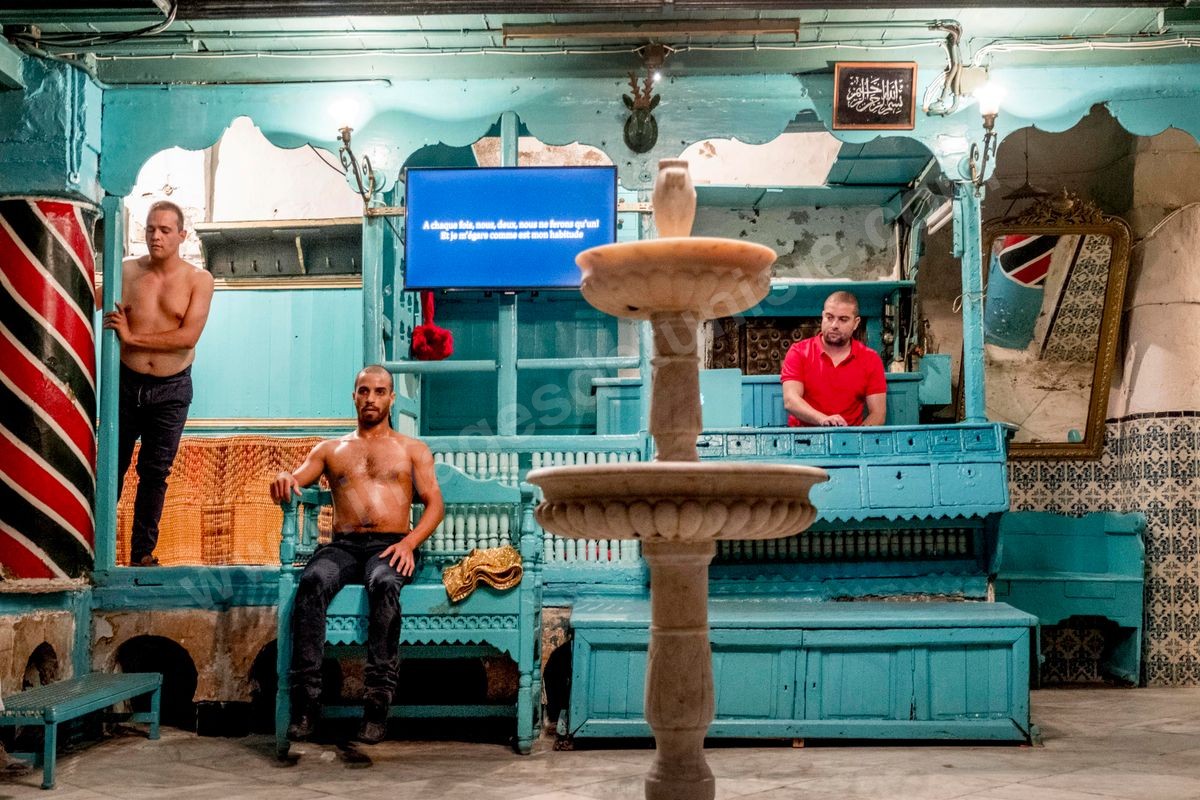
“Arous Oueslat”: From sexuality to dance, it’s almost just one step. And from dance to debauchery, it’s just two steps. Or three. In the space between them, Rochdi Belgasmi’s work continually revisits the gray areas of their shared memory. It is through Selim, the son of a prostitute from the late 18th century, that Rochdi Belgasmi explores here the masculine body and its repressed sexuality. The character of Selim appears on stage, in this hammam, to bear witness but also to manipulate. These are the laws—his laws—of hospitality. Between the attraction of one and the rejection of the other, the performance holds up an invisible mirror to the sociality of the prostitute’s body and its masculine fantasy in Arab-Muslim society, but also to the body of the city and its imaginaries, its erogenous zones, and its visceral connections.© Images de Tunisie — watermarked preview

Photos from the same series

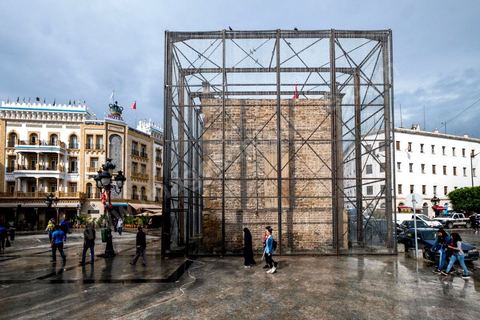
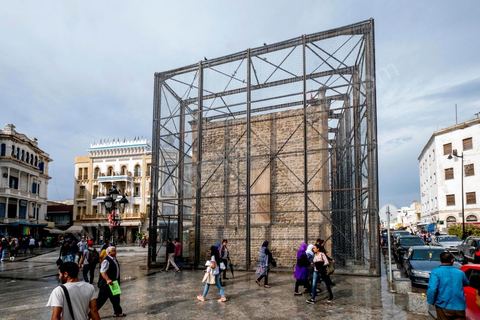
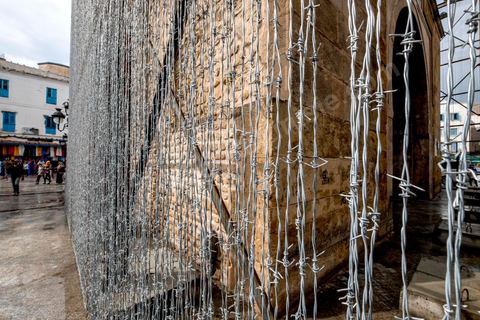
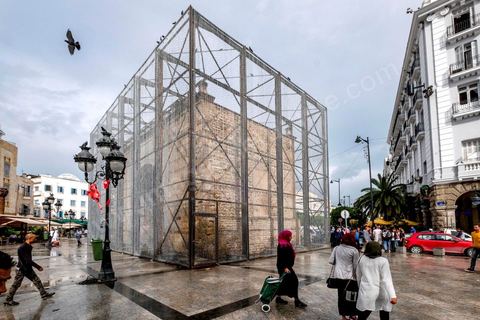
October 4, 2017: Dream City, the medina of Tunis. Works by Nidhal Chamekh. 
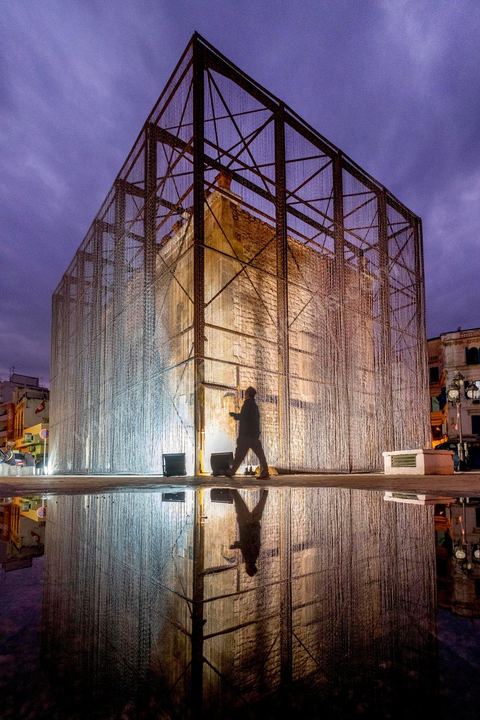
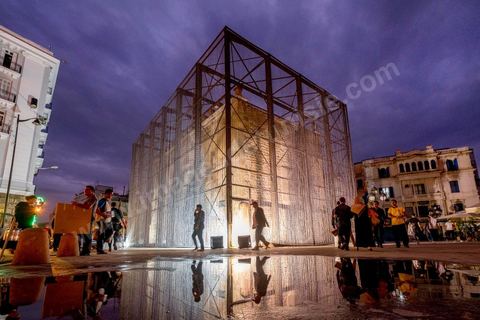
BARBED GATE installation: In the aftermath of January 14, 2011, security measures were tightened in the city of Tunis. What was previously announced as “exceptional measures” has become the norm. Barbed wire and other barriers are now part of the urban landscape.
The decision to intervene at Bab El Bhar stems from the symbolic significance it has come to embody and the historical events that have shaped it into a border monument. Bab El Bhar is entirely covered in barbed wire, blurring the line between the controlled element and the tool of control. The imposing structure recedes, giving way to a ghostly silhouette that evokes the history of a gate opening onto the sea—renamed the Gate of France by the colonial authorities and now aligned with the axis of the statue of Ibn Khaldoun, that of Bourguiba, and the Obelisk.October 4, 2017: Dream City, the medina of Tunis. Works by Nidhal Chamekh. 
BARBED GATE installation: In the aftermath of January 14, 2011, security measures were tightened in the city of Tunis. What was previously announced as “exceptional measures” has become the norm. Barbed wire and other barriers are now part of the urban landscape.
The decision to intervene at Bab El Bhar stems from the symbolic significance it has come to embody and the historical events that have shaped it into a border monument. Bab El Bhar is entirely covered in barbed wire, blurring the line between the controlled element and the tool of control. The imposing structure recedes, giving way to a ghostly silhouette that evokes the history of a gate opening onto the sea—renamed the Gate of France by the colonial authorities and now aligned with the axis of the statue of Ibn Khaldoun, that of Bourguiba, and the Obelisk.October 4, 2017: Dream City, the medina of Tunis. Works by Nidhal Chamekh. 
BARBED GATE installation: In the aftermath of January 14, 2011, security measures were tightened in the city of Tunis. What was previously announced as “exceptional measures” has become the norm. Barbed wire and other barriers are now part of the urban landscape.
The decision to intervene at Bab El Bhar stems from the symbolic significance it has come to embody and the historical events that have shaped it into a border monument. Bab El Bhar is entirely covered in barbed wire, blurring the line between the controlled element and the tool of control. The imposing structure recedes, giving way to a ghostly silhouette that evokes the history of a gate opening onto the sea—renamed the Gate of France by the colonial authorities and now aligned with the axis of the statue of Ibn Khaldoun, that of Bourguiba, and the Obelisk.October 4, 2017: Dream City, the medina of Tunis. Works by Nidhal Chamekh. 
BARBED GATE installation: In the aftermath of January 14, 2011, security measures were tightened in the city of Tunis. What was previously announced as “exceptional measures” has become the norm. Barbed wire and other barriers are now part of the urban landscape.
The decision to intervene at Bab El Bhar stems from the symbolic significance it has come to embody and the historical events that have shaped it into a border monument. Bab El Bhar is entirely covered in barbed wire, blurring the line between the controlled element and the tool of control. The imposing structure recedes, giving way to a ghostly silhouette that evokes the history of a gate opening onto the sea—renamed the Gate of France by the colonial authorities and now aligned with the axis of the statue of Ibn Khaldoun, that of Bourguiba, and the Obelisk.October 4, 2017: Dream City, the medina of Tunis. Works by Nidhal Chamekh. 
BARBED GATE installation: In the aftermath of January 14, 2011, security measures were tightened in the city of Tunis. What was previously announced as “exceptional measures” has become the norm. Barbed wire and other barriers are now part of the urban landscape.
The decision to intervene at Bab El Bhar stems from the symbolic significance it has come to embody and the historical events that have shaped it into a border monument. Bab El Bhar is entirely covered in barbed wire, blurring the line between the controlled element and the tool of control. The imposing structure recedes, giving way to a ghostly silhouette that evokes the history of a gate opening onto the sea—renamed the Gate of France by the colonial authorities and now aligned with the axis of the statue of Ibn Khaldoun, that of Bourguiba, and the Obelisk.October 4, 2017: Dream City, the medina of Tunis. Works by Nidhal Chamekh. 
BARBED GATE installation: In the aftermath of January 14, 2011, security measures were tightened in the city of Tunis. What was previously announced as “exceptional measures” has become the norm. Barbed wire and other barriers are now part of the urban landscape.
The decision to intervene at Bab El Bhar stems from the symbolic significance it has come to embody and the historical events that have shaped it into a border monument. Bab El Bhar is entirely covered in barbed wire, blurring the line between the controlled element and the tool of control. The imposing structure recedes, giving way to a ghostly silhouette that evokes the history of a gate opening onto the sea—renamed the Gate of France by the colonial authorities and now aligned with the axis of the statue of Ibn Khaldoun, that of Bourguiba, and the Obelisk.
RM

M36-524

October 4, 2017: Dream City in the medina of Tunis. A dance performance by Rochdi Belgasmi in a traditional hammam. “Arous Oueslat”: From sexuality to dance, it’s almost just one step. And from dance to debauchery, it’s just two steps. Or three. In the space between them, Rochdi Belgasmi’s work continually revisits the gray areas of their shared memory. It is through Selim, the son of a prostitute from the late 18th century, that Rochdi Belgasmi explores here the masculine body and its repressed sexuality. The character of Selim appears on stage, in this hammam, to bear witness but also to manipulate. These are the laws—his laws—of hospitality. Between the attraction of one and the rejection of the other, the performance holds up an invisible mirror to the sociality of the prostitute’s body and its masculine fantasy in Arab-Muslim society, but also to the body of the city and its imaginaries, its erogenous zones, and its visceral connections.

ReferenceM36-524
CategoryActualités / 2017 / M36-500 DREAM CITY 10/04/2017
LicenceRM — rights managed
Date taken2017
PhotographerNicolas Fauqué
Copyright© Nicolas Fauqué / www.imagesdetunisie.com

No online payment: licensing is quoted individually based on usage, print run and duration of use.