M36-500 DREAM CITY 10/04/2017
1–48 of 48
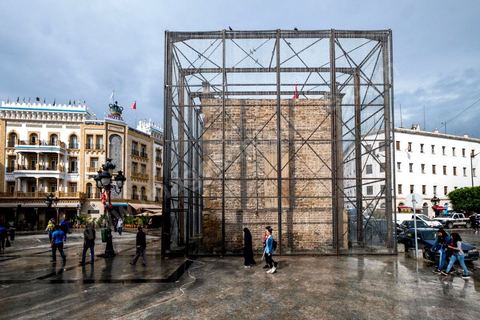
October 4, 2017: Dream City, the medina of Tunis. Works by Nidhal Chamekh. BARBED GATE installation: In the aftermath of January 14, 2011, security measures were tightened in the city of Tunis. What was previously announced as “exceptional measures” has become the norm. Barbed wire and other barriers are now part of the urban landscape. The decision to intervene at Bab El Bhar stems from the symbolic significance it has come to embody and the historical events that have shaped it into a border monument. Bab El Bhar is entirely covered in barbed wire, blurring the line between the controlled element and the tool of control. The imposing structure recedes, giving way to a ghostly silhouette that evokes the history of a gate opening onto the sea—renamed the Gate of France by the colonial authorities and now aligned with the axis of the statue of Ibn Khaldoun, that of Bourguiba, and the Obelisk.
M36-500 · 2017
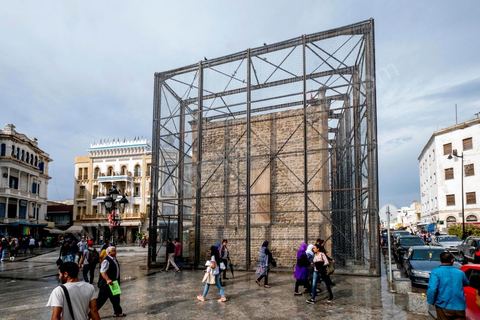
October 4, 2017: Dream City, the medina of Tunis. Works by Nidhal Chamekh. BARBED GATE installation: In the aftermath of January 14, 2011, security measures were tightened in the city of Tunis. What was previously announced as “exceptional measures” has become the norm. Barbed wire and other barriers are now part of the urban landscape. The decision to intervene at Bab El Bhar stems from the symbolic significance it has come to embody and the historical events that have shaped it into a border monument. Bab El Bhar is entirely covered in barbed wire, blurring the line between the controlled element and the tool of control. The imposing structure recedes, giving way to a ghostly silhouette that evokes the history of a gate opening onto the sea—renamed the Gate of France by the colonial authorities and now aligned with the axis of the statue of Ibn Khaldoun, that of Bourguiba, and the Obelisk.
M36-501 · 2017
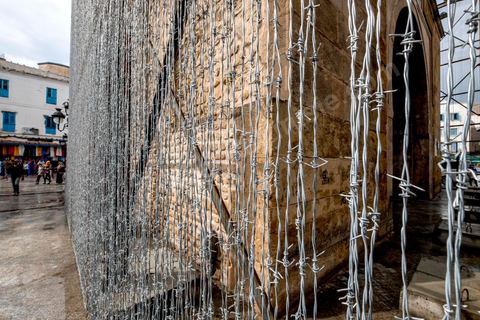
October 4, 2017: Dream City, the medina of Tunis. Works by Nidhal Chamekh. BARBED GATE installation: In the aftermath of January 14, 2011, security measures were tightened in the city of Tunis. What was previously announced as “exceptional measures” has become the norm. Barbed wire and other barriers are now part of the urban landscape. The decision to intervene at Bab El Bhar stems from the symbolic significance it has come to embody and the historical events that have shaped it into a border monument. Bab El Bhar is entirely covered in barbed wire, blurring the line between the controlled element and the tool of control. The imposing structure recedes, giving way to a ghostly silhouette that evokes the history of a gate opening onto the sea—renamed the Gate of France by the colonial authorities and now aligned with the axis of the statue of Ibn Khaldoun, that of Bourguiba, and the Obelisk.
M36-502 · 2017
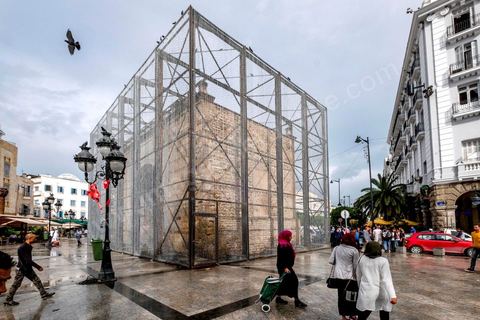
October 4, 2017: Dream City, the medina of Tunis. Works by Nidhal Chamekh. BARBED GATE installation: In the aftermath of January 14, 2011, security measures were tightened in the city of Tunis. What was previously announced as “exceptional measures” has become the norm. Barbed wire and other barriers are now part of the urban landscape. The decision to intervene at Bab El Bhar stems from the symbolic significance it has come to embody and the historical events that have shaped it into a border monument. Bab El Bhar is entirely covered in barbed wire, blurring the line between the controlled element and the tool of control. The imposing structure recedes, giving way to a ghostly silhouette that evokes the history of a gate opening onto the sea—renamed the Gate of France by the colonial authorities and now aligned with the axis of the statue of Ibn Khaldoun, that of Bourguiba, and the Obelisk.
M36-503 · 2017
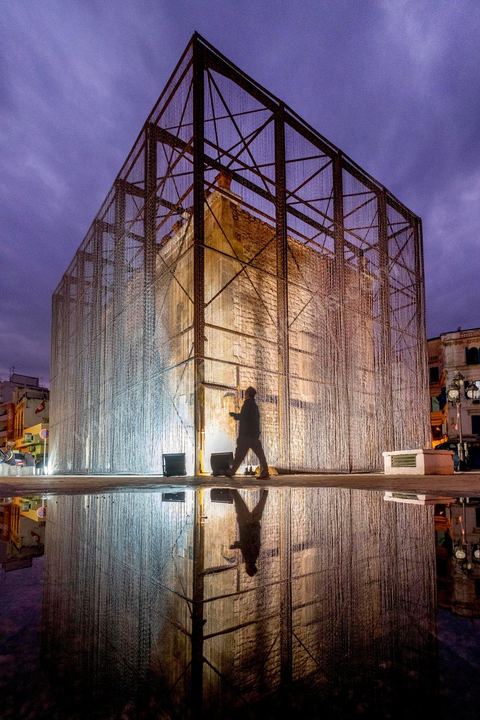
October 4, 2017: Dream City, the medina of Tunis. Works by Nidhal Chamekh. BARBED GATE installation: In the aftermath of January 14, 2011, security measures were tightened in the city of Tunis. What was previously announced as “exceptional measures” has become the norm. Barbed wire and other barriers are now part of the urban landscape. The decision to intervene at Bab El Bhar stems from the symbolic significance it has come to embody and the historical events that have shaped it into a border monument. Bab El Bhar is entirely covered in barbed wire, blurring the line between the controlled element and the tool of control. The imposing structure recedes, giving way to a ghostly silhouette that evokes the history of a gate opening onto the sea—renamed the Gate of France by the colonial authorities and now aligned with the axis of the statue of Ibn Khaldoun, that of Bourguiba, and the Obelisk.
M36-504 · 2017
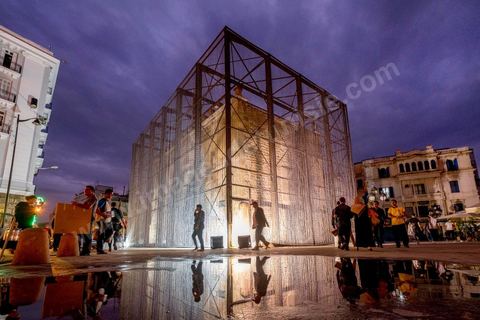
October 4, 2017: Dream City, the medina of Tunis. Works by Nidhal Chamekh. BARBED GATE installation: In the aftermath of January 14, 2011, security measures were tightened in the city of Tunis. What was previously announced as “exceptional measures” has become the norm. Barbed wire and other barriers are now part of the urban landscape. The decision to intervene at Bab El Bhar stems from the symbolic significance it has come to embody and the historical events that have shaped it into a border monument. Bab El Bhar is entirely covered in barbed wire, blurring the line between the controlled element and the tool of control. The imposing structure recedes, giving way to a ghostly silhouette that evokes the history of a gate opening onto the sea—renamed the Gate of France by the colonial authorities and now aligned with the axis of the statue of Ibn Khaldoun, that of Bourguiba, and the Obelisk.
M36-505 · 2017
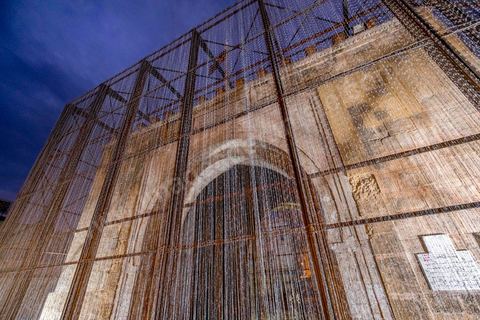
October 4, 2017: Dream City, the medina of Tunis. Works by Nidhal Chamekh. BARBED GATE installation: In the aftermath of January 14, 2011, security measures were tightened in the city of Tunis. What was previously announced as “exceptional measures” has become the norm. Barbed wire and other barriers are now part of the urban landscape. The decision to intervene at Bab El Bhar stems from the symbolic significance it has come to embody and the historical events that have shaped it into a border monument. Bab El Bhar is entirely covered in barbed wire, blurring the line between the controlled element and the tool of control. The imposing structure recedes, giving way to a ghostly silhouette that evokes the history of a gate opening onto the sea—renamed the Gate of France by the colonial authorities and now aligned with the axis of the statue of Ibn Khaldoun, that of Bourguiba, and the Obelisk.
M36-506 · 2017
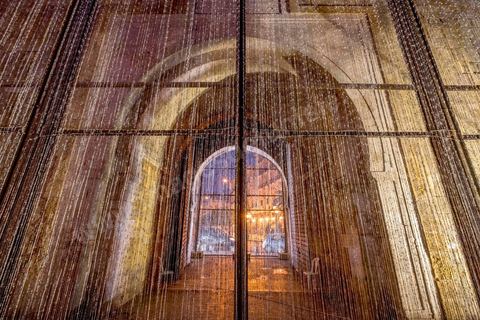
October 4, 2017: Dream City, the medina of Tunis. Works by Nidhal Chamekh. BARBED GATE installation: In the aftermath of January 14, 2011, security measures were tightened in the city of Tunis. What was previously announced as “exceptional measures” has become the norm. Barbed wire and other barriers are now part of the urban landscape. The decision to intervene at Bab El Bhar stems from the symbolic significance it has come to embody and the historical events that have shaped it into a border monument. Bab El Bhar is entirely covered in barbed wire, blurring the line between the controlled element and the tool of control. The imposing structure recedes, giving way to a ghostly silhouette that evokes the history of a gate opening onto the sea—renamed the Gate of France by the colonial authorities and now aligned with the axis of the statue of Ibn Khaldoun, that of Bourguiba, and the Obelisk.
M36-507 · 2017
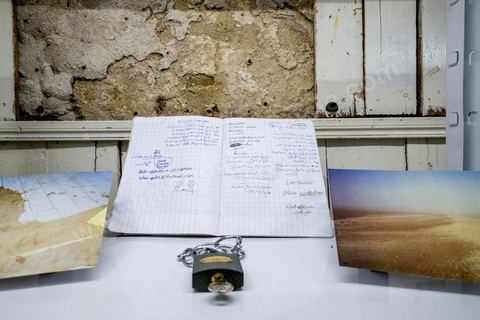
October 4, 2017: Dream City, the medina of Tunis. Works by Nidhal Chamekh. Exhibition: CABINET DES FRONTIÈRES The city’s residents came together to create a collaborative work—a cabinet of curiosities that embodies the collective imagination regarding borders.
M36-508 · 2017
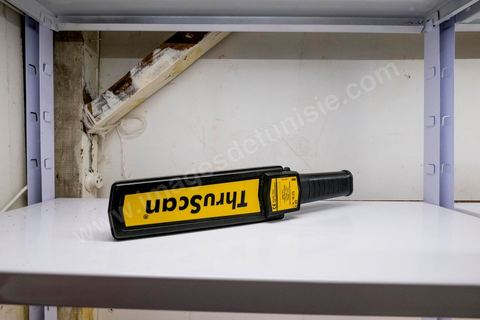
October 4, 2017: Dream City, the medina of Tunis. Works by Nidhal Chamekh. Exhibition: CABINET DES FRONTIÈRES The city’s residents came together to create a collaborative work—a cabinet of curiosities that embodies the collective imagination regarding borders.
M36-509 · 2017
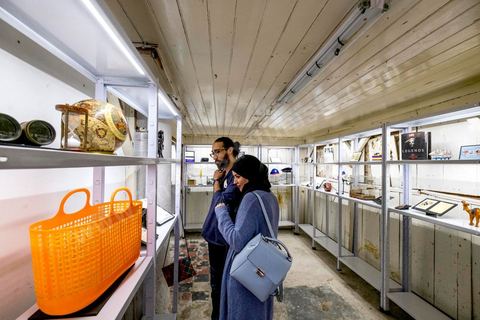
October 4, 2017: Dream City, the medina of Tunis. Works by Nidhal Chamekh. Exhibition: CABINET DES FRONTIÈRES The city’s residents came together to create a collaborative work—a cabinet of curiosities that embodies the collective imagination regarding borders.
M36-510 · 2017
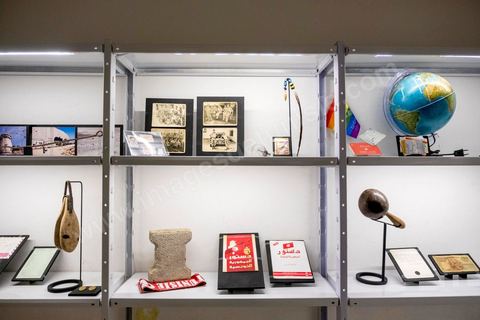
October 4, 2017: Dream City, the medina of Tunis. Works by Nidhal Chamekh. Exhibition: CABINET DES FRONTIÈRES The city’s residents came together to create a collaborative work—a cabinet of curiosities that embodies the collective imagination regarding borders.
M36-511 · 2017
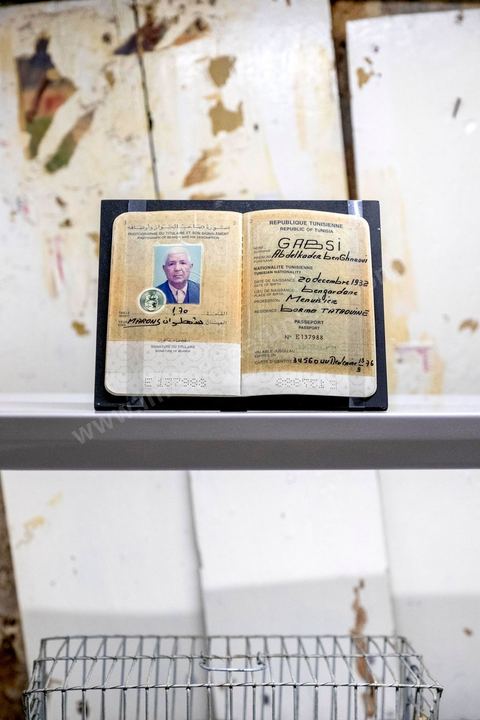
October 4, 2017: Dream City, the medina of Tunis. Works by Nidhal Chamekh. Exhibition: CABINET DES FRONTIÈRES The city’s residents came together to create a collaborative work—a cabinet of curiosities that embodies the collective imagination regarding borders.
M36-512 · 2017
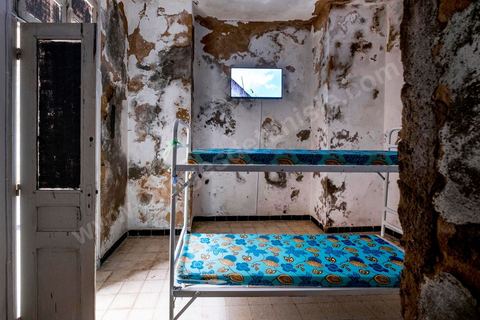
October 4, 2017: Dream City, Tunis Medina. Exhibition by Malek Gnaoui titled “0904”: on a vacant lot, nothing remains of the prison that loomed over the heart of Tunis for decades. The artist explores the memory of the place through the recollections of former inmates of the infamous Tunisian “April 9” prison, thereby reconstructing an archive based on the subjectivity of images, stories, and feelings, drawing on the memories of those who frequented the place, who were incarcerated primarily for criminal offenses. Using memory as a gateway to the prison, he highlights the impact of incarceration on human beings and all the social problems it generates.
M36-513 · 2017
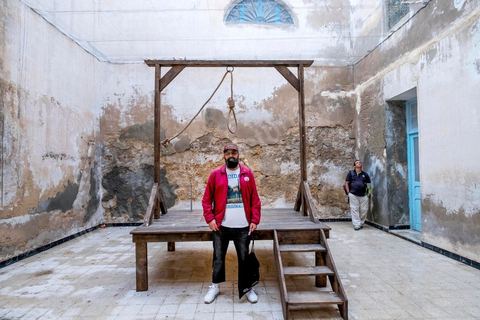
October 4, 2017: Dream City, Tunis Medina. Exhibition by Malek Gnaoui titled “0904”: on a vacant lot, nothing remains of the prison that loomed over the heart of Tunis for decades. The artist explores the memory of the place through the recollections of former inmates of the infamous Tunisian “April 9” prison, thereby reconstructing an archive based on the subjectivity of images, stories, and feelings, drawing on the memories of those who frequented the place, who were incarcerated primarily for criminal offenses. Using memory as a gateway to the prison, he highlights the impact of incarceration on human beings and all the social problems it generates.
M36-514 · 2017
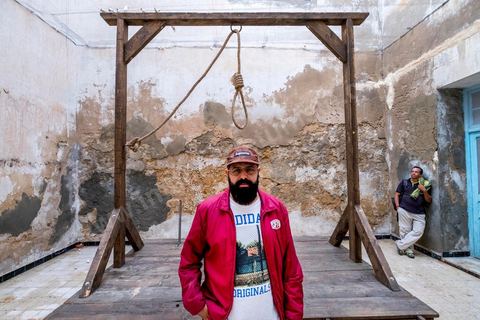
October 4, 2017: Dream City, Tunis Medina. Exhibition by Malek Gnaoui titled “0904”: on a vacant lot, nothing remains of the prison that loomed over the heart of Tunis for decades. The artist explores the memory of the place through the recollections of former inmates of the infamous Tunisian “April 9” prison, thereby reconstructing an archive based on the subjectivity of images, stories, and feelings, drawing on the memories of those who frequented the place, who were incarcerated primarily for criminal offenses. Using memory as a gateway to the prison, he highlights the impact of incarceration on human beings and all the social problems it generates.
M36-515 · 2017
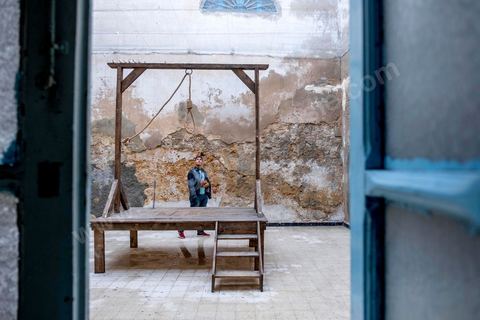
October 4, 2017: Dream City, Tunis Medina. Exhibition by Malek Gnaoui titled “0904”: on a vacant lot, nothing remains of the prison that loomed over the heart of Tunis for decades. The artist explores the memory of the place through the recollections of former inmates of the infamous Tunisian “April 9” prison, thereby reconstructing an archive based on the subjectivity of images, stories, and feelings, drawing on the memories of those who frequented the place, who were incarcerated primarily for criminal offenses. Using memory as a gateway to the prison, he highlights the impact of incarceration on human beings and all the social problems it generates.
M36-516 · 2017
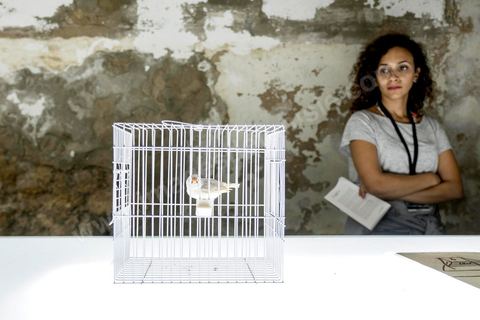
October 4, 2017: Dream City, Tunis Medina. Exhibition by Malek Gnaoui titled “0904”: on a vacant lot, nothing remains of the prison that loomed over the heart of Tunis for decades. The artist explores the memory of the place through the recollections of former inmates of the infamous Tunisian “April 9” prison, thereby reconstructing an archive based on the subjectivity of images, stories, and feelings, drawing on the memories of those who frequented the place, who were incarcerated primarily for criminal offenses. Using memory as a gateway to the prison, he highlights the impact of incarceration on human beings and all the social problems it generates.
M36-517 · 2017
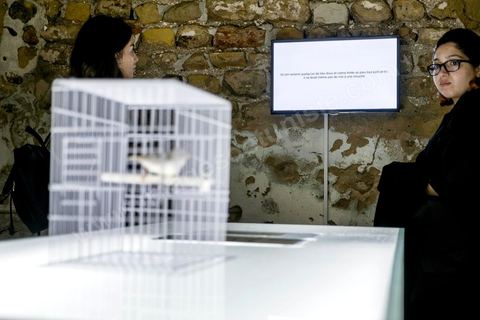
October 4, 2017: Dream City, Tunis Medina. Exhibition by Malek Gnaoui titled “0904”: on a vacant lot, nothing remains of the prison that loomed over the heart of Tunis for decades. The artist explores the memory of the place through the recollections of former inmates of the infamous Tunisian “April 9” prison, thereby reconstructing an archive based on the subjectivity of images, stories, and feelings, drawing on the memories of those who frequented the place, who were incarcerated primarily for criminal offenses. Using memory as a gateway to the prison, he highlights the impact of incarceration on human beings and all the social problems it generates.
M36-518 · 2017
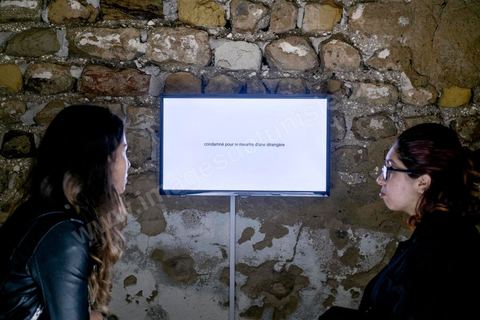
October 4, 2017: Dream City, Tunis Medina. Exhibition by Malek Gnaoui titled “0904”: on a vacant lot, nothing remains of the prison that loomed over the heart of Tunis for decades. The artist explores the memory of the place through the recollections of former inmates of the infamous Tunisian “April 9” prison, thereby reconstructing an archive based on the subjectivity of images, stories, and feelings, drawing on the memories of those who frequented the place, who were incarcerated primarily for criminal offenses. Using memory as a gateway to the prison, he highlights the impact of incarceration on human beings and all the social problems it generates.
M36-519 · 2017
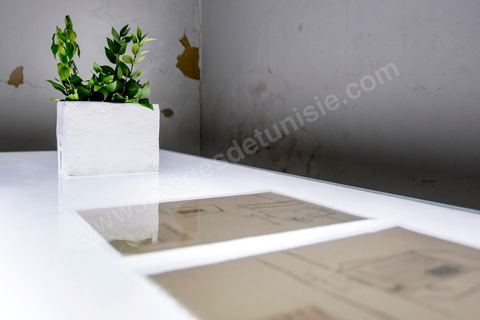
October 4, 2017: Dream City, Tunis Medina. Exhibition by Malek Gnaoui titled “0904”: on a vacant lot, nothing remains of the prison that loomed over the heart of Tunis for decades. The artist explores the memory of the place through the recollections of former inmates of the infamous Tunisian “April 9” prison, thereby reconstructing an archive based on the subjectivity of images, stories, and feelings, drawing on the memories of those who frequented the place, who were incarcerated primarily for criminal offenses. Using memory as a gateway to the prison, he highlights the impact of incarceration on human beings and all the social problems it generates.
M36-520 · 2017
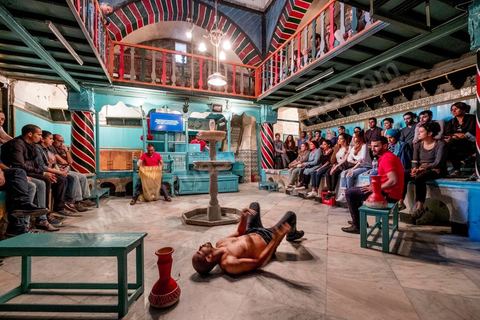
October 4, 2017: Dream City in the medina of Tunis. A dance performance by Rochdi Belgasmi in a traditional hammam. “Arous Oueslat”: From sexuality to dance, it’s almost just one step. And from dance to debauchery, it’s just two steps. Or three. In the space between them, Rochdi Belgasmi’s work continually revisits the gray areas of their shared memory. It is through Selim, the son of a prostitute from the late 18th century, that Rochdi Belgasmi explores here the masculine body and its repressed sexuality. The character of Selim appears on stage, in this hammam, to bear witness but also to manipulate. These are the laws—his laws—of hospitality. Between the attraction of one and the rejection of the other, the performance holds up an invisible mirror to the sociality of the prostitute’s body and its masculine fantasy in Arab-Muslim society, but also to the body of the city and its imaginaries, its erogenous zones, and its visceral connections.
M36-521 · 2017
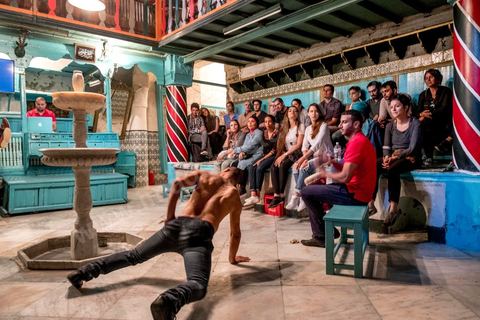
October 4, 2017: Dream City in the medina of Tunis. A dance performance by Rochdi Belgasmi in a traditional hammam. “Arous Oueslat”: From sexuality to dance, it’s almost just one step. And from dance to debauchery, it’s just two steps. Or three. In the space between them, Rochdi Belgasmi’s work continually revisits the gray areas of their shared memory. It is through Selim, the son of a prostitute from the late 18th century, that Rochdi Belgasmi explores here the masculine body and its repressed sexuality. The character of Selim appears on stage, in this hammam, to bear witness but also to manipulate. These are the laws—his laws—of hospitality. Between the attraction of one and the rejection of the other, the performance holds up an invisible mirror to the sociality of the prostitute’s body and its masculine fantasy in Arab-Muslim society, but also to the body of the city and its imaginaries, its erogenous zones, and its visceral connections.
M36-522 · 2017
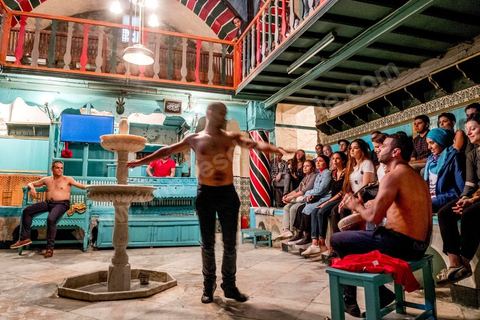
October 4, 2017: Dream City in the medina of Tunis. A dance performance by Rochdi Belgasmi in a traditional hammam. “Arous Oueslat”: From sexuality to dance, it’s almost just one step. And from dance to debauchery, it’s just two steps. Or three. In the space between them, Rochdi Belgasmi’s work continually revisits the gray areas of their shared memory. It is through Selim, the son of a prostitute from the late 18th century, that Rochdi Belgasmi explores here the masculine body and its repressed sexuality. The character of Selim appears on stage, in this hammam, to bear witness but also to manipulate. These are the laws—his laws—of hospitality. Between the attraction of one and the rejection of the other, the performance holds up an invisible mirror to the sociality of the prostitute’s body and its masculine fantasy in Arab-Muslim society, but also to the body of the city and its imaginaries, its erogenous zones, and its visceral connections.
M36-523 · 2017
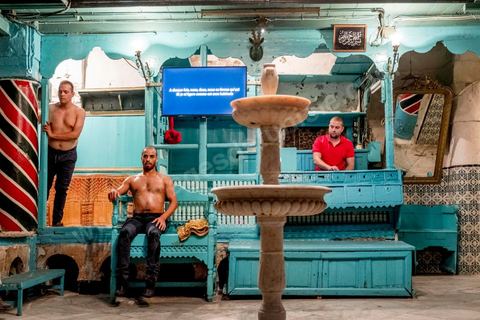
October 4, 2017: Dream City in the medina of Tunis. A dance performance by Rochdi Belgasmi in a traditional hammam. “Arous Oueslat”: From sexuality to dance, it’s almost just one step. And from dance to debauchery, it’s just two steps. Or three. In the space between them, Rochdi Belgasmi’s work continually revisits the gray areas of their shared memory. It is through Selim, the son of a prostitute from the late 18th century, that Rochdi Belgasmi explores here the masculine body and its repressed sexuality. The character of Selim appears on stage, in this hammam, to bear witness but also to manipulate. These are the laws—his laws—of hospitality. Between the attraction of one and the rejection of the other, the performance holds up an invisible mirror to the sociality of the prostitute’s body and its masculine fantasy in Arab-Muslim society, but also to the body of the city and its imaginaries, its erogenous zones, and its visceral connections.
M36-524 · 2017
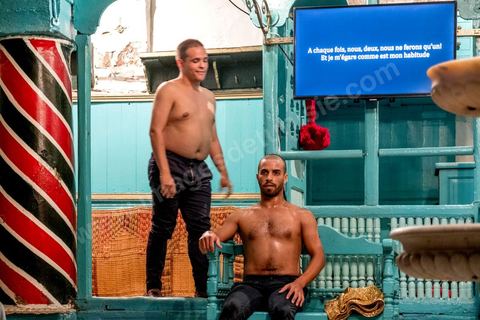
October 4, 2017: Dream City in the medina of Tunis. A dance performance by Rochdi Belgasmi in a traditional hammam. “Arous Oueslat”: From sexuality to dance, it’s almost just one step. And from dance to debauchery, it’s just two steps. Or three. In the space between them, Rochdi Belgasmi’s work continually revisits the gray areas of their shared memory. It is through Selim, the son of a prostitute from the late 18th century, that Rochdi Belgasmi explores here the masculine body and its repressed sexuality. The character of Selim appears on stage, in this hammam, to bear witness but also to manipulate. These are the laws—his laws—of hospitality. Between the attraction of one and the rejection of the other, the performance holds up an invisible mirror to the sociality of the prostitute’s body and its masculine fantasy in Arab-Muslim society, but also to the body of the city and its imaginaries, its erogenous zones, and its visceral connections.
M36-525 · 2017
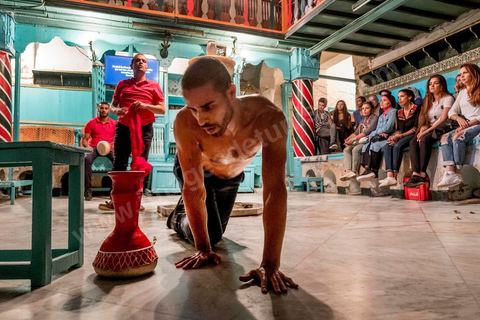
October 4, 2017: Dream City in the medina of Tunis. A dance performance by Rochdi Belgasmi in a traditional hammam. “Arous Oueslat”: From sexuality to dance, it’s almost just one step. And from dance to debauchery, it’s just two steps. Or three. In the space between the two, Rochdi Belgasmi’s work continually revisits the gray areas of their shared memory. It is through Selim, the son of a prostitute from the late 18th century, that Rochdi Belgasmi explores here the masculine body and its repressed sexuality. The character of Selim appears on stage, in this hammam, to bear witness but also to manipulate. These are the laws—his laws—of hospitality. Between the attraction of one and the rejection of the other, the performance holds up an invisible mirror to the sociality of the prostituted body and its masculine fantasies within Arab-Muslim society, as well as to the body of the city and its imaginaries, its erogenous zones, and its visceral connections.
M36-526 · 2017
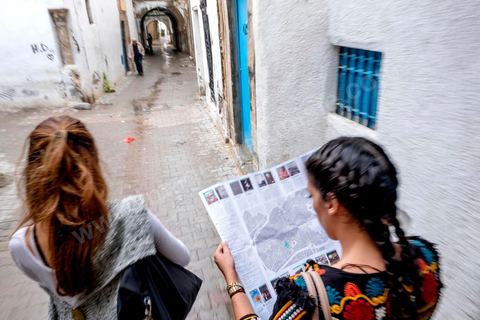
04 octobre 2017 : Dream City dans la medina de Tunis. dans les ruelles de la median de Tunis les visiteurs, plan en mains, partent à la recherche des lieux d'expositions.
M36-527 · 2017
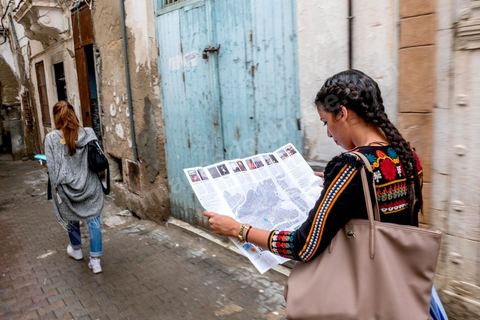
04 octobre 2017 : Dream City dans la medina de Tunis. dans les ruelles de la median de Tunis les visiteurs, plan en mains, partent à la recherche des lieux d'expositions.
M36-528 · 2017
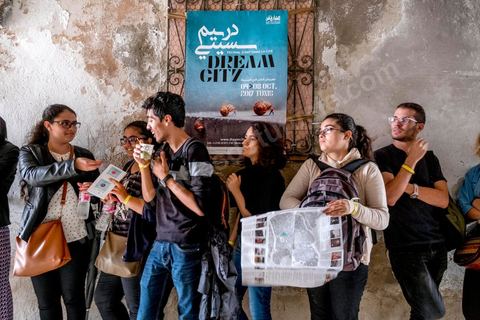
04 octobre 2017 : Dream City dans la medina de Tunis. Malgré la pluie, le premier jour de cette nouvelle édition voit une affluence importane, ici les jeunes patientes pour entrer dasn une exposition.
M36-529 · 2017
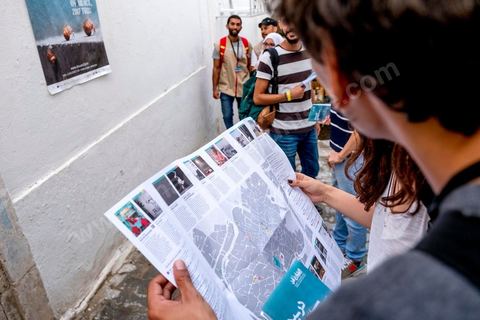
04 octobre 2017 : Dream City dans la medina de Tunis. dans les ruelles de la median de Tunis les visiteurs, plan en mains, partent à la recherche des lieux d'expositions.
M36-530 · 2017
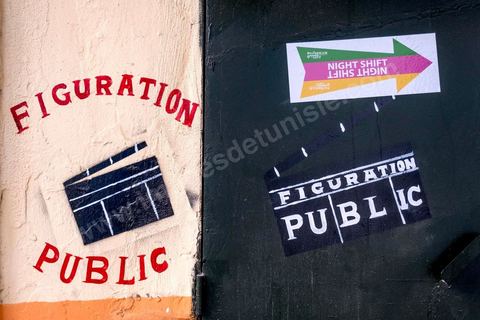
October 4, 2017: Dream City in the Medina of Tunis. Dream City’s signage covers the walls of the Medina and blends in with the shop signs.
M36-531 · 2017
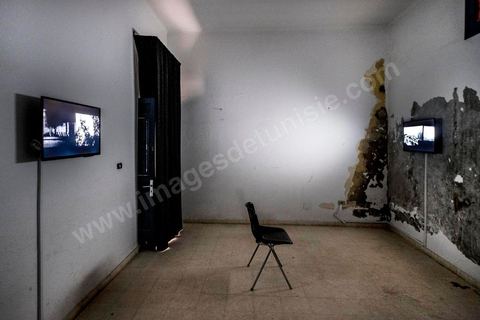
October 4, 2017: Dream City, Tunis Medina. Video installation by Fakhri el Ghezal titled “Héni éltéli”: “Wherever it falls, Fakhri El Ghezal’s gaze lends its solitude to more than one image. This video project unfolds, from one screen to the next, like so many variations on a single theme: drawing from everyday life, the videographer has decided to explore, day by day and without giving it too much thought, the realms of the intimate and the fictional. Armed with his cell phone, he captures—in varying durations—what passes by, comes to be, and unravels before his eyes. Between the routine and the isolation to which his well-oiled routine confines him; between death, which suddenly intrudes upon this daily life, and the grieving process that begins, certain threads of the artist’s post-prison experience replay in a loop. Bathed in black and white that yields as much to the present as to memory, Fakhri El Ghezal’s video work invites the viewer to keep their “third eye” open.”
M36-532 · 2017
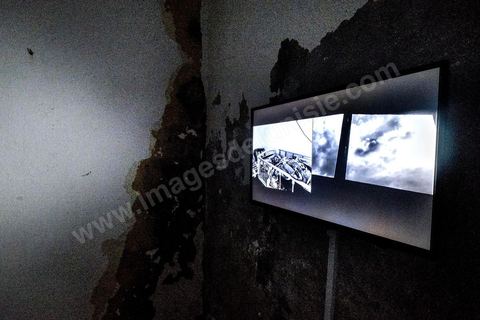
October 4, 2017: Dream City, Tunis Medina. Video installation by Fakhri el Ghezal titled “Héni éltéli”: “Wherever it falls, Fakhri El Ghezal’s gaze lends its solitude to more than one image. This video project unfolds, from one screen to the next, like so many variations on a single theme: drawing from everyday life, the videographer has decided to explore, day by day and without giving it too much thought, the realms of the intimate and the fictional. Armed with his cell phone, he captures—in varying durations—what passes by, comes to be, and unravels before his eyes. Between the routine and the isolation to which his well-oiled routine confines him; between death, which suddenly intrudes upon this daily life, and the grieving process that begins, certain threads of the artist’s post-prison experience replay in a loop. Bathed in black and white that yields as much to the present as to memory, Fakhri El Ghezal’s video work invites the viewer to keep their “third eye” open.”
M36-533 · 2017
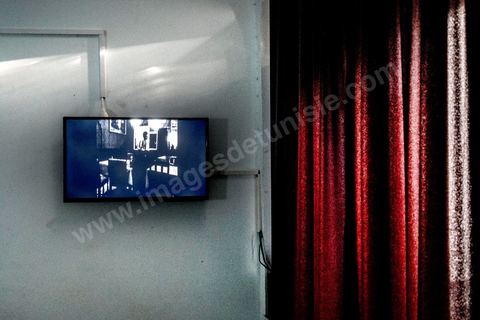
October 4, 2017: Dream City, Tunis Medina. Video installation by Fakhri el Ghezal titled “Héni éltéli”: “Wherever it falls, Fakhri El Ghezal’s gaze lends its solitude to more than one image. This video project unfolds, from one screen to the next, like so many variations on a single theme: drawing from everyday life, the videographer has decided to explore, day by day and without giving it too much thought, the realms of the intimate and the fictional. Armed with his cell phone, he captures—in varying durations—what passes by, comes to be, and unravels before his eyes. Between the routine and the isolation to which his well-oiled routine confines him; between death, which suddenly intrudes upon this daily life, and the grieving process that begins, certain threads of the artist’s post-prison experience replay in a loop. Bathed in black and white that yields as much to the present as to memory, Fakhri El Ghezal’s video work invites the viewer to keep their “third eye” open.”
M36-534 · 2017
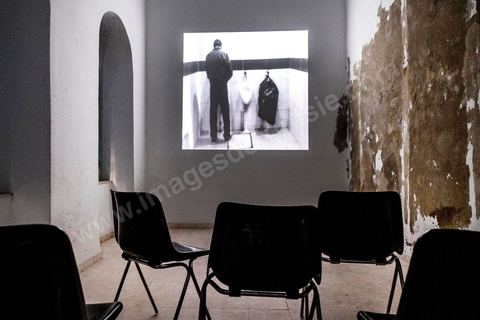
October 4, 2017: Dream City, Tunis Medina. Video installation by Fakhri el Ghezal titled “Héni éltéli”: “Wherever it falls, Fakhri El Ghezal’s gaze lends its solitude to more than one image. This video project unfolds, from one screen to the next, like so many variations on a single theme: drawing from everyday life, the videographer has decided to explore, day by day and without giving it too much thought, the realms of the intimate and the fictional. Armed with his cell phone, he captures—in varying durations—what passes by, comes to be, and unravels before his eyes. Between the routine and the isolation to which his well-oiled routine confines him; between death, which suddenly intrudes upon this daily life, and the grieving process that begins, certain threads of the artist’s post-prison experience replay in a loop. Bathed in black and white that yields as much to the present as to memory, Fakhri El Ghezal’s video work invites the viewer to keep their “third eye” open.”
M36-535 · 2017
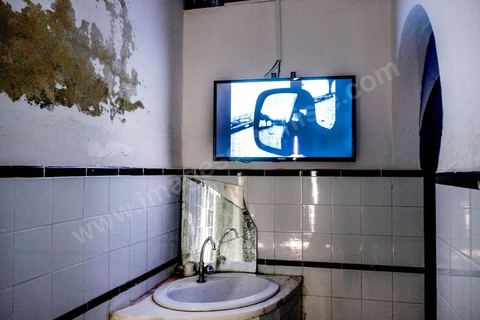
October 4, 2017: Dream City, Tunis Medina. Video installation by Fakhri el Ghezal titled “Héni éltéli”: “Wherever it falls, Fakhri El Ghezal’s gaze lends its solitude to more than one image. This video project unfolds, from one screen to the next, like so many variations on a single theme: drawing from everyday life, the videographer has decided to explore, day by day and without giving it too much thought, the realms of the intimate and the fictional. Armed with his cell phone, he captures—in varying durations—what passes by, comes to be, and unravels before his eyes. Between the routine and the isolation to which his well-oiled routine confines him; between death, which suddenly intrudes upon this daily life, and the grieving process that begins, certain threads of the artist’s post-prison experience replay in a loop. Bathed in black and white that yields as much to the present as to memory, Fakhri El Ghezal’s video work invites the viewer to keep their “third eye” open.”
M36-536 · 2017
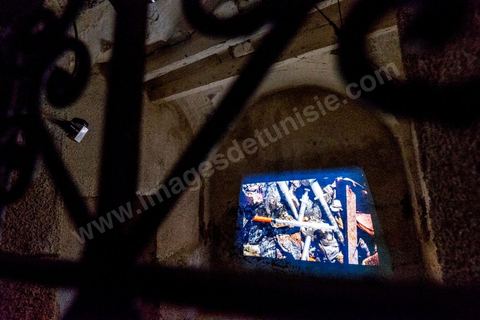
October 4, 2017: Dream City in the Medina of Tunis. Exhibition and installation by visual artist Héla Ammar titled “A contre-jour” (Backlit): in photography, backlighting occurs when light strikes the subject from the side opposite the direction in which the viewer is looking; the subject’s features then fade into the background, giving way to its surroundings. It is through this factual illumination that the story shared today by a large portion of our youth begins. This semi-darkness, where the subject fades into the background in favor of the violence and precariousness of their environment, must nevertheless give way to another light—the light that each of these young people carries within themselves as individuals.
M36-537 · 2017
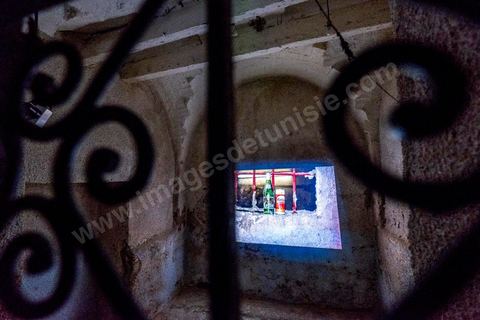
October 4, 2017: Dream City in the Medina of Tunis. Exhibition and installation by visual artist Héla Ammar titled “A contre-jour” (Backlit): in photography, backlighting occurs when light strikes the subject from the side opposite the direction in which the viewer is looking; the subject’s features then fade into the background, giving way to its surroundings. It is through this factual illumination that the story shared today by a large portion of our youth begins. This semi-darkness, where the subject fades into the background in favor of the violence and precariousness of their environment, must nevertheless give way to another light—the light that each of these young people carries within themselves as individuals.
M36-538 · 2017
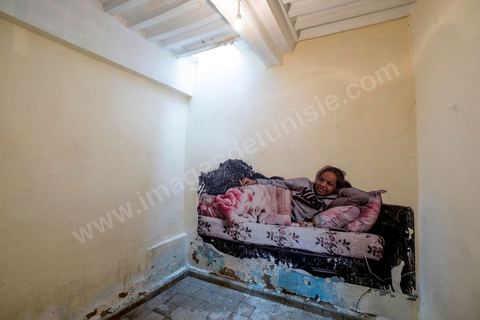
October 4, 2017: Dream City in the Medina of Tunis. Exhibition and installation by visual artist Héla Ammar titled “A contre-jour” (Backlit): in photography, backlighting occurs when light strikes the subject from the side opposite the direction in which the viewer is looking; the subject’s features then fade into the background, giving way to its surroundings. It is through this factual illumination that the story shared today by a large portion of our youth begins. This semi-darkness, where the subject fades into the background in favor of the violence and precariousness of their environment, must nevertheless give way to another light—the light that each of these young people carries within themselves as individuals.
M36-539 · 2017
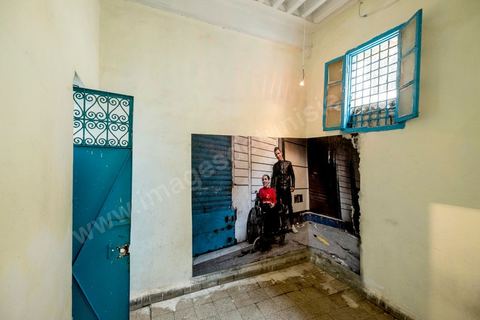
October 4, 2017: Dream City in the Medina of Tunis. Exhibition and installation by visual artist Héla Ammar titled “A contre-jour” (Backlit): in photography, backlighting occurs when light strikes the subject from the side opposite the direction in which the viewer is looking; the subject’s features then fade into the background, giving way to its surroundings. It is through this factual illumination that the story shared today by a large portion of our youth begins. This semi-darkness, where the subject fades into the background in favor of the violence and precariousness of their environment, must nevertheless give way to another light—the light that each of these young people carries within themselves as individuals.
M36-540 · 2017
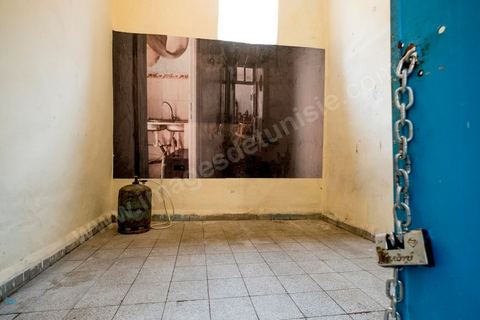
October 4, 2017: Dream City in the Medina of Tunis. Exhibition and installation by visual artist Héla Ammar titled “A contre-jour” (Backlit): in photography, backlighting occurs when light strikes the subject from the side opposite the direction in which the viewer is looking; the subject’s features then fade into the background, giving way to its surroundings. It is through this factual illumination that the story shared today by a large portion of our youth begins. This semi-darkness, where the subject fades into the background in favor of the violence and precariousness of their environment, must nevertheless give way to another light—the light that each of these young people carries within themselves as individuals.
M36-541 · 2017
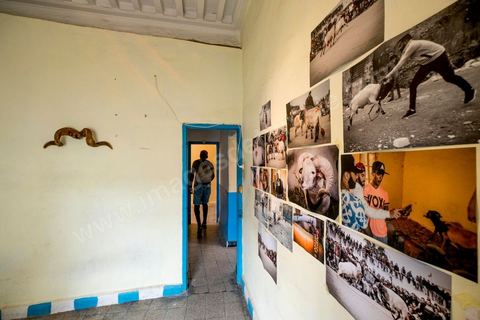
October 4, 2017: Dream City in the Medina of Tunis. Exhibition and installation by visual artist Héla Ammar titled “A contre-jour” (Backlit): in photography, backlighting occurs when light strikes the subject from the side opposite the direction in which the viewer is looking; the subject’s features then fade into the background, giving way to its surroundings. It is through this factual illumination that the story shared today by a large portion of our youth begins. This semi-darkness, where the subject fades into the background in favor of the violence and precariousness of their environment, must nevertheless give way to another light—the light that each of these young people carries within themselves as individuals.
M36-542 · 2017
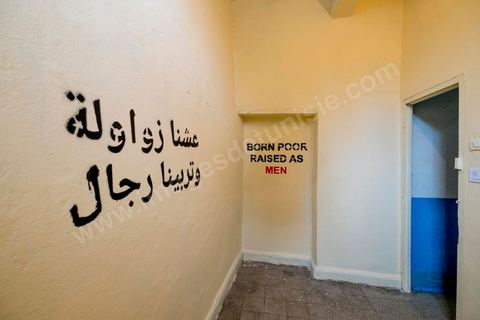
October 4, 2017: Dream City in the Medina of Tunis. Exhibition and installation by visual artist Héla Ammar titled “A contre-jour” (Backlit): in photography, backlighting occurs when light strikes the subject from the side opposite the direction in which the viewer is looking; the subject’s features then fade into the background, giving way to its surroundings. It is through this factual illumination that the story shared today by a large portion of our youth begins. This semi-darkness, where the subject fades into the background in favor of the violence and precariousness of their environment, must nevertheless give way to another light—the light that each of these young people carries within themselves as individuals.
M36-543 · 2017
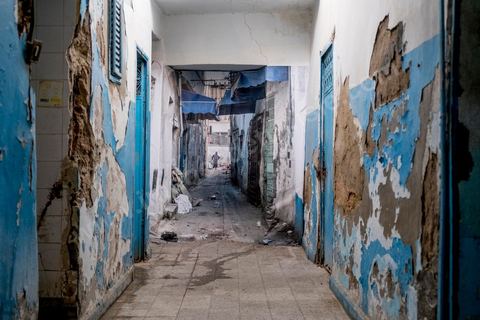
October 4, 2017: Dream City in the Medina of Tunis. Exhibition and installation by visual artist Héla Ammar titled “A contre-jour” (Backlit): in photography, backlighting occurs when light strikes the subject from the side opposite the direction in which the viewer is looking; the subject’s features then fade into the background, giving way to its surroundings. It is through this factual illumination that the story shared today by a large portion of our youth begins. This semi-darkness, where the subject fades into the background in favor of the violence and precariousness of their environment, must nevertheless give way to another light—the light that each of these young people carries within themselves as individuals.
M36-544 · 2017
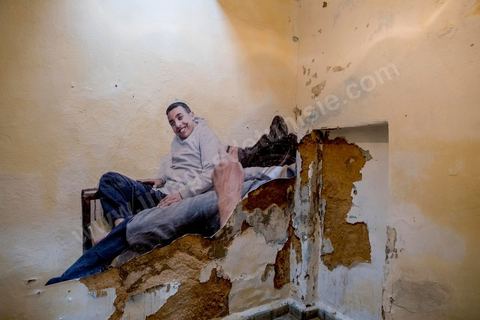
October 4, 2017: Dream City in the Medina of Tunis. Exhibition and installation by visual artist Héla Ammar titled “A contre-jour” (Backlit): in photography, backlighting occurs when light strikes the subject from the side opposite the direction in which the viewer is looking; the subject’s features then fade into the background, giving way to its surroundings. It is through this factual illumination that the story shared today by a large portion of our youth begins. This semi-darkness, where the subject fades into the background in favor of the violence and precariousness of their environment, must nevertheless give way to another light—the light that each of these young people carries within themselves as individuals.
M36-545 · 2017
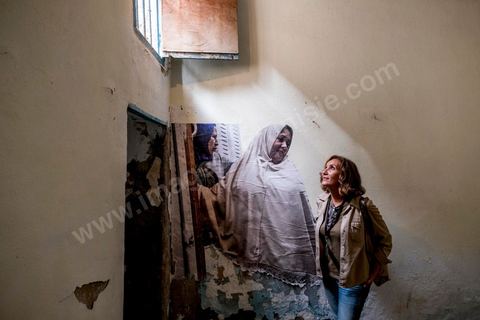
October 4, 2017: Dream City in the Medina of Tunis. Exhibition and installation by visual artist Héla Ammar titled “A contre-jour” (Backlit): in photography, backlighting occurs when light strikes the subject from the side opposite the direction in which the viewer is looking; the subject’s features then fade into the background, giving way to its surroundings. It is through this factual illumination that the story shared today by a large portion of our youth begins. This semi-darkness, where the subject fades into the background in favor of the violence and precariousness of their environment, must nevertheless give way to another light—the light that each of these young people carries within themselves as individuals.
M36-546 · 2017
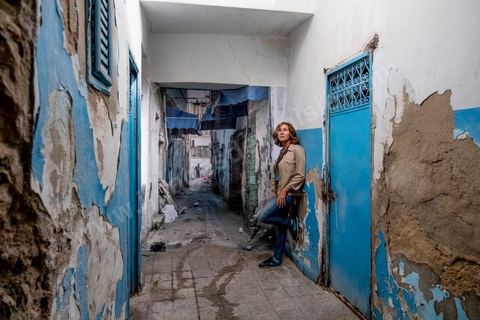
October 4, 2017: Dream City in the Medina of Tunis. Exhibition and installation by visual artist Héla Ammar titled “A contre-jour” (Backlit): in photography, backlighting occurs when light strikes the subject from the side opposite the direction in which the viewer is looking; the subject’s features then fade into the background, giving way to its surroundings. It is through this factual illumination that the story shared today by a large portion of our youth begins. This semi-darkness, where the subject fades into the background in favor of the violence and precariousness of their environment, must nevertheless give way to another light—the light that each of these young people carries within themselves as individuals.
M36-547 · 2017