M36-700 Violence Against Women 15102017
1–41 of 41
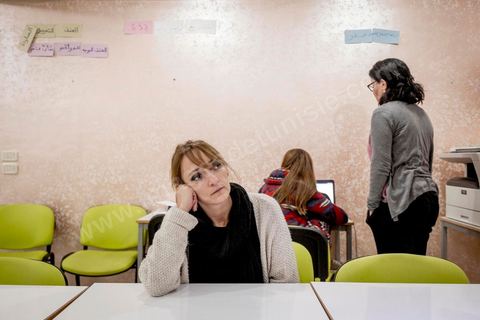
October 7, 2017: Karima Brini, Founder and President of the “Femme Citoyenneté” association, at the association’s office in El Kef. This is a group of independent women and men who volunteer their time, convinced that the reconstruction of their country and the establishment of true democracy cannot be achieved without the participation of the majority of women, and determined to commit themselves to advancing women’s freedom and dignity. They work to combat the precarious situation of women and discrimination, and strive for an egalitarian society by carrying out initiatives to defend and advance women’s rights in the economic, social, cultural, and political spheres.
M36-724 · 2017
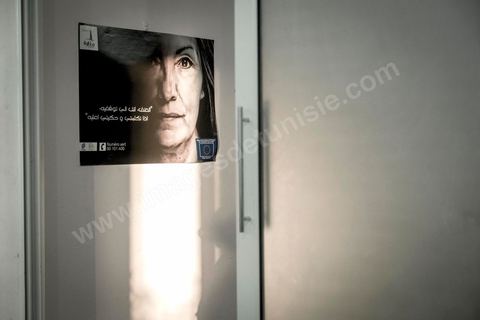
October 7, 2017: Karima Brini, Founder and President of the “Femme Citoyenneté” association, at the association’s office in El Kef. This is a group of independent women and men who volunteer their time, convinced that the reconstruction of their country and the establishment of true democracy cannot be achieved without the participation of the majority of women, and determined to commit themselves to advancing women’s freedom and dignity. They work to combat the precarious situation of women and discrimination, and strive for an egalitarian society by carrying out initiatives to defend and advance women’s rights in the economic, social, cultural, and political spheres.
M36-723 · 2017
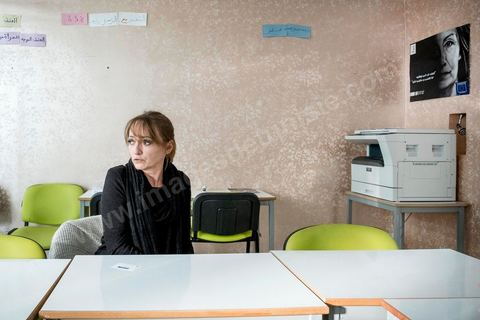
October 7, 2017: Karima Brini, Founder and President of the “Femme Citoyenneté” association, at the association’s office in El Kef. This is a group of independent women and men who volunteer their time, convinced that the reconstruction of their country and the establishment of true democracy cannot be achieved without the participation of the majority of women, and determined to commit themselves to advancing women’s freedom and dignity. They work to combat the precarious situation of women and discrimination, and strive for an egalitarian society by carrying out initiatives to defend and advance women’s rights in the economic, social, cultural, and political spheres.
M36-722 · 2017
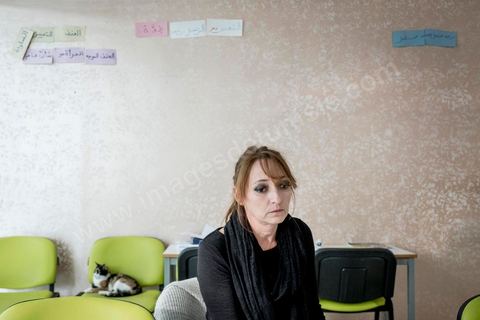
October 7, 2017: Karima Brini, Founder and President of the “Femme Citoyenneté” association, at the association’s office in El Kef. This is a group of independent women and men who volunteer their time, convinced that the reconstruction of their country and the establishment of true democracy cannot be achieved without the participation of the majority of women, and determined to commit themselves to advancing women’s freedom and dignity. They work to combat the precarious situation of women and discrimination, and strive for an egalitarian society by carrying out initiatives to defend and advance women’s rights in the economic, social, cultural, and political spheres.
M36-721 · 2017
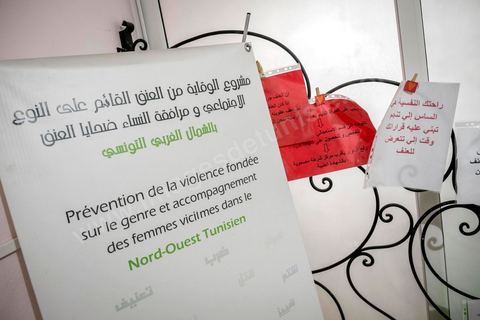
October 7, 2017: Karima Brini, Founder and President of the “Femme Citoyenneté” association, at the association’s office in El Kef. This is a group of independent women and men who volunteer their time, convinced that the reconstruction of their country and the establishment of true democracy cannot be achieved without the participation of the majority of women, and determined to commit themselves to advancing women’s freedom and dignity. They work to combat the precarious situation of women and discrimination, and strive for an egalitarian society by carrying out initiatives to defend and advance women’s rights in the economic, social, cultural, and political spheres.
M36-720 · 2017
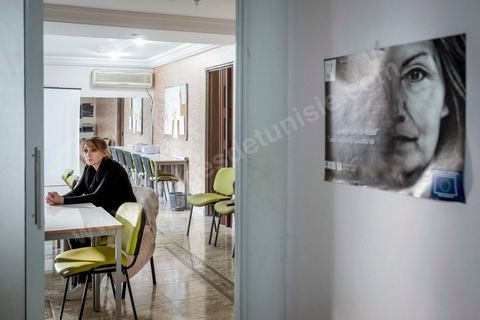
October 7, 2017: Karima Brini, Founder and President of the “Femme Citoyenneté” association, at the association’s office in El Kef. This is a group of independent women and men who volunteer their time, convinced that the reconstruction of their country and the establishment of true democracy cannot be achieved without the participation of the majority of women, and determined to commit themselves to advancing women’s freedom and dignity. They work to combat the precarious situation of women and discrimination, and strive for an egalitarian society by carrying out initiatives to defend and advance women’s rights in the economic, social, cultural, and political spheres.
M36-719 · 2017
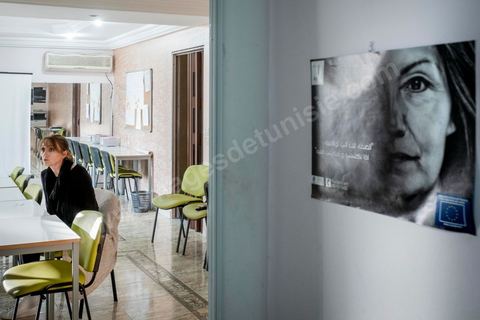
October 7, 2017: Karima Brini, Founder and President of the “Femme Citoyenneté” association, at the association’s office in El Kef. This is a group of independent women and men who volunteer their time, convinced that the reconstruction of their country and the establishment of true democracy cannot be achieved without the participation of the majority of women, and determined to commit themselves to advancing women’s freedom and dignity. They work to combat the precarious situation of women and discrimination, and strive for an egalitarian society by carrying out initiatives to defend and advance women’s rights in the economic, social, cultural, and political spheres.
M36-718 · 2017
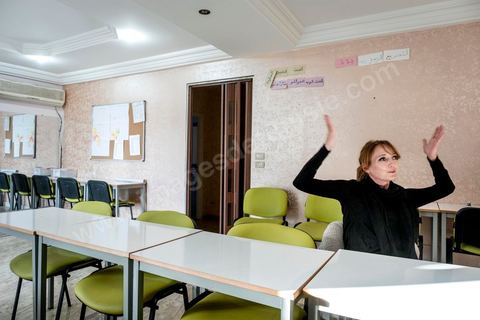
October 7, 2017: Karima Brini, Founder and President of the “Femme Citoyenneté” association, at the association’s office in El Kef. This is a group of independent women and men who volunteer their time, convinced that the reconstruction of their country and the establishment of true democracy cannot be achieved without the participation of the majority of women, and determined to commit themselves to advancing women’s freedom and dignity. They work to combat the precarious situation of women and discrimination, and strive for an egalitarian society by carrying out initiatives to defend and advance women’s rights in the economic, social, cultural, and political spheres.
M36-717 · 2017
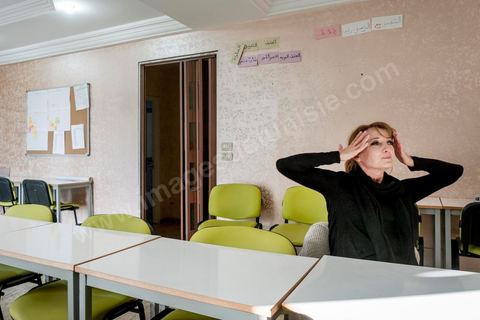
October 7, 2017: Karima Brini, Founder and President of the “Femme Citoyenneté” association, at the association’s office in El Kef. This is a group of independent women and men who volunteer their time, convinced that the reconstruction of their country and the establishment of true democracy cannot be achieved without the participation of the majority of women, and determined to commit themselves to advancing women’s freedom and dignity. They work to combat the precarious situation of women and discrimination, and strive for an egalitarian society by carrying out initiatives to defend and advance women’s rights in the economic, social, cultural, and political spheres.
M36-716 · 2017
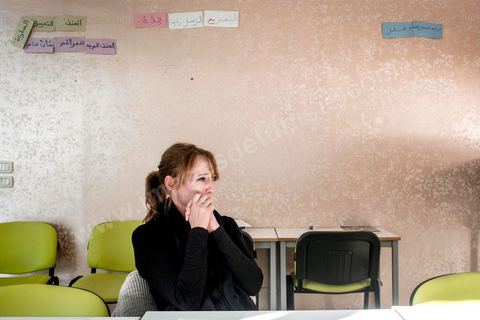
October 7, 2017: Karima Brini, Founder and President of the “Femme Citoyenneté” association, at the association’s office in El Kef. This is a group of independent women and men who volunteer their time, convinced that the reconstruction of their country and the establishment of true democracy cannot be achieved without the participation of the majority of women, and determined to commit themselves to advancing women’s freedom and dignity. They work to combat the precarious situation of women and discrimination, and strive for an egalitarian society by carrying out initiatives to defend and advance women’s rights in the economic, social, cultural, and political spheres.
M36-715 · 2017
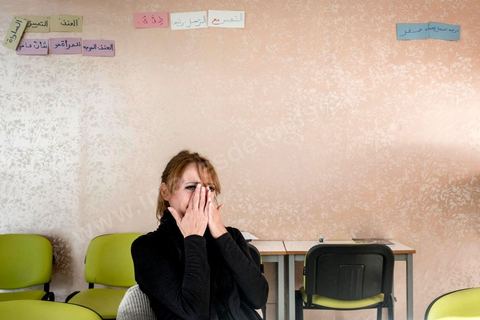
October 7, 2017: Karima Brini, Founder and President of the “Femme Citoyenneté” association, at the association’s office in El Kef. This is a group of independent women and men who volunteer their time, convinced that the reconstruction of their country and the establishment of true democracy cannot be achieved without the participation of the majority of women, and determined to commit themselves to advancing women’s freedom and dignity. They work to combat the precarious situation of women and discrimination, and strive for an egalitarian society by carrying out initiatives to defend and advance women’s rights in the economic, social, cultural, and political spheres.
M36-714 · 2017

7 octobre 2017 : Afraa Ben Azza. Afraa Ben Azza n’a que 19 ans, mais déjà une solide réputation d’activiste qui se bat sur tous les fronts, pour la sauvegarde du patrimoine de la cité historique du Kef, pour la préparation d’un festival du court-métrage comme pour l’émancipation des femmes. Afraa vit « librement ». Les interpellations de la police lorsqu’elle manifestait n’ont fait que renforcer sa détermination « J’ai fait ma révolution contre un système patriarcal machiste. J’ai construit mon entourage », avance-t-elle fièrement. Devant la poigne et l’obstination de la frêle jeune femme, ses parents ont fini par battre en retraite et admettre son insolente indépendance. A 16 ans Afraa a déposé plainte contre son frère de 22 ans auprès des services de protection de l’enfance. « J’ai été battue par mon frère pour avoir porté plainte ». Depuis l’âge de 13 ans, parce qu’elle fulminait contre la ségrégation entre hommes et femmes à la maison, son frère la battait pour la remettre dans le droit chemin de la soumission avec, si ce n’est l’assentiment, le laisser faire de ses parents. « Tout était bon pour être frappée ». Son fiancé, le célèbre blogueur activiste Aziz Amami, l’une des figures du soulèvement de 2011, juge bon d’ajouter : « il est normal qu’un frère éduque sa sœur ». Et d’expliciter : « en tunisien frapper se dit éduquer ».
M36-733 · 2017

7 octobre 2017 : Afraa Ben Azza. Afraa Ben Azza n’a que 19 ans, mais déjà une solide réputation d’activiste qui se bat sur tous les fronts, pour la sauvegarde du patrimoine de la cité historique du Kef, pour la préparation d’un festival du court-métrage comme pour l’émancipation des femmes. Afraa vit « librement ». Les interpellations de la police lorsqu’elle manifestait n’ont fait que renforcer sa détermination « J’ai fait ma révolution contre un système patriarcal machiste. J’ai construit mon entourage », avance-t-elle fièrement. Devant la poigne et l’obstination de la frêle jeune femme, ses parents ont fini par battre en retraite et admettre son insolente indépendance. A 16 ans Afraa a déposé plainte contre son frère de 22 ans auprès des services de protection de l’enfance. « J’ai été battue par mon frère pour avoir porté plainte ». Depuis l’âge de 13 ans, parce qu’elle fulminait contre la ségrégation entre hommes et femmes à la maison, son frère la battait pour la remettre dans le droit chemin de la soumission avec, si ce n’est l’assentiment, le laisser faire de ses parents. « Tout était bon pour être frappée ». Son fiancé, le célèbre blogueur activiste Aziz Amami, l’une des figures du soulèvement de 2011, juge bon d’ajouter : « il est normal qu’un frère éduque sa sœur ». Et d’expliciter : « en tunisien frapper se dit éduquer ».
M36-732 · 2017

7 octobre 2017 : Afraa Ben Azza. Afraa Ben Azza n’a que 19 ans, mais déjà une solide réputation d’activiste qui se bat sur tous les fronts, pour la sauvegarde du patrimoine de la cité historique du Kef, pour la préparation d’un festival du court-métrage comme pour l’émancipation des femmes. Afraa vit « librement ». Les interpellations de la police lorsqu’elle manifestait n’ont fait que renforcer sa détermination « J’ai fait ma révolution contre un système patriarcal machiste. J’ai construit mon entourage », avance-t-elle fièrement. Devant la poigne et l’obstination de la frêle jeune femme, ses parents ont fini par battre en retraite et admettre son insolente indépendance. A 16 ans Afraa a déposé plainte contre son frère de 22 ans auprès des services de protection de l’enfance. « J’ai été battue par mon frère pour avoir porté plainte ». Depuis l’âge de 13 ans, parce qu’elle fulminait contre la ségrégation entre hommes et femmes à la maison, son frère la battait pour la remettre dans le droit chemin de la soumission avec, si ce n’est l’assentiment, le laisser faire de ses parents. « Tout était bon pour être frappée ». Son fiancé, le célèbre blogueur activiste Aziz Amami, l’une des figures du soulèvement de 2011, juge bon d’ajouter : « il est normal qu’un frère éduque sa sœur ». Et d’expliciter : « en tunisien frapper se dit éduquer ».
M36-731 · 2017

7 octobre 2017 : Afraa Ben Azza. Afraa Ben Azza n’a que 19 ans, mais déjà une solide réputation d’activiste qui se bat sur tous les fronts, pour la sauvegarde du patrimoine de la cité historique du Kef, pour la préparation d’un festival du court-métrage comme pour l’émancipation des femmes. Afraa vit « librement ». Les interpellations de la police lorsqu’elle manifestait n’ont fait que renforcer sa détermination « J’ai fait ma révolution contre un système patriarcal machiste. J’ai construit mon entourage », avance-t-elle fièrement. Devant la poigne et l’obstination de la frêle jeune femme, ses parents ont fini par battre en retraite et admettre son insolente indépendance. A 16 ans Afraa a déposé plainte contre son frère de 22 ans auprès des services de protection de l’enfance. « J’ai été battue par mon frère pour avoir porté plainte ». Depuis l’âge de 13 ans, parce qu’elle fulminait contre la ségrégation entre hommes et femmes à la maison, son frère la battait pour la remettre dans le droit chemin de la soumission avec, si ce n’est l’assentiment, le laisser faire de ses parents. « Tout était bon pour être frappée ». Son fiancé, le célèbre blogueur activiste Aziz Amami, l’une des figures du soulèvement de 2011, juge bon d’ajouter : « il est normal qu’un frère éduque sa sœur ». Et d’expliciter : « en tunisien frapper se dit éduquer ».
M36-730 · 2017
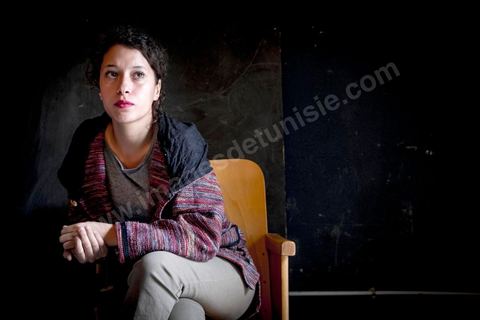
7 octobre 2017 : Afraa Ben Azza. Afraa Ben Azza n’a que 19 ans, mais déjà une solide réputation d’activiste qui se bat sur tous les fronts, pour la sauvegarde du patrimoine de la cité historique du Kef, pour la préparation d’un festival du court-métrage comme pour l’émancipation des femmes. Afraa vit « librement ». Les interpellations de la police lorsqu’elle manifestait n’ont fait que renforcer sa détermination « J’ai fait ma révolution contre un système patriarcal machiste. J’ai construit mon entourage », avance-t-elle fièrement. Devant la poigne et l’obstination de la frêle jeune femme, ses parents ont fini par battre en retraite et admettre son insolente indépendance. A 16 ans Afraa a déposé plainte contre son frère de 22 ans auprès des services de protection de l’enfance. « J’ai été battue par mon frère pour avoir porté plainte ». Depuis l’âge de 13 ans, parce qu’elle fulminait contre la ségrégation entre hommes et femmes à la maison, son frère la battait pour la remettre dans le droit chemin de la soumission avec, si ce n’est l’assentiment, le laisser faire de ses parents. « Tout était bon pour être frappée ». Son fiancé, le célèbre blogueur activiste Aziz Amami, l’une des figures du soulèvement de 2011, juge bon d’ajouter : « il est normal qu’un frère éduque sa sœur ». Et d’expliciter : « en tunisien frapper se dit éduquer ».
M36-729 · 2017
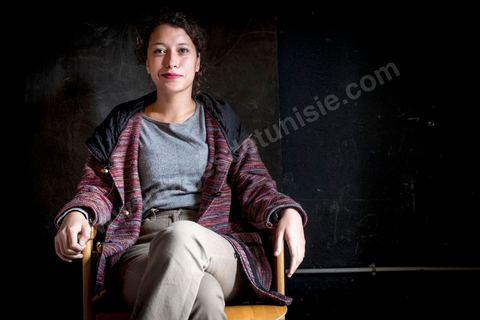
7 octobre 2017 : Afraa Ben Azza. Afraa Ben Azza n’a que 19 ans, mais déjà une solide réputation d’activiste qui se bat sur tous les fronts, pour la sauvegarde du patrimoine de la cité historique du Kef, pour la préparation d’un festival du court-métrage comme pour l’émancipation des femmes. Afraa vit « librement ». Les interpellations de la police lorsqu’elle manifestait n’ont fait que renforcer sa détermination « J’ai fait ma révolution contre un système patriarcal machiste. J’ai construit mon entourage », avance-t-elle fièrement. Devant la poigne et l’obstination de la frêle jeune femme, ses parents ont fini par battre en retraite et admettre son insolente indépendance. A 16 ans Afraa a déposé plainte contre son frère de 22 ans auprès des services de protection de l’enfance. « J’ai été battue par mon frère pour avoir porté plainte ». Depuis l’âge de 13 ans, parce qu’elle fulminait contre la ségrégation entre hommes et femmes à la maison, son frère la battait pour la remettre dans le droit chemin de la soumission avec, si ce n’est l’assentiment, le laisser faire de ses parents. « Tout était bon pour être frappée ». Son fiancé, le célèbre blogueur activiste Aziz Amami, l’une des figures du soulèvement de 2011, juge bon d’ajouter : « il est normal qu’un frère éduque sa sœur ». Et d’expliciter : « en tunisien frapper se dit éduquer ».
M36-728 · 2017

7 octobre 2017 : Afraa Ben Azza. Afraa Ben Azza n’a que 19 ans, mais déjà une solide réputation d’activiste qui se bat sur tous les fronts, pour la sauvegarde du patrimoine de la cité historique du Kef, pour la préparation d’un festival du court-métrage comme pour l’émancipation des femmes. Afraa vit « librement ». Les interpellations de la police lorsqu’elle manifestait n’ont fait que renforcer sa détermination « J’ai fait ma révolution contre un système patriarcal machiste. J’ai construit mon entourage », avance-t-elle fièrement. Devant la poigne et l’obstination de la frêle jeune femme, ses parents ont fini par battre en retraite et admettre son insolente indépendance. A 16 ans Afraa a déposé plainte contre son frère de 22 ans auprès des services de protection de l’enfance. « J’ai été battue par mon frère pour avoir porté plainte ». Depuis l’âge de 13 ans, parce qu’elle fulminait contre la ségrégation entre hommes et femmes à la maison, son frère la battait pour la remettre dans le droit chemin de la soumission avec, si ce n’est l’assentiment, le laisser faire de ses parents. « Tout était bon pour être frappée ». Son fiancé, le célèbre blogueur activiste Aziz Amami, l’une des figures du soulèvement de 2011, juge bon d’ajouter : « il est normal qu’un frère éduque sa sœur ». Et d’expliciter : « en tunisien frapper se dit éduquer ».
M36-727 · 2017

7 octobre 2017 : Afraa Ben Azza avec l'équipe d'organisation du Festival. Afraa Ben Azza n’a que 19 ans, mais déjà une solide réputation d’activiste qui se bat sur tous les fronts, pour la sauvegarde du patrimoine de la cité historique du Kef, pour la préparation d’un festival du court-métrage comme pour l’émancipation des femmes. Afraa vit « librement ». Les interpellations de la police lorsqu’elle manifestait n’ont fait que renforcer sa détermination « J’ai fait ma révolution contre un système patriarcal machiste. J’ai construit mon entourage », avance-t-elle fièrement. Devant la poigne et l’obstination de la frêle jeune femme, ses parents ont fini par battre en retraite et admettre son insolente indépendance. A 16 ans Afraa a déposé plainte contre son frère de 22 ans auprès des services de protection de l’enfance. « J’ai été battue par mon frère pour avoir porté plainte ». Depuis l’âge de 13 ans, parce qu’elle fulminait contre la ségrégation entre hommes et femmes à la maison, son frère la battait pour la remettre dans le droit chemin de la soumission avec, si ce n’est l’assentiment, le laisser faire de ses parents. « Tout était bon pour être frappée ». Son fiancé, le célèbre blogueur activiste Aziz Amami, l’une des figures du soulèvement de 2011, juge bon d’ajouter : « il est normal qu’un frère éduque sa sœur ». Et d’expliciter : « en tunisien frapper se dit éduquer ».
M36-726 · 2017

7 octobre 2017 : Afraa Ben Azza. Afraa Ben Azza n’a que 19 ans, mais déjà une solide réputation d’activiste qui se bat sur tous les fronts, pour la sauvegarde du patrimoine de la cité historique du Kef, pour la préparation d’un festival du court-métrage comme pour l’émancipation des femmes. Afraa vit « librement ». Les interpellations de la police lorsqu’elle manifestait n’ont fait que renforcer sa détermination « J’ai fait ma révolution contre un système patriarcal machiste. J’ai construit mon entourage », avance-t-elle fièrement. Devant la poigne et l’obstination de la frêle jeune femme, ses parents ont fini par battre en retraite et admettre son insolente indépendance. A 16 ans Afraa a déposé plainte contre son frère de 22 ans auprès des services de protection de l’enfance. « J’ai été battue par mon frère pour avoir porté plainte ». Depuis l’âge de 13 ans, parce qu’elle fulminait contre la ségrégation entre hommes et femmes à la maison, son frère la battait pour la remettre dans le droit chemin de la soumission avec, si ce n’est l’assentiment, le laisser faire de ses parents. « Tout était bon pour être frappée ». Son fiancé, le célèbre blogueur activiste Aziz Amami, l’une des figures du soulèvement de 2011, juge bon d’ajouter : « il est normal qu’un frère éduque sa sœur ». Et d’expliciter : « en tunisien frapper se dit éduquer ».
M36-725 · 2017
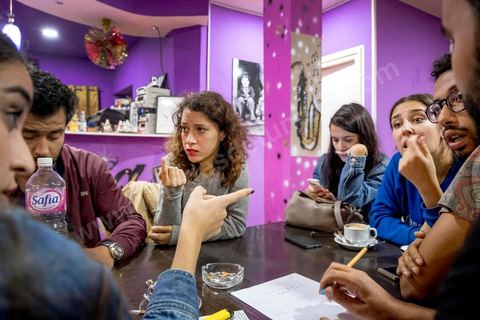
October 6, 2017: Afraa Ben Azza At Cirta, the private cultural center located on the third floor of an insurance company building in the heart of Kef, she moves like a muse among young people who dream of freedom. Girls and boys gather there in the evening at this one and only coed nightlife spot to drink soda, smoke cigarettes, and put the world to rights—like rebels breaking the social codes that descend on the city like a curfew, effectively making the streets off-limits to women after 6 p.m. and once night falls.
M36-736 · 2017
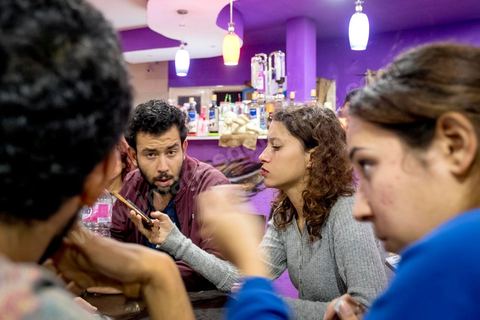
October 6, 2017: Afraa Ben Azza At Cirta, the private cultural center located on the third floor of an insurance company building in the heart of Kef, she moves like a muse among young people who dream of freedom. Girls and boys gather there in the evening at this one and only coed nightlife spot to drink soda, smoke cigarettes, and put the world to rights—like rebels breaking the social codes that descend on the city like a curfew, effectively making the streets off-limits to women after 6 p.m. and once night falls.
M36-735 · 2017
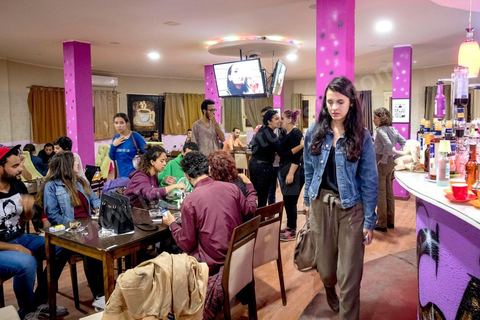
6 octobre 2017 : Au Cirta, le centre culturel privé qui s’est installé au troisième étage d’un immeuble d’une compagnie d’assurance au cœur du Kef, elle évolue telle une égérie au milieu des jeunes qui rêvent de liberté. Filles et garçons se retrouvent là le soir dans cet unique lieu mixte de vie nocturne, pour boire des sodas, fumer des cigarettes et refaire le monde, tels des rebelles brisant les codes sociaux qui s’abattent comme un couvre-feu sur la ville, faisant de la rue un espace interdit de facto aux femmes dès 18 heures et la nuit tombée.
M36-734 · 2017
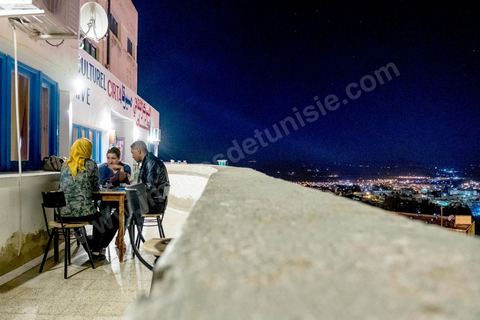
6 octobre 2017 : Terrasse du CIRTA. Au Cirta, le centre culturel privé qui s’est installé au troisième étage d’un immeuble d’une compagnie d’assurance au cœur du Kef, elle évolue telle une égérie au milieu des jeunes qui rêvent de liberté. Filles et garçons se retrouvent là le soir dans cet unique lieu mixte de vie nocturne, pour boire des sodas, fumer des cigarettes et refaire le monde, tels des rebelles brisant les codes sociaux qui s’abattent comme un couvre-feu sur la ville, faisant de la rue un espace interdit de facto aux femmes dès 18 heures et la nuit tombée.
M36-740 · 2017

October 6, 2017: A view of El Kef at night from the CIRTA terrace. At CIRTA, the private cultural center housed on the third floor of an insurance company building in the heart of Le Kef, she moves like a muse among young people who dream of freedom. Girls and boys gather there in the evening at this unique mixed-gender nightlife spot to drink sodas, smoke cigarettes, and put the world to rights—like rebels breaking the social codes that descend on the city like a curfew, effectively making the streets off-limits to women after 6 p.m. and once night falls.
M36-739 · 2017
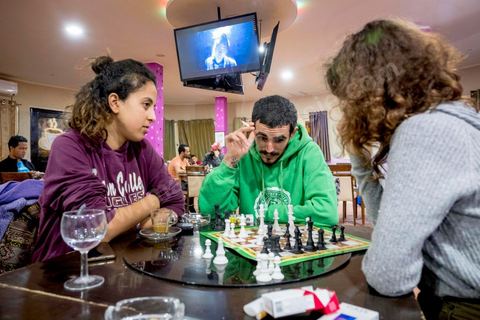
6 octobre 2017 : Au Cirta, le centre culturel privé qui s’est installé au troisième étage d’un immeuble d’une compagnie d’assurance au cœur du Kef, elle évolue telle une égérie au milieu des jeunes qui rêvent de liberté. Filles et garçons se retrouvent là le soir dans cet unique lieu mixte de vie nocturne, pour boire des sodas, fumer des cigarettes et refaire le monde, tels des rebelles brisant les codes sociaux qui s’abattent comme un couvre-feu sur la ville, faisant de la rue un espace interdit de facto aux femmes dès 18 heures et la nuit tombée.
M36-738 · 2017
![October 6, 2017: In the office of activist attorney Fatma Ben Arfa, Sanaa, a woman who has been a victim of domestic violence. “Women always care about their husbands; they don’t want to get divorced. A divorced woman has no chance of remarrying. Who would agree to marry a divorced woman with children?” asks attorney Fatma Ben Arfa. Behind the padded door of her office, Attorney Ben Arfa—who prides herself on “being tough on men”—is the confidante for the most heart-wrenching stories. “Women come to file complaints of assault and to request alimony [paid between married couples],” explains the attorney. Such is the case of a 27-year-old woman who married in 2016—believing, as she thought, out of love—after three romantic declarations and promises of a happy life from the man who would become her husband, only to be beaten so severely in the first months of her marriage that she lost her spleen. “ “As soon as she files for spousal support, the husband comes and asks for forgiveness,” explains the lawyer, “but the payment of spousal support—which is granted automatically—usually triggers a new outburst of violence. Yet as long as the couple is married, the woman is required to remain in the marital home.”](/uploads/actualites/2017/m36-700-violences-aux-femmes-15102017/M36-713_thumb.jpg)
October 6, 2017: In the office of activist attorney Fatma Ben Arfa, Sanaa, a woman who has been a victim of domestic violence. “Women always care about their husbands; they don’t want to get divorced. A divorced woman has no chance of remarrying. Who would agree to marry a divorced woman with children?” asks attorney Fatma Ben Arfa. Behind the padded door of her office, Attorney Ben Arfa—who prides herself on “being tough on men”—is the confidante for the most heart-wrenching stories. “Women come to file complaints of assault and to request alimony [paid between married couples],” explains the attorney. Such is the case of a 27-year-old woman who married in 2016—believing, as she thought, out of love—after three romantic declarations and promises of a happy life from the man who would become her husband, only to be beaten so severely in the first months of her marriage that she lost her spleen. “ “As soon as she files for spousal support, the husband comes and asks for forgiveness,” explains the lawyer, “but the payment of spousal support—which is granted automatically—usually triggers a new outburst of violence. Yet as long as the couple is married, the woman is required to remain in the marital home.”
M36-713 · 2017
![October 6, 2017: In the office of activist attorney Fatma Ben Arfa, Sanaa, a woman who has been a victim of domestic violence. “Women always care about their husbands; they don’t want to get divorced. A divorced woman has no chance of remarrying. Who would agree to marry a divorced woman with children?” asks attorney Fatma Ben Arfa. Behind the padded door of her office, Attorney Ben Arfa—who prides herself on “being tough on men”—is the confidante for the most heart-wrenching stories. “Women come to file complaints of assault and to request alimony [paid between married couples],” explains the attorney. Such is the case of a 27-year-old woman who married in 2016—believing, as she thought, out of love—after three romantic declarations and promises of a happy life from the man who would become her husband, only to be beaten so severely in the first months of her marriage that she lost her spleen. “ “As soon as she files for spousal support, the husband comes and asks for forgiveness,” explains the lawyer, “but the payment of spousal support—which is granted automatically—usually triggers a new outburst of violence. Yet as long as the couple is married, the woman is required to remain in the marital home.”](/uploads/actualites/2017/m36-700-violences-aux-femmes-15102017/M36-712_thumb.jpg)
October 6, 2017: In the office of activist attorney Fatma Ben Arfa, Sanaa, a woman who has been a victim of domestic violence. “Women always care about their husbands; they don’t want to get divorced. A divorced woman has no chance of remarrying. Who would agree to marry a divorced woman with children?” asks attorney Fatma Ben Arfa. Behind the padded door of her office, Attorney Ben Arfa—who prides herself on “being tough on men”—is the confidante for the most heart-wrenching stories. “Women come to file complaints of assault and to request alimony [paid between married couples],” explains the attorney. Such is the case of a 27-year-old woman who married in 2016—believing, as she thought, out of love—after three romantic declarations and promises of a happy life from the man who would become her husband, only to be beaten so severely in the first months of her marriage that she lost her spleen. “ “As soon as she files for spousal support, the husband comes and asks for forgiveness,” explains the lawyer, “but the payment of spousal support—which is granted automatically—usually triggers a new outburst of violence. Yet as long as the couple is married, the woman is required to remain in the marital home.”
M36-712 · 2017
![October 6, 2017: In the office of activist attorney Fatma Ben Arfa, Sanaa, a woman who has been a victim of domestic violence. “Women always care about their husbands; they don’t want to get divorced. A divorced woman has no chance of remarrying. Who would agree to marry a divorced woman with children?” asks attorney Fatma Ben Arfa. Behind the padded door of her office, Attorney Ben Arfa—who prides herself on “being tough on men”—is the confidante for the most heart-wrenching stories. “Women come to file complaints of assault and to request alimony [paid between married couples],” explains the attorney. Such is the case of a 27-year-old woman who married in 2016—believing, as she thought, out of love—after three romantic declarations and promises of a happy life from the man who would become her husband, only to be beaten so severely in the first months of her marriage that she lost her spleen. “ “As soon as she files for spousal support, the husband comes and asks for forgiveness,” explains the lawyer, “but the payment of spousal support—which is granted automatically—usually triggers a new outburst of violence. Yet as long as the couple is married, the woman is required to remain in the marital home.”](/uploads/actualites/2017/m36-700-violences-aux-femmes-15102017/M36-711_thumb.jpg)
October 6, 2017: In the office of activist attorney Fatma Ben Arfa, Sanaa, a woman who has been a victim of domestic violence. “Women always care about their husbands; they don’t want to get divorced. A divorced woman has no chance of remarrying. Who would agree to marry a divorced woman with children?” asks attorney Fatma Ben Arfa. Behind the padded door of her office, Attorney Ben Arfa—who prides herself on “being tough on men”—is the confidante for the most heart-wrenching stories. “Women come to file complaints of assault and to request alimony [paid between married couples],” explains the attorney. Such is the case of a 27-year-old woman who married in 2016—believing, as she thought, out of love—after three romantic declarations and promises of a happy life from the man who would become her husband, only to be beaten so severely in the first months of her marriage that she lost her spleen. “ “As soon as she files for spousal support, the husband comes and asks for forgiveness,” explains the lawyer, “but the payment of spousal support—which is granted automatically—usually triggers a new outburst of violence. Yet as long as the couple is married, the woman is required to remain in the marital home.”
M36-711 · 2017
![October 6, 2017: In the office of activist attorney Fatma Ben Arfa, Sanaa, a woman who has been a victim of domestic violence. “Women always care about their husbands; they don’t want to get divorced. A divorced woman has no chance of remarrying. Who would agree to marry a divorced woman with children?” asks attorney Fatma Ben Arfa. Behind the padded door of her office, Attorney Ben Arfa—who prides herself on “being tough on men”—is the confidante for the most heart-wrenching stories. “Women come to file complaints of assault and to request alimony [paid between married couples],” explains the attorney. Such is the case of a 27-year-old woman who married in 2016—believing, as she thought, out of love—after three romantic declarations and promises of a happy life from the man who would become her husband, only to be beaten so severely in the first months of her marriage that she lost her spleen. “ “As soon as she files for spousal support, the husband comes and asks for forgiveness,” explains the lawyer, “but the payment of spousal support—which is granted automatically—usually triggers a new outburst of violence. Yet as long as the couple is married, the woman is required to remain in the marital home.”](/uploads/actualites/2017/m36-700-violences-aux-femmes-15102017/M36-710_thumb.jpg)
October 6, 2017: In the office of activist attorney Fatma Ben Arfa, Sanaa, a woman who has been a victim of domestic violence. “Women always care about their husbands; they don’t want to get divorced. A divorced woman has no chance of remarrying. Who would agree to marry a divorced woman with children?” asks attorney Fatma Ben Arfa. Behind the padded door of her office, Attorney Ben Arfa—who prides herself on “being tough on men”—is the confidante for the most heart-wrenching stories. “Women come to file complaints of assault and to request alimony [paid between married couples],” explains the attorney. Such is the case of a 27-year-old woman who married in 2016—believing, as she thought, out of love—after three romantic declarations and promises of a happy life from the man who would become her husband, only to be beaten so severely in the first months of her marriage that she lost her spleen. “ “As soon as she files for spousal support, the husband comes and asks for forgiveness,” explains the lawyer, “but the payment of spousal support—which is granted automatically—usually triggers a new outburst of violence. Yet as long as the couple is married, the woman is required to remain in the marital home.”
M36-710 · 2017
![October 6, 2017: In the office of activist attorney Fatma Ben Arfa, Sanaa, a woman who has been a victim of domestic violence. “Women always care about their husbands; they don’t want to get divorced. A divorced woman has no chance of remarrying. Who would agree to marry a divorced woman with children?” asks attorney Fatma Ben Arfa. Behind the padded door of her office, Attorney Ben Arfa—who prides herself on “being tough on men”—is the confidante for the most heart-wrenching stories. “Women come to file complaints of assault and to request alimony [paid between married couples],” explains the attorney. Such is the case of a 27-year-old woman who married in 2016—believing, as she thought, out of love—after three romantic declarations and promises of a happy life from the man who would become her husband, only to be beaten so severely in the first months of her marriage that she lost her spleen. “ “As soon as she files for spousal support, the husband comes and asks for forgiveness,” explains the lawyer, “but the payment of spousal support—which is granted automatically—usually triggers a new outburst of violence. Yet as long as the couple is married, the woman is required to remain in the marital home.”](/uploads/actualites/2017/m36-700-violences-aux-femmes-15102017/M36-709_thumb.jpg)
October 6, 2017: In the office of activist attorney Fatma Ben Arfa, Sanaa, a woman who has been a victim of domestic violence. “Women always care about their husbands; they don’t want to get divorced. A divorced woman has no chance of remarrying. Who would agree to marry a divorced woman with children?” asks attorney Fatma Ben Arfa. Behind the padded door of her office, Attorney Ben Arfa—who prides herself on “being tough on men”—is the confidante for the most heart-wrenching stories. “Women come to file complaints of assault and to request alimony [paid between married couples],” explains the attorney. Such is the case of a 27-year-old woman who married in 2016—believing, as she thought, out of love—after three romantic declarations and promises of a happy life from the man who would become her husband, only to be beaten so severely in the first months of her marriage that she lost her spleen. “ “As soon as she files for spousal support, the husband comes and asks for forgiveness,” explains the lawyer, “but the payment of spousal support—which is granted automatically—usually triggers a new outburst of violence. Yet as long as the couple is married, the woman is required to remain in the marital home.”
M36-709 · 2017
![October 6, 2017: In the office of activist attorney Fatma Ben Arfa, Sanaa, a woman who has been a victim of domestic violence. “Women always care about their husbands; they don’t want to get divorced. A divorced woman has no chance of remarrying. Who would agree to marry a divorced woman with children?” asks attorney Fatma Ben Arfa. Behind the padded door of her office, Attorney Ben Arfa—who prides herself on “being tough on men”—is the confidante for the most heart-wrenching stories. “Women come to file complaints of assault and to request alimony [paid between married couples],” explains the attorney. Such is the case of a 27-year-old woman who married in 2016—believing, as she thought, out of love—after three romantic declarations and promises of a happy life from the man who would become her husband, only to be beaten so severely in the first months of her marriage that she lost her spleen. “ “As soon as she files for spousal support, the husband comes and asks for forgiveness,” explains the lawyer, “but the payment of spousal support—which is granted automatically—usually triggers a new outburst of violence. Yet as long as the couple is married, the woman is required to remain in the marital home.”](/uploads/actualites/2017/m36-700-violences-aux-femmes-15102017/M36-708_thumb.jpg)
October 6, 2017: In the office of activist attorney Fatma Ben Arfa, Sanaa, a woman who has been a victim of domestic violence. “Women always care about their husbands; they don’t want to get divorced. A divorced woman has no chance of remarrying. Who would agree to marry a divorced woman with children?” asks attorney Fatma Ben Arfa. Behind the padded door of her office, Attorney Ben Arfa—who prides herself on “being tough on men”—is the confidante for the most heart-wrenching stories. “Women come to file complaints of assault and to request alimony [paid between married couples],” explains the attorney. Such is the case of a 27-year-old woman who married in 2016—believing, as she thought, out of love—after three romantic declarations and promises of a happy life from the man who would become her husband, only to be beaten so severely in the first months of her marriage that she lost her spleen. “ “As soon as she files for spousal support, the husband comes and asks for forgiveness,” explains the lawyer, “but the payment of spousal support—which is granted automatically—usually triggers a new outburst of violence. Yet as long as the couple is married, the woman is required to remain in the marital home.”
M36-708 · 2017
![October 6, 2017: In the office of activist attorney Fatma Ben Arfa, Sanaa, a woman who has been a victim of domestic violence. “Women always care about their husbands; they don’t want to get divorced. A divorced woman has no chance of remarrying. Who would agree to marry a divorced woman with children?” asks attorney Fatma Ben Arfa. Behind the padded door of her office, Attorney Ben Arfa—who prides herself on “being tough on men”—is the confidante for the most heart-wrenching stories. “Women come to file complaints of assault and to request alimony [paid between married couples],” explains the attorney. Such is the case of a 27-year-old woman who married in 2016—believing, as she thought, out of love—after three romantic declarations and promises of a happy life from the man who would become her husband, only to be beaten so severely in the first months of her marriage that she lost her spleen. “ “As soon as she files for spousal support, the husband comes and asks for forgiveness,” explains the lawyer, “but the payment of spousal support—which is granted automatically—usually triggers a new outburst of violence. Yet as long as the couple is married, the woman is required to remain in the marital home.”](/uploads/actualites/2017/m36-700-violences-aux-femmes-15102017/M36-707_thumb.jpg)
October 6, 2017: In the office of activist attorney Fatma Ben Arfa, Sanaa, a woman who has been a victim of domestic violence. “Women always care about their husbands; they don’t want to get divorced. A divorced woman has no chance of remarrying. Who would agree to marry a divorced woman with children?” asks attorney Fatma Ben Arfa. Behind the padded door of her office, Attorney Ben Arfa—who prides herself on “being tough on men”—is the confidante for the most heart-wrenching stories. “Women come to file complaints of assault and to request alimony [paid between married couples],” explains the attorney. Such is the case of a 27-year-old woman who married in 2016—believing, as she thought, out of love—after three romantic declarations and promises of a happy life from the man who would become her husband, only to be beaten so severely in the first months of her marriage that she lost her spleen. “ “As soon as she files for spousal support, the husband comes and asks for forgiveness,” explains the lawyer, “but the payment of spousal support—which is granted automatically—usually triggers a new outburst of violence. Yet as long as the couple is married, the woman is required to remain in the marital home.”
M36-707 · 2017
![October 6, 2017: In the office of activist attorney Fatma Ben Arfa, Sanaa, a woman who has been a victim of domestic violence. “Women always care about their husbands; they don’t want to get divorced. A divorced woman has no chance of remarrying. Who would agree to marry a divorced woman with children?” asks attorney Fatma Ben Arfa. Behind the padded door of her office, Attorney Ben Arfa—who prides herself on “being tough on men”—is the confidante for the most heart-wrenching stories. “Women come to file complaints of assault and to request alimony [paid between married couples],” explains the attorney. Such is the case of a 27-year-old woman who married in 2016—believing, as she thought, out of love—after three romantic declarations and promises of a happy life from the man who would become her husband, only to be beaten so severely in the first months of her marriage that she lost her spleen. “ “As soon as she files for spousal support, the husband comes and asks for forgiveness,” explains the lawyer, “but the payment of spousal support—which is granted automatically—usually triggers a new outburst of violence. Yet as long as the couple is married, the woman is required to remain in the marital home.”](/uploads/actualites/2017/m36-700-violences-aux-femmes-15102017/M36-706_thumb.jpg)
October 6, 2017: In the office of activist attorney Fatma Ben Arfa, Sanaa, a woman who has been a victim of domestic violence. “Women always care about their husbands; they don’t want to get divorced. A divorced woman has no chance of remarrying. Who would agree to marry a divorced woman with children?” asks attorney Fatma Ben Arfa. Behind the padded door of her office, Attorney Ben Arfa—who prides herself on “being tough on men”—is the confidante for the most heart-wrenching stories. “Women come to file complaints of assault and to request alimony [paid between married couples],” explains the attorney. Such is the case of a 27-year-old woman who married in 2016—believing, as she thought, out of love—after three romantic declarations and promises of a happy life from the man who would become her husband, only to be beaten so severely in the first months of her marriage that she lost her spleen. “ “As soon as she files for spousal support, the husband comes and asks for forgiveness,” explains the lawyer, “but the payment of spousal support—which is granted automatically—usually triggers a new outburst of violence. Yet as long as the couple is married, the woman is required to remain in the marital home.”
M36-706 · 2017
![6 ocotbre 2017 : dans le bureau de l'avocate militante Fatma Ben Arfa. « Les femmes tiennent toujours à leur mari, elles ne veulent pas divorcer. Une femme divorcée n’a aucune chance de se remarier. Qui accepterait de se marier avec une divorcée qui a des enfants ? » interroge l’avocate Fatma Ben Arfa. Derrière la porte capitonnée de son cabinet, maître Ben Arfa qui se targue « d’être dure avec les hommes » est la confidente des drames les plus poignants. « Les femmes viennent pour porter plainte contre une agression et pour réclamer une pension alimentaire [versée dans le cadre des couples mariés] », précise l’avocate. C’est le cas de cette jeune femme de 27 ans mariée en 2016 par amour croyait-elle après trois belles déclarations et promesses de vie heureuse de celui qui allait devenir son mari et battue dès les premiers mois de son mariage au point d’en perdre la rate. « Dès qu’il y a demande de pension, le mari vient et demande le pardon, explique l’avocate, mais le versement de la pension, accordée d’office, est généralement l’occasion d’un nouveau déchainement de violence. Or tant que le couple est marié, la femme est tenue de rester au domicile conjugal ».](/uploads/actualites/2017/m36-700-violences-aux-femmes-15102017/M36-705_thumb.jpg)
6 ocotbre 2017 : dans le bureau de l'avocate militante Fatma Ben Arfa. « Les femmes tiennent toujours à leur mari, elles ne veulent pas divorcer. Une femme divorcée n’a aucune chance de se remarier. Qui accepterait de se marier avec une divorcée qui a des enfants ? » interroge l’avocate Fatma Ben Arfa. Derrière la porte capitonnée de son cabinet, maître Ben Arfa qui se targue « d’être dure avec les hommes » est la confidente des drames les plus poignants. « Les femmes viennent pour porter plainte contre une agression et pour réclamer une pension alimentaire [versée dans le cadre des couples mariés] », précise l’avocate. C’est le cas de cette jeune femme de 27 ans mariée en 2016 par amour croyait-elle après trois belles déclarations et promesses de vie heureuse de celui qui allait devenir son mari et battue dès les premiers mois de son mariage au point d’en perdre la rate. « Dès qu’il y a demande de pension, le mari vient et demande le pardon, explique l’avocate, mais le versement de la pension, accordée d’office, est généralement l’occasion d’un nouveau déchainement de violence. Or tant que le couple est marié, la femme est tenue de rester au domicile conjugal ».
M36-705 · 2017
![6 ocotbre 2017 : dans le bureau de l'avocate militante Fatma Ben Arfa. « Les femmes tiennent toujours à leur mari, elles ne veulent pas divorcer. Une femme divorcée n’a aucune chance de se remarier. Qui accepterait de se marier avec une divorcée qui a des enfants ? » interroge l’avocate Fatma Ben Arfa. Derrière la porte capitonnée de son cabinet, maître Ben Arfa qui se targue « d’être dure avec les hommes » est la confidente des drames les plus poignants. « Les femmes viennent pour porter plainte contre une agression et pour réclamer une pension alimentaire [versée dans le cadre des couples mariés] », précise l’avocate. C’est le cas de cette jeune femme de 27 ans mariée en 2016 par amour croyait-elle après trois belles déclarations et promesses de vie heureuse de celui qui allait devenir son mari et battue dès les premiers mois de son mariage au point d’en perdre la rate. « Dès qu’il y a demande de pension, le mari vient et demande le pardon, explique l’avocate, mais le versement de la pension, accordée d’office, est généralement l’occasion d’un nouveau déchainement de violence. Or tant que le couple est marié, la femme est tenue de rester au domicile conjugal ».](/uploads/actualites/2017/m36-700-violences-aux-femmes-15102017/M36-704_thumb.jpg)
6 ocotbre 2017 : dans le bureau de l'avocate militante Fatma Ben Arfa. « Les femmes tiennent toujours à leur mari, elles ne veulent pas divorcer. Une femme divorcée n’a aucune chance de se remarier. Qui accepterait de se marier avec une divorcée qui a des enfants ? » interroge l’avocate Fatma Ben Arfa. Derrière la porte capitonnée de son cabinet, maître Ben Arfa qui se targue « d’être dure avec les hommes » est la confidente des drames les plus poignants. « Les femmes viennent pour porter plainte contre une agression et pour réclamer une pension alimentaire [versée dans le cadre des couples mariés] », précise l’avocate. C’est le cas de cette jeune femme de 27 ans mariée en 2016 par amour croyait-elle après trois belles déclarations et promesses de vie heureuse de celui qui allait devenir son mari et battue dès les premiers mois de son mariage au point d’en perdre la rate. « Dès qu’il y a demande de pension, le mari vient et demande le pardon, explique l’avocate, mais le versement de la pension, accordée d’office, est généralement l’occasion d’un nouveau déchainement de violence. Or tant que le couple est marié, la femme est tenue de rester au domicile conjugal ».
M36-704 · 2017
![6 ocotbre 2017 : dans le bureau de l'avocate militante Fatma Ben Arfa. « Les femmes tiennent toujours à leur mari, elles ne veulent pas divorcer. Une femme divorcée n’a aucune chance de se remarier. Qui accepterait de se marier avec une divorcée qui a des enfants ? » interroge l’avocate Fatma Ben Arfa. Derrière la porte capitonnée de son cabinet, maître Ben Arfa qui se targue « d’être dure avec les hommes » est la confidente des drames les plus poignants. « Les femmes viennent pour porter plainte contre une agression et pour réclamer une pension alimentaire [versée dans le cadre des couples mariés] », précise l’avocate. C’est le cas de cette jeune femme de 27 ans mariée en 2016 par amour croyait-elle après trois belles déclarations et promesses de vie heureuse de celui qui allait devenir son mari et battue dès les premiers mois de son mariage au point d’en perdre la rate. « Dès qu’il y a demande de pension, le mari vient et demande le pardon, explique l’avocate, mais le versement de la pension, accordée d’office, est généralement l’occasion d’un nouveau déchainement de violence. Or tant que le couple est marié, la femme est tenue de rester au domicile conjugal ».](/uploads/actualites/2017/m36-700-violences-aux-femmes-15102017/M36-703_thumb.jpg)
6 ocotbre 2017 : dans le bureau de l'avocate militante Fatma Ben Arfa. « Les femmes tiennent toujours à leur mari, elles ne veulent pas divorcer. Une femme divorcée n’a aucune chance de se remarier. Qui accepterait de se marier avec une divorcée qui a des enfants ? » interroge l’avocate Fatma Ben Arfa. Derrière la porte capitonnée de son cabinet, maître Ben Arfa qui se targue « d’être dure avec les hommes » est la confidente des drames les plus poignants. « Les femmes viennent pour porter plainte contre une agression et pour réclamer une pension alimentaire [versée dans le cadre des couples mariés] », précise l’avocate. C’est le cas de cette jeune femme de 27 ans mariée en 2016 par amour croyait-elle après trois belles déclarations et promesses de vie heureuse de celui qui allait devenir son mari et battue dès les premiers mois de son mariage au point d’en perdre la rate. « Dès qu’il y a demande de pension, le mari vient et demande le pardon, explique l’avocate, mais le versement de la pension, accordée d’office, est généralement l’occasion d’un nouveau déchainement de violence. Or tant que le couple est marié, la femme est tenue de rester au domicile conjugal ».
M36-703 · 2017
![6 ocotbre 2017 : dans le bureau de l'avocate militante Fatma Ben Arfa. « Les femmes tiennent toujours à leur mari, elles ne veulent pas divorcer. Une femme divorcée n’a aucune chance de se remarier. Qui accepterait de se marier avec une divorcée qui a des enfants ? » interroge l’avocate Fatma Ben Arfa. Derrière la porte capitonnée de son cabinet, maître Ben Arfa qui se targue « d’être dure avec les hommes » est la confidente des drames les plus poignants. « Les femmes viennent pour porter plainte contre une agression et pour réclamer une pension alimentaire [versée dans le cadre des couples mariés] », précise l’avocate. C’est le cas de cette jeune femme de 27 ans mariée en 2016 par amour croyait-elle après trois belles déclarations et promesses de vie heureuse de celui qui allait devenir son mari et battue dès les premiers mois de son mariage au point d’en perdre la rate. « Dès qu’il y a demande de pension, le mari vient et demande le pardon, explique l’avocate, mais le versement de la pension, accordée d’office, est généralement l’occasion d’un nouveau déchainement de violence. Or tant que le couple est marié, la femme est tenue de rester au domicile conjugal ».](/uploads/actualites/2017/m36-700-violences-aux-femmes-15102017/M36-702_thumb.jpg)
6 ocotbre 2017 : dans le bureau de l'avocate militante Fatma Ben Arfa. « Les femmes tiennent toujours à leur mari, elles ne veulent pas divorcer. Une femme divorcée n’a aucune chance de se remarier. Qui accepterait de se marier avec une divorcée qui a des enfants ? » interroge l’avocate Fatma Ben Arfa. Derrière la porte capitonnée de son cabinet, maître Ben Arfa qui se targue « d’être dure avec les hommes » est la confidente des drames les plus poignants. « Les femmes viennent pour porter plainte contre une agression et pour réclamer une pension alimentaire [versée dans le cadre des couples mariés] », précise l’avocate. C’est le cas de cette jeune femme de 27 ans mariée en 2016 par amour croyait-elle après trois belles déclarations et promesses de vie heureuse de celui qui allait devenir son mari et battue dès les premiers mois de son mariage au point d’en perdre la rate. « Dès qu’il y a demande de pension, le mari vient et demande le pardon, explique l’avocate, mais le versement de la pension, accordée d’office, est généralement l’occasion d’un nouveau déchainement de violence. Or tant que le couple est marié, la femme est tenue de rester au domicile conjugal ».
M36-702 · 2017
![6 ocotbre 2017 : dans le bureau de l'avocate militante Fatma Ben Arfa. « Les femmes tiennent toujours à leur mari, elles ne veulent pas divorcer. Une femme divorcée n’a aucune chance de se remarier. Qui accepterait de se marier avec une divorcée qui a des enfants ? » interroge l’avocate Fatma Ben Arfa. Derrière la porte capitonnée de son cabinet, maître Ben Arfa qui se targue « d’être dure avec les hommes » est la confidente des drames les plus poignants. « Les femmes viennent pour porter plainte contre une agression et pour réclamer une pension alimentaire [versée dans le cadre des couples mariés] », précise l’avocate. C’est le cas de cette jeune femme de 27 ans mariée en 2016 par amour croyait-elle après trois belles déclarations et promesses de vie heureuse de celui qui allait devenir son mari et battue dès les premiers mois de son mariage au point d’en perdre la rate. « Dès qu’il y a demande de pension, le mari vient et demande le pardon, explique l’avocate, mais le versement de la pension, accordée d’office, est généralement l’occasion d’un nouveau déchainement de violence. Or tant que le couple est marié, la femme est tenue de rester au domicile conjugal ».](/uploads/actualites/2017/m36-700-violences-aux-femmes-15102017/M36-701_thumb.jpg)
6 ocotbre 2017 : dans le bureau de l'avocate militante Fatma Ben Arfa. « Les femmes tiennent toujours à leur mari, elles ne veulent pas divorcer. Une femme divorcée n’a aucune chance de se remarier. Qui accepterait de se marier avec une divorcée qui a des enfants ? » interroge l’avocate Fatma Ben Arfa. Derrière la porte capitonnée de son cabinet, maître Ben Arfa qui se targue « d’être dure avec les hommes » est la confidente des drames les plus poignants. « Les femmes viennent pour porter plainte contre une agression et pour réclamer une pension alimentaire [versée dans le cadre des couples mariés] », précise l’avocate. C’est le cas de cette jeune femme de 27 ans mariée en 2016 par amour croyait-elle après trois belles déclarations et promesses de vie heureuse de celui qui allait devenir son mari et battue dès les premiers mois de son mariage au point d’en perdre la rate. « Dès qu’il y a demande de pension, le mari vient et demande le pardon, explique l’avocate, mais le versement de la pension, accordée d’office, est généralement l’occasion d’un nouveau déchainement de violence. Or tant que le couple est marié, la femme est tenue de rester au domicile conjugal ».
M36-701 · 2017
![6 ocotbre 2017 : dans le bureau de l'avocate militante Fatma Ben Arfa. « Les femmes tiennent toujours à leur mari, elles ne veulent pas divorcer. Une femme divorcée n’a aucune chance de se remarier. Qui accepterait de se marier avec une divorcée qui a des enfants ? » interroge l’avocate Fatma Ben Arfa. Derrière la porte capitonnée de son cabinet, maître Ben Arfa qui se targue « d’être dure avec les hommes » est la confidente des drames les plus poignants. « Les femmes viennent pour porter plainte contre une agression et pour réclamer une pension alimentaire [versée dans le cadre des couples mariés] », précise l’avocate. C’est le cas de cette jeune femme de 27 ans mariée en 2016 par amour croyait-elle après trois belles déclarations et promesses de vie heureuse de celui qui allait devenir son mari et battue dès les premiers mois de son mariage au point d’en perdre la rate. « Dès qu’il y a demande de pension, le mari vient et demande le pardon, explique l’avocate, mais le versement de la pension, accordée d’office, est généralement l’occasion d’un nouveau déchainement de violence. Or tant que le couple est marié, la femme est tenue de rester au domicile conjugal ».](/uploads/actualites/2017/m36-700-violences-aux-femmes-15102017/M36-700_thumb.jpg)
6 ocotbre 2017 : dans le bureau de l'avocate militante Fatma Ben Arfa. « Les femmes tiennent toujours à leur mari, elles ne veulent pas divorcer. Une femme divorcée n’a aucune chance de se remarier. Qui accepterait de se marier avec une divorcée qui a des enfants ? » interroge l’avocate Fatma Ben Arfa. Derrière la porte capitonnée de son cabinet, maître Ben Arfa qui se targue « d’être dure avec les hommes » est la confidente des drames les plus poignants. « Les femmes viennent pour porter plainte contre une agression et pour réclamer une pension alimentaire [versée dans le cadre des couples mariés] », précise l’avocate. C’est le cas de cette jeune femme de 27 ans mariée en 2016 par amour croyait-elle après trois belles déclarations et promesses de vie heureuse de celui qui allait devenir son mari et battue dès les premiers mois de son mariage au point d’en perdre la rate. « Dès qu’il y a demande de pension, le mari vient et demande le pardon, explique l’avocate, mais le versement de la pension, accordée d’office, est généralement l’occasion d’un nouveau déchainement de violence. Or tant que le couple est marié, la femme est tenue de rester au domicile conjugal ».
M36-700 · 2017
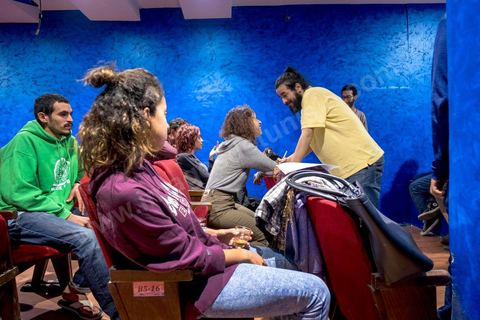
6 octobre 2017 : Afraa Ben Azza et son fiancé Azyz Amami, célèbre bloggeur de la révolution, en réunion dasn la salle de cinéma pour la préparation du festival du film court. Au Cirta, le centre culturel privé qui s’est installé au troisième étage d’un immeuble d’une compagnie d’assurance au cœur du Kef, elle évolue telle une égérie au milieu des jeunes qui rêvent de liberté. Filles et garçons se retrouvent là le soir dans cet unique lieu mixte de vie nocturne, pour boire des sodas, fumer des cigarettes et refaire le monde, tels des rebelles brisant les codes sociaux qui s’abattent comme un couvre-feu sur la ville, faisant de la rue un espace interdit de facto aux femmes dès 18 heures et la nuit tombée.
M36-737