Carthage
1–200 of 229 · page 4/5
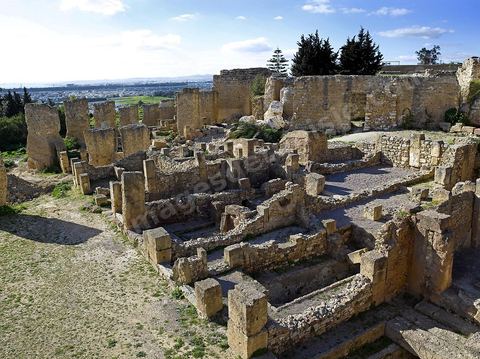
A Punic residential quarter on Byrsa Hill in Carthage. At the summit of Byrsa Hill, the site of the Roman forum, a Punic residential quarter dating from the city’s final century of existence—more precisely, the early 2nd century BCE—has been unearthed. The settlement is typical and even stereotypical, with a room facing the street that could be used as a store, a cistern installed in the basement to collect water for domestic use, and a long corridor on the right-hand side leading to a courtyard with a well, around which a series of small rooms of varying numbers are arranged.
A02-011
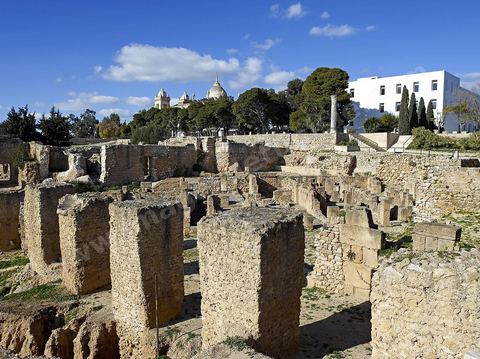
A Punic residential quarter on Byrsa Hill in Carthage. At the summit of Byrsa Hill, the site of the Roman forum, a Punic residential quarter dating from the city’s final century of existence—more precisely, the early 2nd century BCE—has been unearthed. The settlement is typical and even stereotypical, with a room facing the street that could be used as a store, a cistern installed in the basement to collect water for domestic use, and a long corridor on the right-hand side leading to a courtyard with a well, around which a series of small rooms of varying numbers are arranged.
A02-013
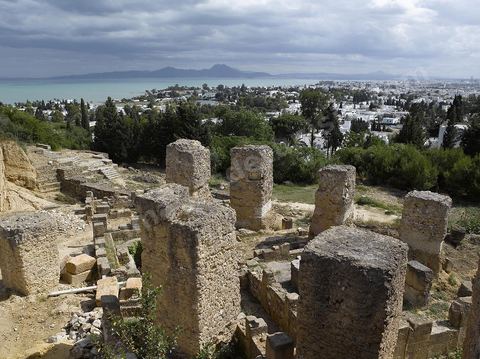
A Punic residential quarter on Byrsa Hill in Carthage. At the summit of Byrsa Hill, the site of the Roman forum, a Punic residential quarter dating from the city’s final century of existence—more precisely, the early 2nd century BCE—has been unearthed. The settlement is typical and even stereotypical, with a room facing the street that could be used as a store, a cistern installed in the basement to collect water for domestic use, and a long corridor on the right-hand side leading to a courtyard with a well, around which a series of small rooms of varying numbers are arranged.
A02-015
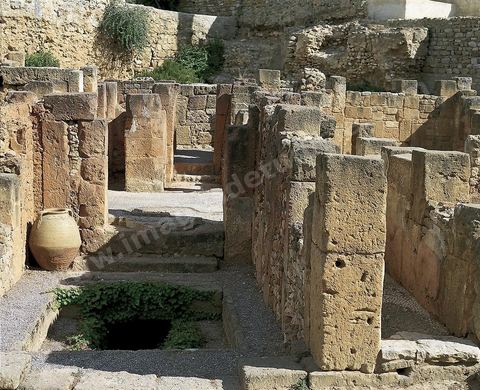
A Punic residential quarter on Byrsa Hill in Carthage. At the summit of Byrsa Hill, the site of the Roman forum, a Punic residential quarter dating from the city’s final century of existence—more precisely, the early 2nd century BCE—has been unearthed. The settlement is typical and even stereotypical, with a room facing the street that could be used as a store, a cistern installed in the basement to collect water for domestic use, and a long corridor on the right-hand side leading to a courtyard with a well, around which a series of small rooms of varying numbers are arranged.
A02-016
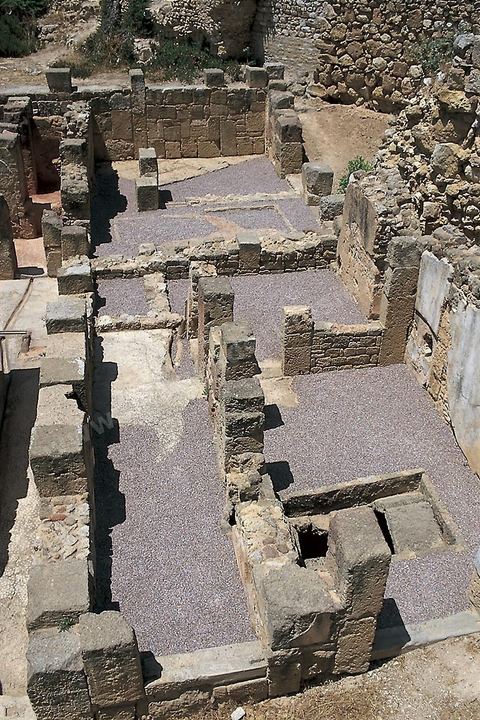
A Punic residential quarter on Byrsa Hill in Carthage. At the summit of Byrsa Hill, the site of the Roman forum, a Punic residential quarter dating from the city’s final century of existence—more precisely, the early 2nd century BCE—has been unearthed. The settlement is typical and even stereotypical, with a room facing the street that could be used as a store, a cistern installed in the basement to collect water for domestic use, and a long corridor on the right-hand side leading to a courtyard with a well, around which a series of small rooms of varying numbers are arranged.
A02-017
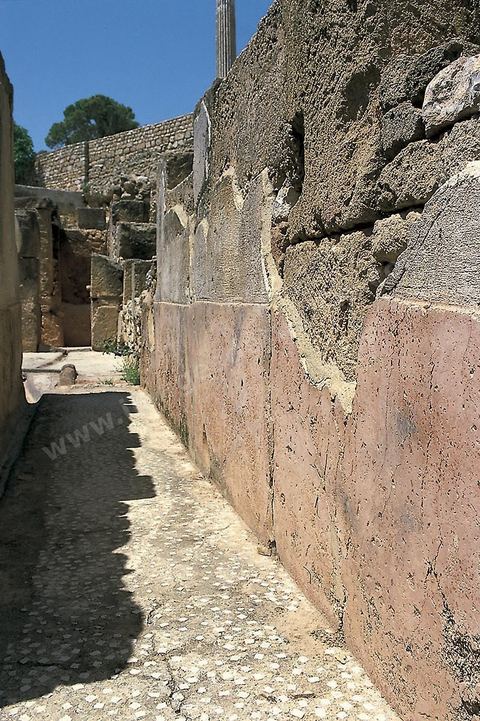
A Punic residential quarter on Byrsa Hill in Carthage. At the summit of Byrsa Hill, the site of the Roman forum, a Punic residential quarter dating from the city’s final century of existence—more precisely, the early 2nd century BCE—has been unearthed. The settlement is typical and even stereotypical, with a room facing the street that could be used as a store, a cistern installed in the basement to collect water for domestic use, and a long corridor on the right-hand side leading to a courtyard with a well, around which a series of small rooms of varying numbers are arranged.
A02-018
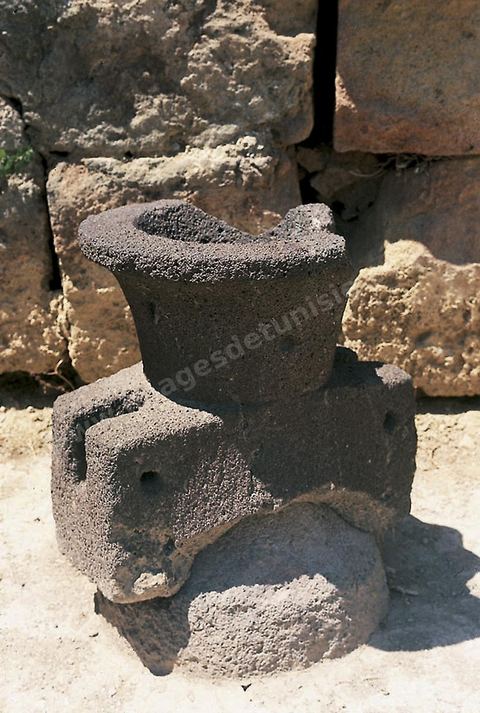
A Punic residential quarter on Byrsa Hill in Carthage. At the summit of Byrsa Hill, the site of the Roman forum, a Punic residential quarter dating from the city’s final century of existence—more precisely, the early 2nd century BCE—has been unearthed. The settlement is typical and even stereotypical, with a room facing the street that could be used as a store, a cistern installed in the basement to collect water for domestic use, and a long corridor on the right-hand side leading to a courtyard with a well, around which a series of small rooms of varying numbers are arranged.
A02-019
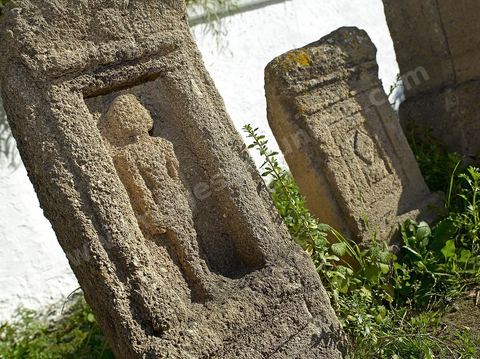
The Tophet is a sacred Punic enclosure where, according to a well-established but now disputed historical account, the Carthaginians are said to have sacrificed their children to the protective deities Tanit and Ba'al Hammon. This garden contains a large number of Punic stelae, many of which bear the symbol of Tanit.
A02-021
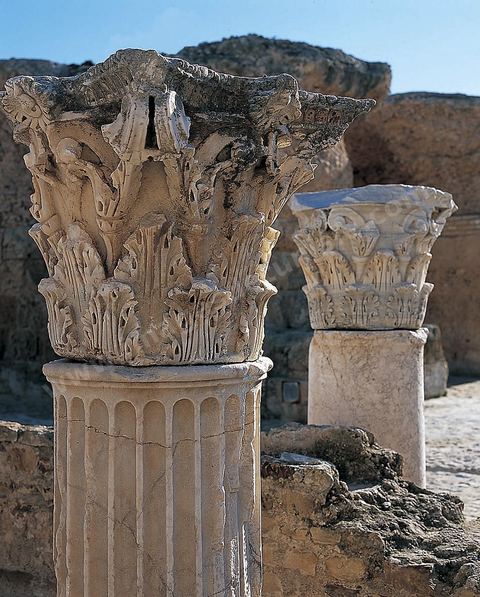
The Antonine Baths of Carthage are the largest Roman bath complex ever built on African soil. Of the original structures, only a few remnants of the ground floor—consisting of service areas located near the Carthaginian waterfront—remain. In fact, the site served as a stone quarry for centuries to build numerous monuments, both in Tunis and in many cities across the northern Mediterranean basin, such as Pisa; its proximity to the shore exacerbated the looting. The ruins extend over a length of more than 200 meters along the shoreline. The anastylosis of a column from the frigidarium by a Tunisian archaeological mission in 1985, as part of the international campaign led by UNESCO (1972–1992), gives a sense of the site’s magnificence at the height of the Roman city’s glory; the lost vaults rose to a height of over 29 meters—roughly the height of an eight-story building.
A02-038
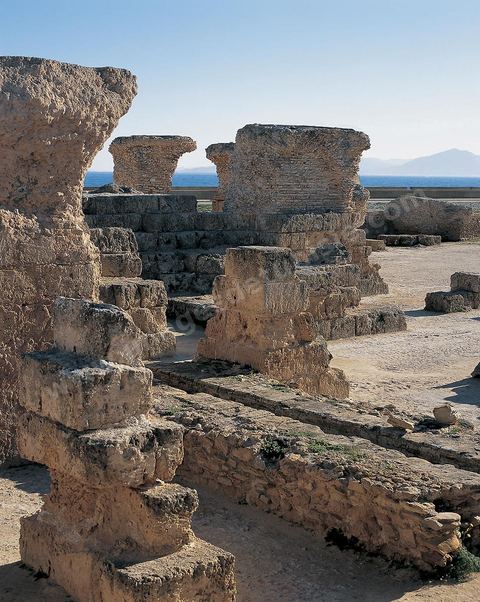
The Antonine Baths of Carthage are the largest Roman bath complex ever built on African soil. Of the original structures, only a few remnants of the ground floor—consisting of service areas located near the Carthaginian waterfront—remain. In fact, the site served as a stone quarry for centuries to build numerous monuments, both in Tunis and in many cities across the northern Mediterranean basin, such as Pisa; its proximity to the shore exacerbated the looting. The ruins extend over a length of more than 200 meters along the shoreline. The anastylosis of a column from the frigidarium by a Tunisian archaeological mission in 1985, as part of the international campaign led by UNESCO (1972–1992), gives a sense of the site’s magnificence at the height of the Roman city’s glory; the lost vaults rose to a height of over 29 meters—roughly the height of an eight-story building.
A02-039
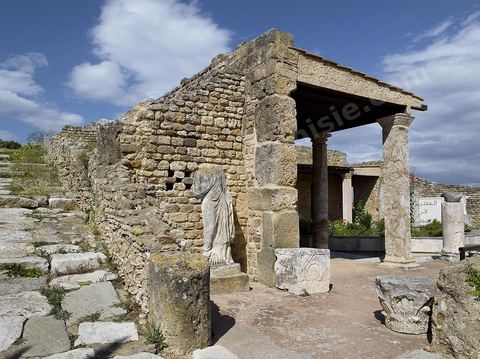
The Villa Volière at the archaeological site of the Park of the Roman Villas in Carthage. The partially reconstructed villa features some beautiful floor mosaics.
A02-040
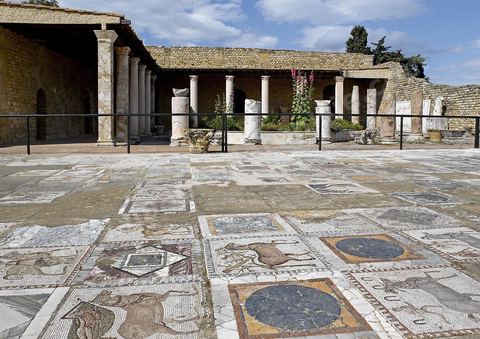
The Villa Volière at the archaeological site of the Park of the Roman Villas in Carthage. The partially reconstructed villa features some beautiful floor mosaics.
A02-041
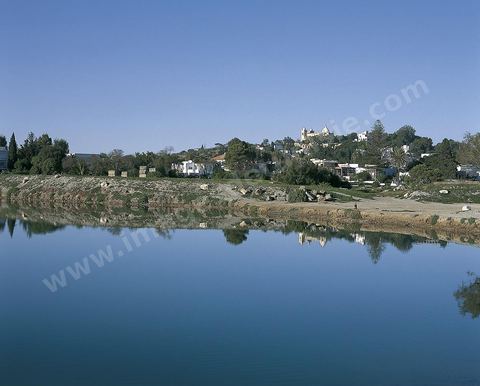
Les ports puniques
A02-042
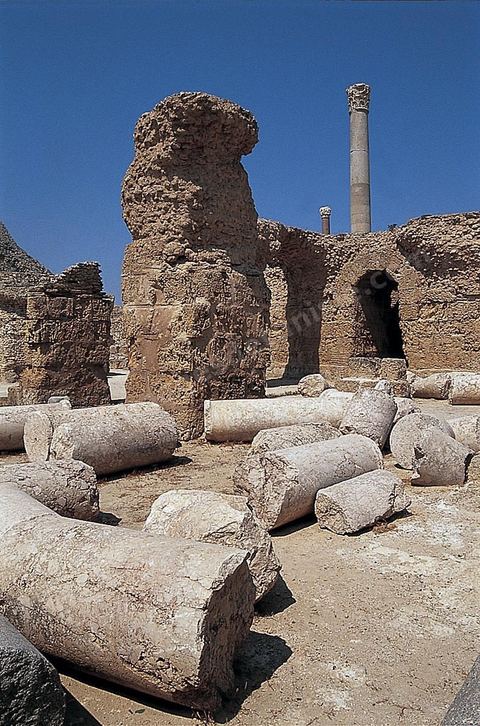
The Antonine Baths of Carthage are the largest Roman bath complex ever built on African soil. Of the original structures, only a few remnants of the ground floor—consisting of service areas located near the Carthaginian waterfront—remain. In fact, the site served as a stone quarry for centuries to build numerous monuments, both in Tunis and in many cities across the northern Mediterranean basin, such as Pisa; its proximity to the shore exacerbated the looting. The ruins extend over a length of more than 200 meters along the shoreline. The anastylosis of a column from the frigidarium by a Tunisian archaeological mission in 1985, as part of the international campaign led by UNESCO (1972–1992), gives a sense of the site’s magnificence at the height of the Roman city’s glory; the lost vaults rose to a height of over 29 meters—roughly the height of an eight-story building.
A02-044
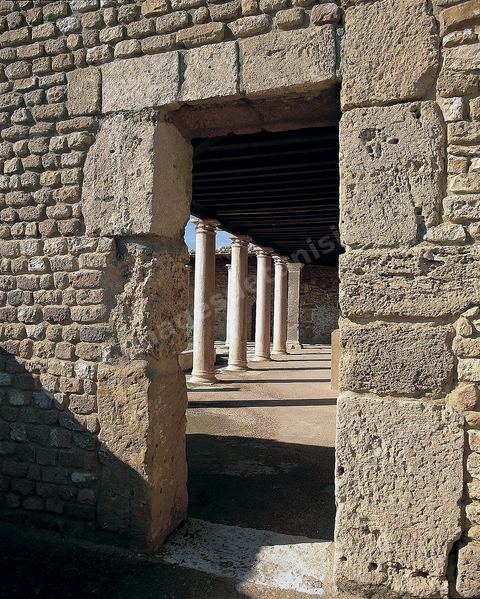
The Villa Volière at the archaeological site of the Park of the Roman Villas in Carthage. The partially reconstructed villa features some beautiful floor mosaics.
A02-045
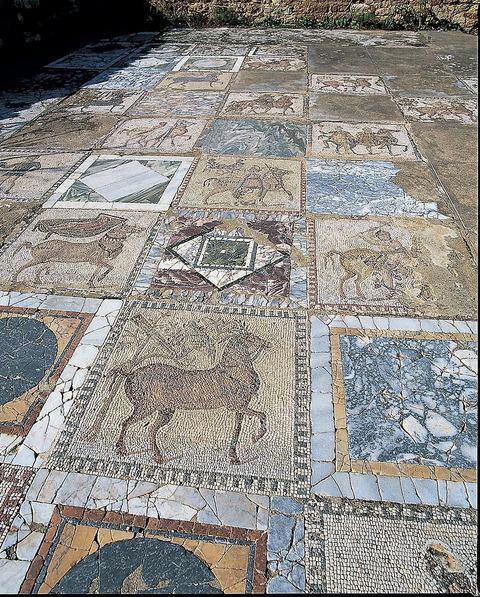
The Villa Volière at the archaeological site of the Park of the Roman Villas in Carthage. The partially reconstructed villa features some beautiful floor mosaics.
A02-046
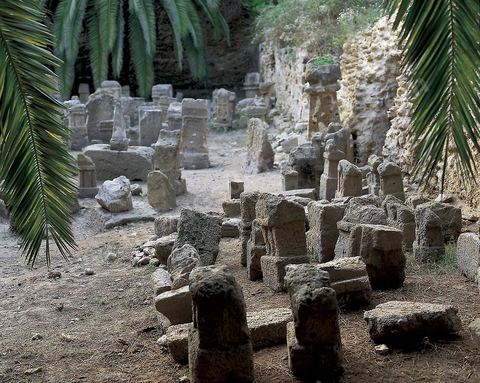
The Tophet is a sacred Punic enclosure where, according to a well-established but now disputed historical account, the Carthaginians are said to have sacrificed their children to the protective deities Tanit and Ba'al Hammon. This garden contains a large number of Punic stelae, many of which bear the symbol of Tanit.
A02-047
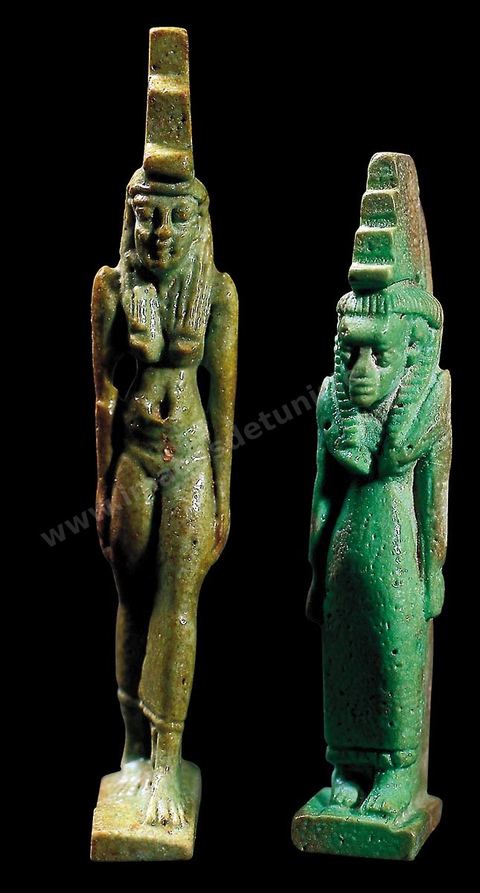
Egyptian-style amulets made of siliceous clay. Intricately crafted, they often form the motifs of necklaces and are found by the dozens in the richest tombs. Whether imported from Egypt or produced locally, they are believed to possess magical protective powers. (H. 8.2 and 7 cm, Carthage, 5th–4th centuries BCE, Carthage Museum).
A02-050
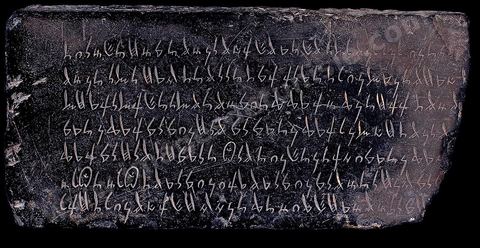
This Punic inscription, which refers to urban development projects, is engraved on a small slab of black marble discovered in 1954 in Carthage and likely dating from the 3rd century. It commemorates the completion of a major public works project involving several trades: the construction of a new road or a new gate. (L. 25 cm, W. 11 cm, Carthage, 3rd century B.C., Carthage Museum).
A02-051
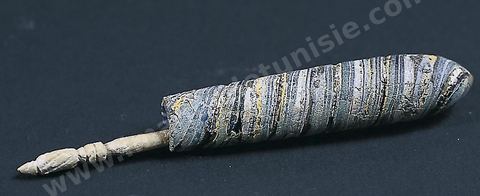
Makeup kit. Punic women, who took great pride in their appearance, used a wide range of products for their beauty routine: powders (pink and sky blue for blush), ointments, perfumes... Kohl case made of glass paste, terracotta, and even seashell, complete with a bone stylus (4th–3rd century BCE, Carthage Museum).
A02-052
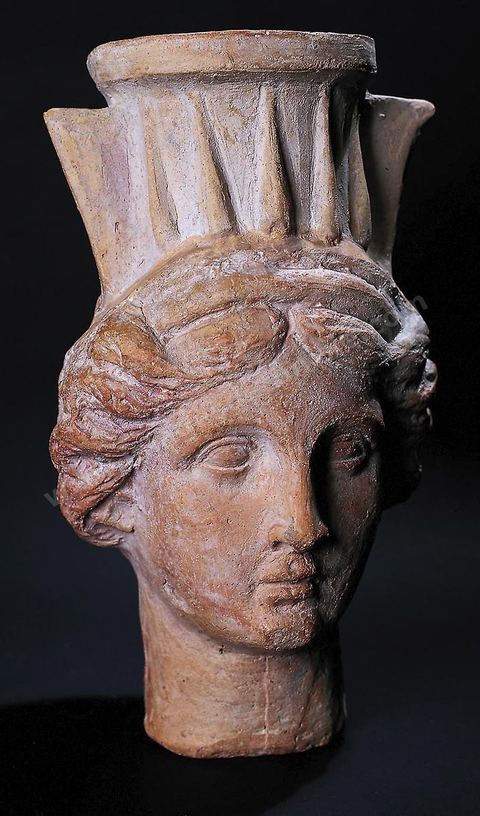
A female head carved from terracotta, with delicate, regular features, wearing a tall, radiating crown (stéphané) that holds a veil in place and serves as an incense burner. This is likely a depiction of Demeter (H. 25 cm, 3rd–2nd century BCE, Carthage Museum).
A02-053
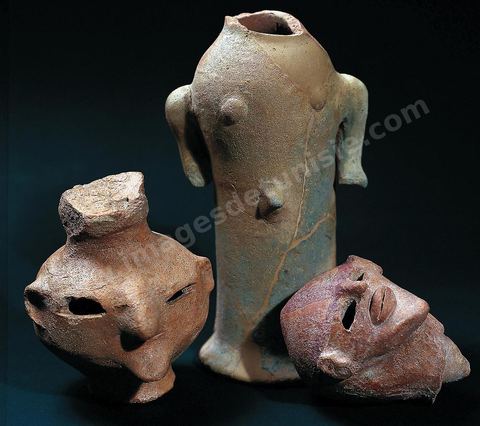
Bell-shaped terracotta figurines. Made on a potter’s wheel, they have a bell-shaped profile, and their origins date back to the Phoenicians of the East. These figures have a caricatured appearance: elongated skulls, protruding ears, prominent, hooked noses, and square chins. They are found primarily at the Tophet beginning in the 8th century, and their purpose remains a mystery. (Carthage, 8th century; Carthage Museum).
A02-054
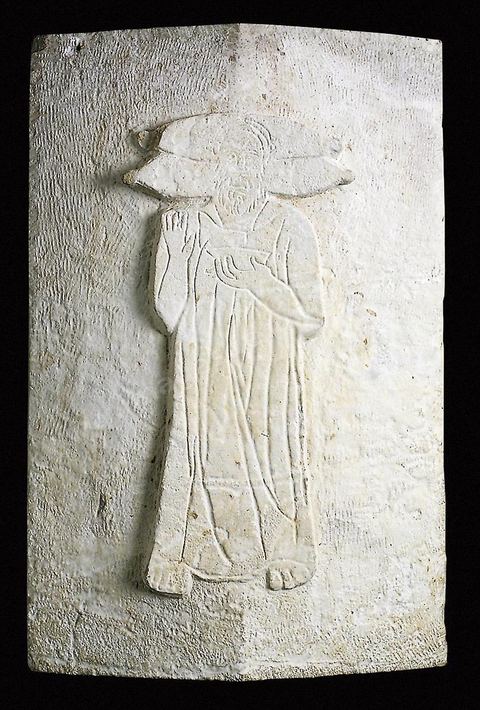
A limestone ossuary with a lid decorated with a figure in bas-relief wearing a beard and clothing; the figure’s right hand is raised in a gesture of prayer, and the left hand holds a cup; his head rests on two large cushions. (Rabs Necropolis, Carthage, 3rd century BCE, Carthage Museum).
A02-055
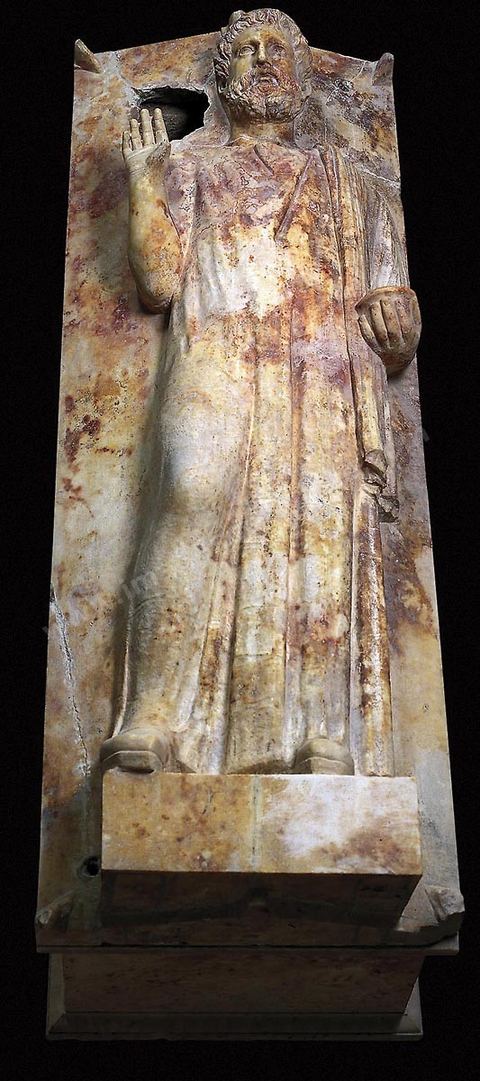
A white marble sarcophagus with a figurative lid decorated in high relief with a male figure wearing a mustache and beard, whose body is wrapped in a long garment. His right hand is raised in a gesture of prayer, and his left hand holds a cup. He has been identified as either a priest or a magistrate. Egyptian and Greek influences are evident (H. 65 cm, L. 193 cm, W. 72 cm; Necropolis of Saint Monica in Carthage, 3rd century B.C.; Carthage Museum).
A02-056
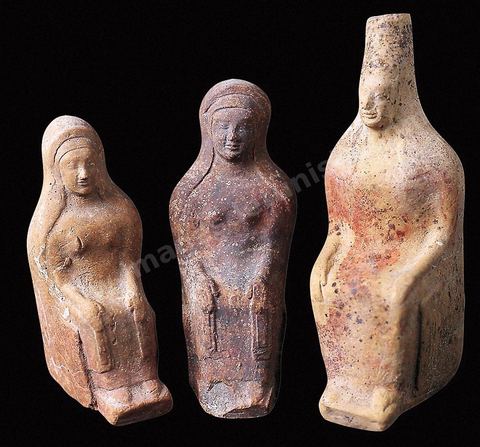
Déesses assises sur des trônes, enveloppées d'un voile descendant jusqu'à leurs genoux. L'une d'elles est coiffée d'une tiare cylindrique. Ces figurines se rattachent à des modèles ioniens de la fin du Vième sicèle avant JC (H. 13 à 16 cm, musée de Carthage).
A02-057
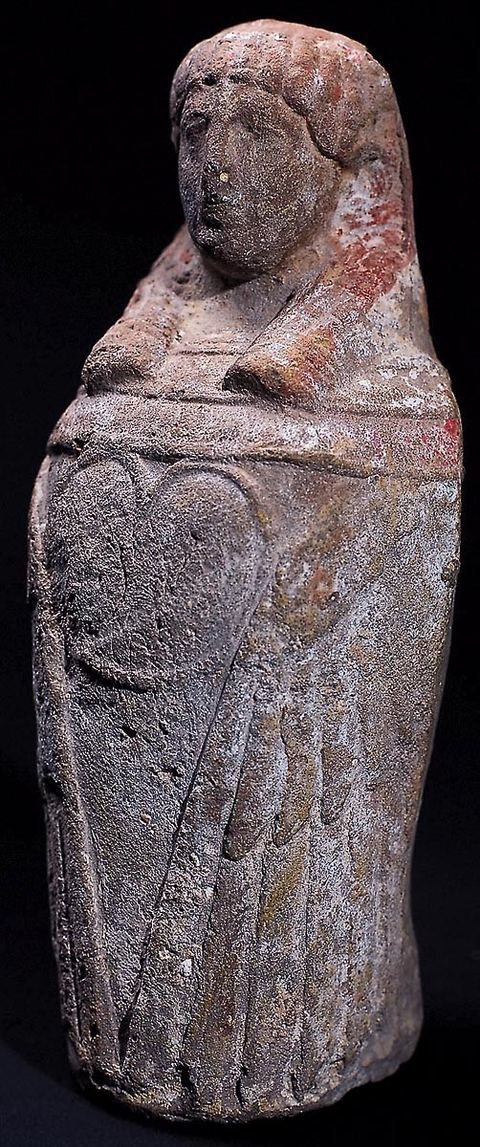
Terracotta statuette in the shape of a canopic jar (H. 15 cm, Borj Jedid necropolis, Carthage, 4th century B.C., Carthage Museum).
A02-058
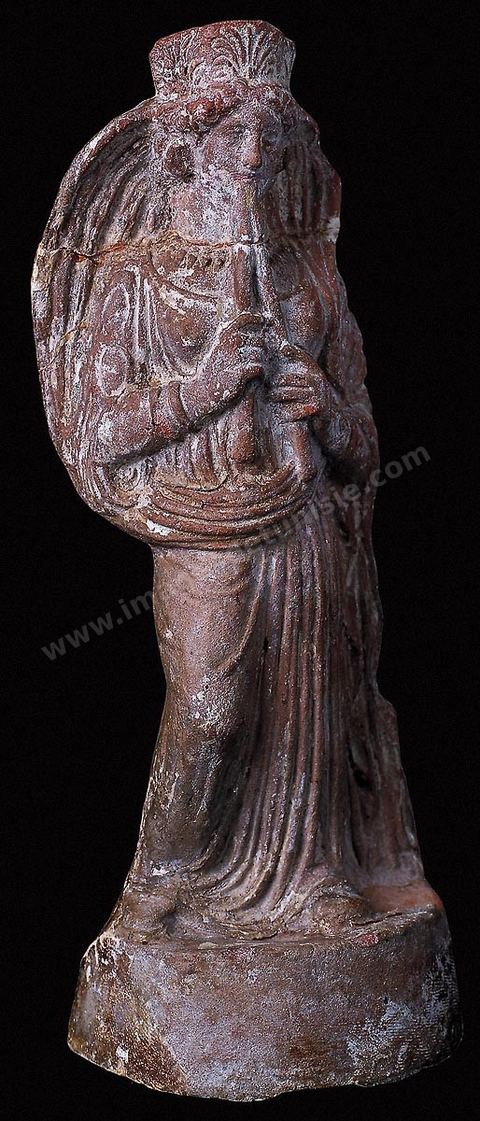
Figurine en terre cuite représentant une femme jouant de la double flûte. Elle porte une tunique longue te un manteau formant voile autour de sa tête, un diadème à palmette et des bijoux (H. 23 cm, nécropole de Borj Jedid, Carthage, IVème siècle avant JC, musée de Carthage).
A02-059
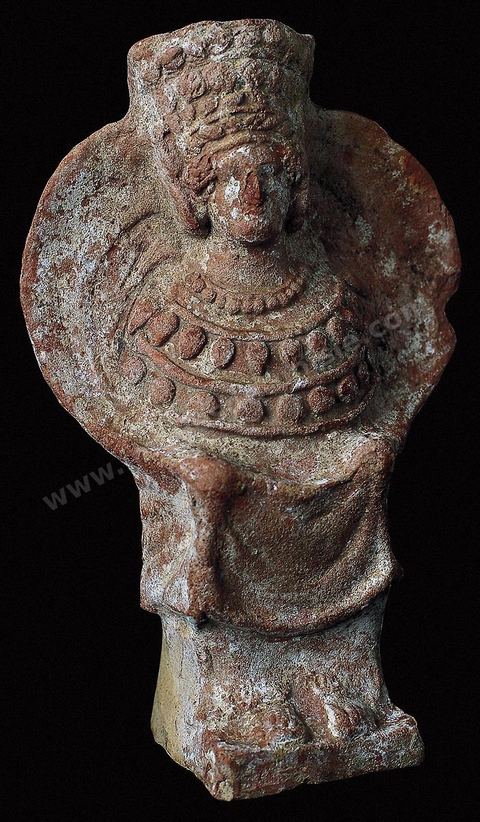
A seated terracotta goddess, her bust surrounded by a circular veil and her head adorned with an enormous diadem. She wears long earrings, and a heavy pectoral made of necklaces covers her chest. This profusion of ornamentation appears to have symbolic significance (H. 18 cm, Punic necropolis of Byrsa, 4th century BCE, Carthage Museum).
A02-060
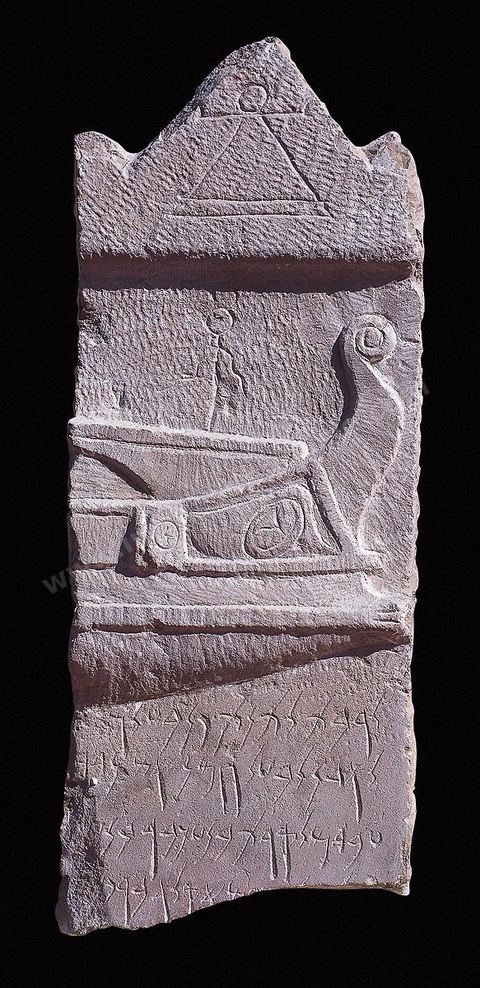
A limestone stele whose pediment is adorned with the so-called sign of Tanit and whose first register depicts a ship similar to the admiral’s galleys on Barcid coins. With its shield on the hull and its trident-shaped stem, it is likely a warship. The second register, which is partially destroyed, contains an invocation to Tanit and Baal Hammon; provenance: Tophet of Carthage; late 3rd century BCE; Punic section; Bardo Museum
A02-061
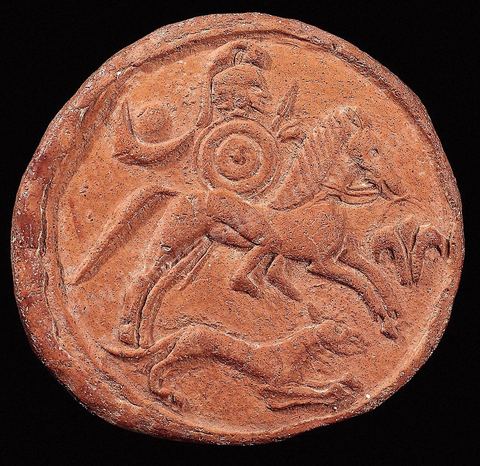
A terracotta medallion depicting a warrior riding bareback on a galloping horse. Wearing a crested helmet and armed with a round shield and a spear, he is accompanied by a dog. To the right of the horse is a lotus or lily flower, and behind the rider are depicted a crescent moon and a sun disk. This may represent a warrior deity (diameter 9 cm, Douimès Necropolis, Carthage, 6th century BCE, Carthage Museum).
A02-062
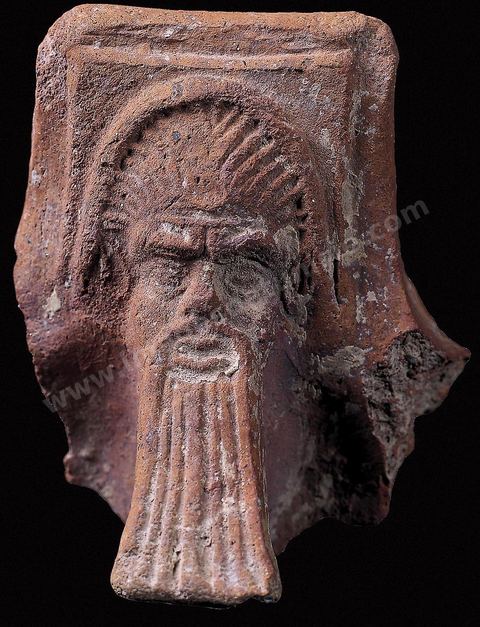
A brazier handle depicting a head adorned with a beard (Carthage Museum).
A02-063
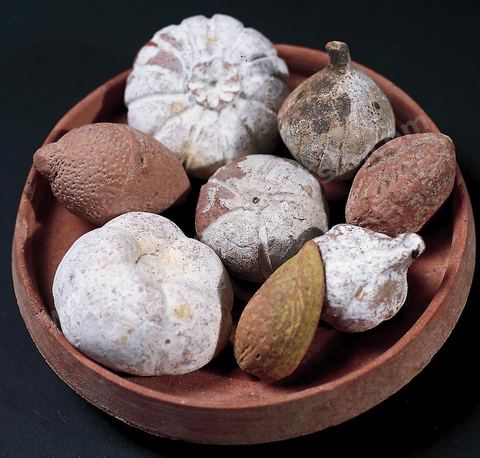
Assiette de fruits en terre cuite (IV-III ème siècle avant JC, musée de Carthage)
A02-064
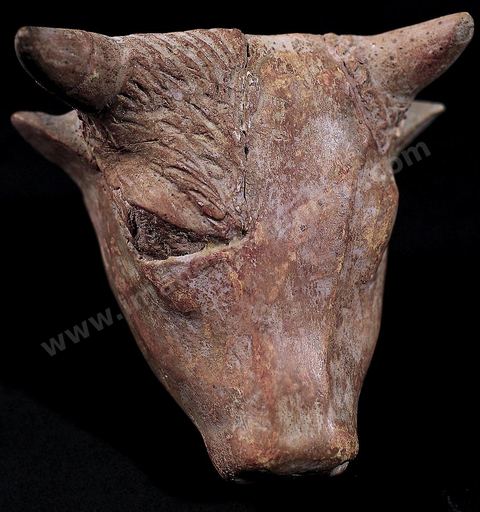
Terracotta cow's head (Carthage Museum)
A02-065
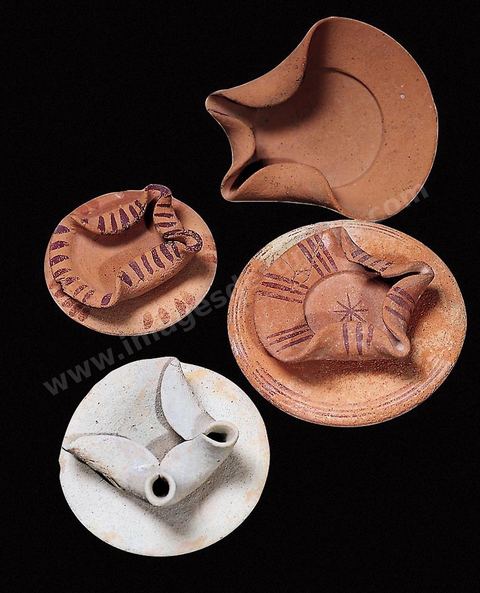
Lampes à huile puniques, leur forme simple est obtenue à partir d'écuelles pincées en deux endroits pour former les becs où l'on disposait les mèches (musée de Carthage)
A02-066
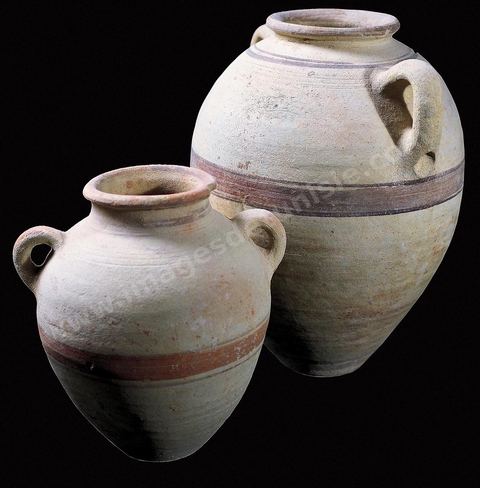
Grandes amphores globulaires à deux anses; argile rougeâtre bien cuite, engobe blanc crémeux sur lequel se détache un décor de lignes horizontales et de bandes rouges; le col est court et large (nécropole punique de Carthage, musée de Carthage).
A02-067
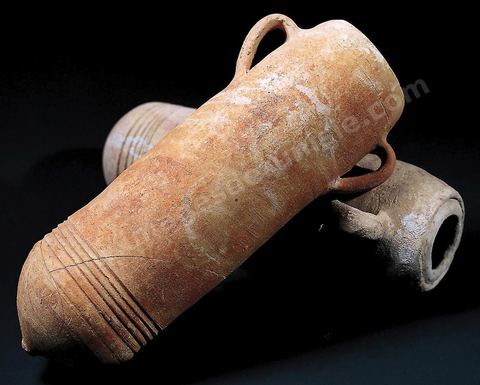
Two cylindrical Punic trade amphorae from the Hellenistic period (4th–2nd centuries B.C., Carthage Museum).
A02-068
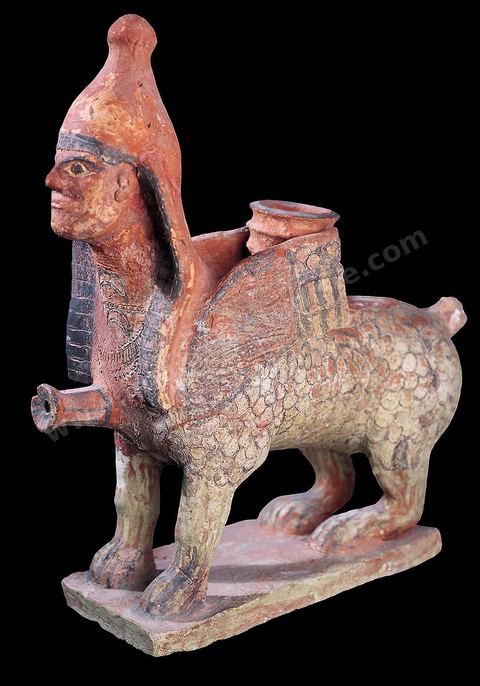
Terracotta vase in the shape of a sphinx. It is topped with a sort of Egyptian pschent in the form of a pointed tiara and has a hole for attaching ornaments. It bears three necklaces around the neck and chest, incised with a drypoint tool before firing (H. 30 cm, W. 32 cm, Archaic Necropolis of Douimès, Carthage, 6th century BCE, Carthage Museum).
A02-069
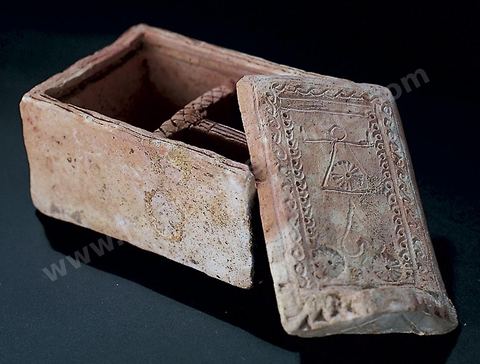
Terracotta jewelry box with a lid decorated with the so-called Tanit symbol and various motifs: rosettes, a heart, and twisted patterns (3rd century, Carthage Museum).
A02-070
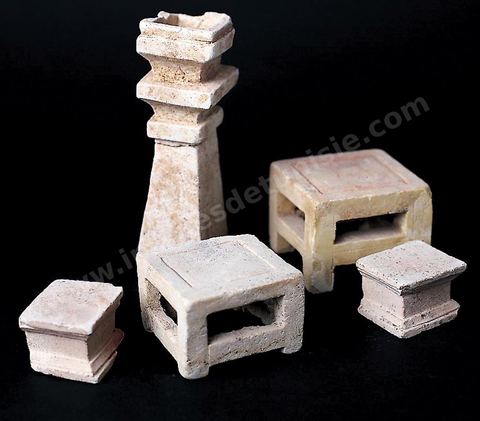
Miniature furniture carved from soft limestone: a table, stools, an altar, and an incense burner, replicating the wooden furnishings of a Punic interior (Douimès and Dermerch necropolises, Carthage, 6th century B.C., Carthage Museum).
A02-072
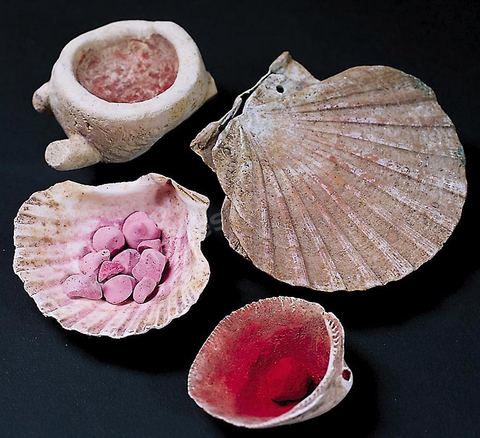
Makeup kit. The Punic woman, ever the coquette, used a wide range of products for her beauty routine: powders (pink and sky blue for blush), ointments, and perfumes (4th–3rd century B.C., Carthage Museum).
A02-073
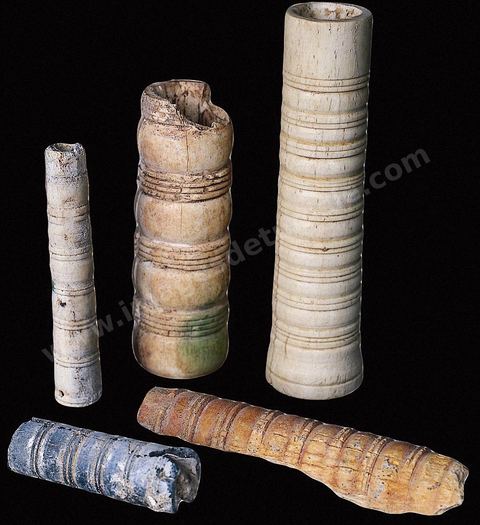
Makeup kit. Punic women, who took great pride in their appearance, used a wide range of products for their beauty routine: powders (pink and sky blue for blush), ointments, perfumes... Kohl case made of glass paste, terracotta, and even seashell, complete with a bone stylus (4th–3rd century BCE, Carthage Museum).
A02-074
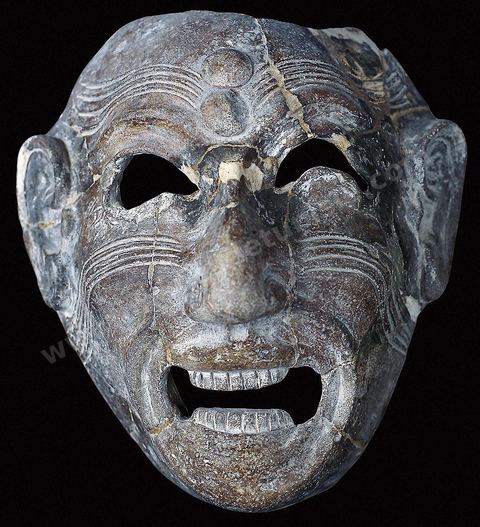
A grotesque, grimacing terracotta mask. This type of mask, inherited from the Phoenicians, was placed in tombs to protect the dead from demons (H. 18 cm, W. 16 cm, Dermech Necropolis, Carthage, late 8th century–early 7th century, Carthage Museum).
A02-075
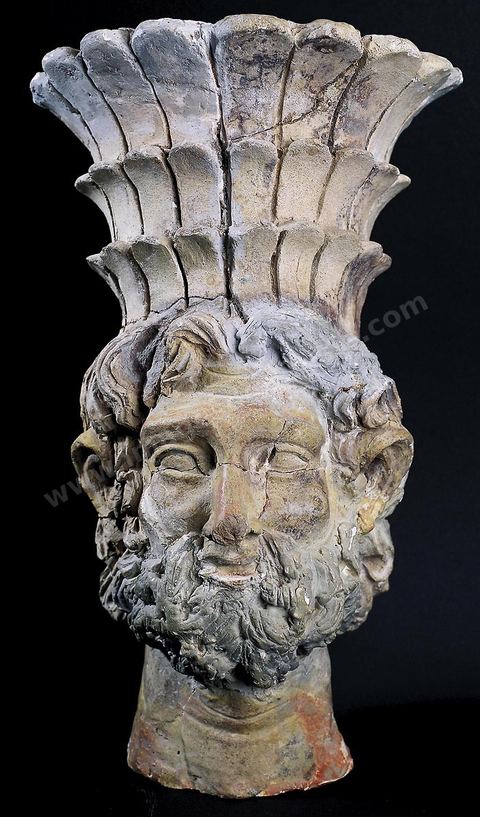
Baal Hammon. A beautiful terracotta head of a male deity, easily recognizable as the great Punic god Baal Hammon. Highly expressive, it still bears traces of vermilion. (H. 30 cm, Sanctuary of Salammbo, Carthage, mid-2nd century B.C., Carthage Museum)
A02-076
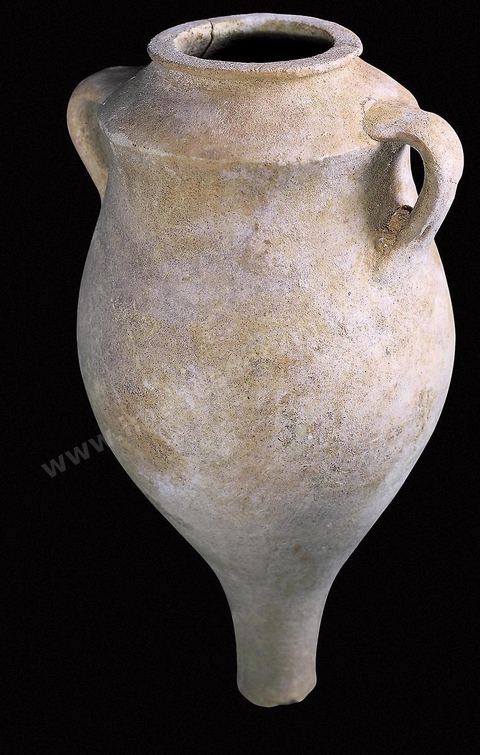
Amphorae known as “empaulement” amphorae, produced in Carthage during the Archaic period and often unearthed at the Tanit I level of the Tophet. Decorated with red bands and black lines (H. 25–30 cm, Tophet, Carthage, 8th–7th century BCE, Carthage Museum).
A02-077
Mirror handle depicting a mother goddess pressing her breasts (H. 13 cm, Douimès Necropolis, Carthage, 7th century B.C., Carthage Museum)
A02-078
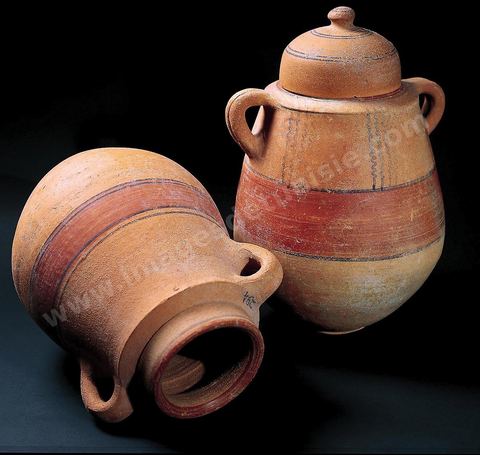
Amphorae known as “empaulement” amphorae, produced in Carthage during the Archaic period and often unearthed at the Tanit I level of the Tophet. Decorated with red bands and black lines (H. 25–30 cm, Tophet, Carthage, 8th–7th century BCE, Carthage Museum).
A02-079
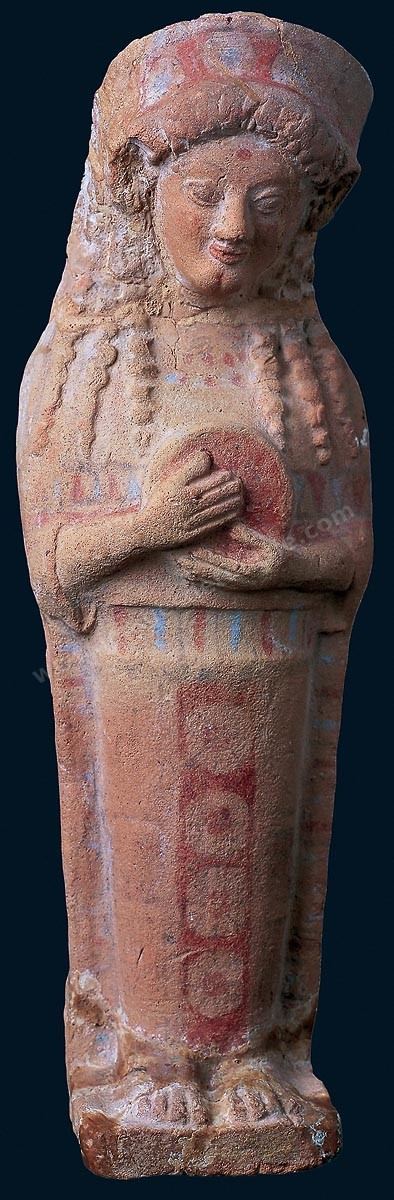
Déesse au tympanon. Cette figurine en terre cuite a l'attitude hiératique egyptienne mais l'ornementation du vêtement et la richesse de ses couleurs sont autant d'emprunts à l'Orient. Le traitement de la chevelure et le diadème qui la coiffe évoquent la Grèce d'Asie (H. 33 cm, nécropole d'Ardh el Morali, fin du VII ème siècle avant JC, musée de Carthage).
A02-080
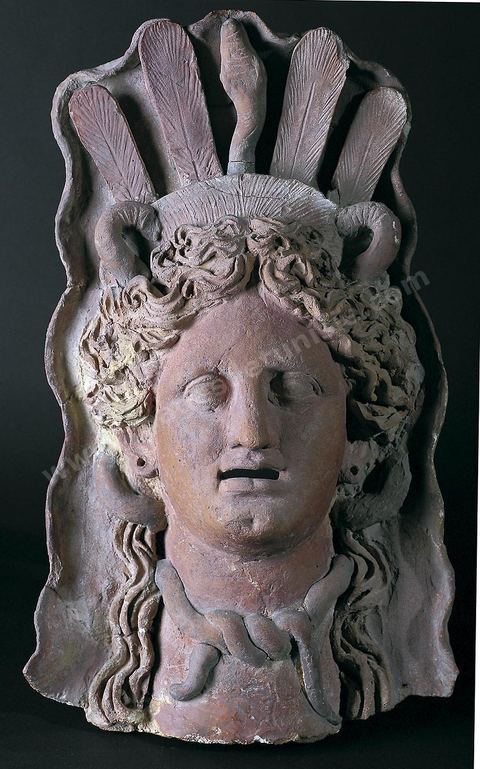
A terracotta mask likely depicting Demeter. The goddess wears a sort of bowl-shaped tiara, framed by a rigid, conch-shaped veil. Vertical, parallel feathers rise from it, with a serpent—a common attribute of chthonic deities—standing out at their center (H. 46 cm, W. 29 cm, Th. 12.5 cm, Salammbô Sanctuary, Carthage, 3rd–2nd century BCE, Carthage Museum).
A02-081
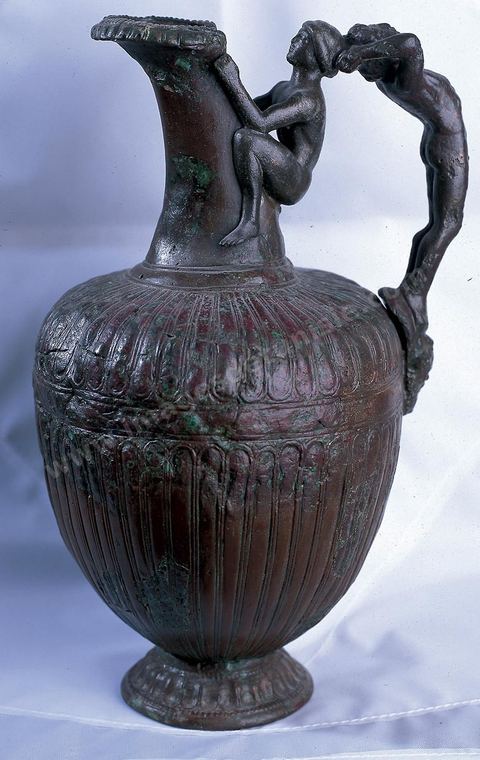
Bronze oenochoe: The body of this bronze oenochoe (wine jug) is adorned with a simple design: fluting on either side of a central band. The handle consists of two figurines: a teenager clinging to the neck of the vessel, which he holds between his legs, and a bearded figure whose body is arched backward, leaning against a mask that serves as the lower attachment, with his hands resting on the teenager’s head. Some scholars attribute this oenochoe to Etruria, others to Tarentum or even Carthage (H. 25 cm, diam. 14 cm, Carthage, 5th century BCE, Carthage Museum).
A02-082
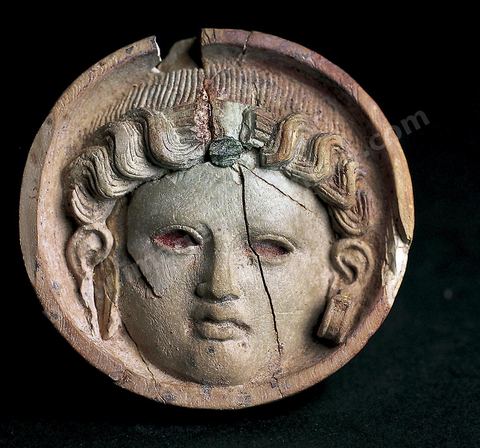
Médaillon en ivoire trouvé dans la nécropole de Sainte Monique (diam. 6,2 cm, musée de Carthage)
A02-083